Capital World Group
  • Shanghai
  • Taipei
  • Shaoxing
  • Hanoi
  • Nam Dinh
nominated vs. local sourcing

Nominated vs. local sourcing: Which strategy fits your margins?

As cost pressures intensify across the global apparel market, the sourcing strategy has become a decisive factor in protecting margins. For fashion brands manufacturing in Vietnam, the choice between nominated sourcing and local sourcing directly influences material pricing, production agility, and supply-chain stability. Each approach offers distinct benefits and trade-offs depending on a brand’s business model and risk tolerance. 

This guideline will explore the key differences between nominated and local sourcing, examine their impact on costs, lead times, and supply-chain control, and help brands identify the sourcing strategy that best supports margin performance and long-term growth.

Quick comparison of nominated vs. local sourcing

Sourcing decisions shape your cost base, flexibility, and risk exposure. Choosing between nominated and local sourcing impacts not only material pricing, but also lead times, inventory management, and supplier accountability.

CriteriaNominated SourcingLocal Sourcing
Fabric & trim supplierBrand-nominatedManufacturer-managed
Cost controlLimited negotiation flexibilityOptimized through bulk and local networks
Lead timeOften longer due to coordinationShorter with integrated sourcing
Risk managementShared across multiple partiesCentralized under one partner
Best forBrands with strict material mandatesBrands prioritizing margin and speed

What is nominated sourcing?

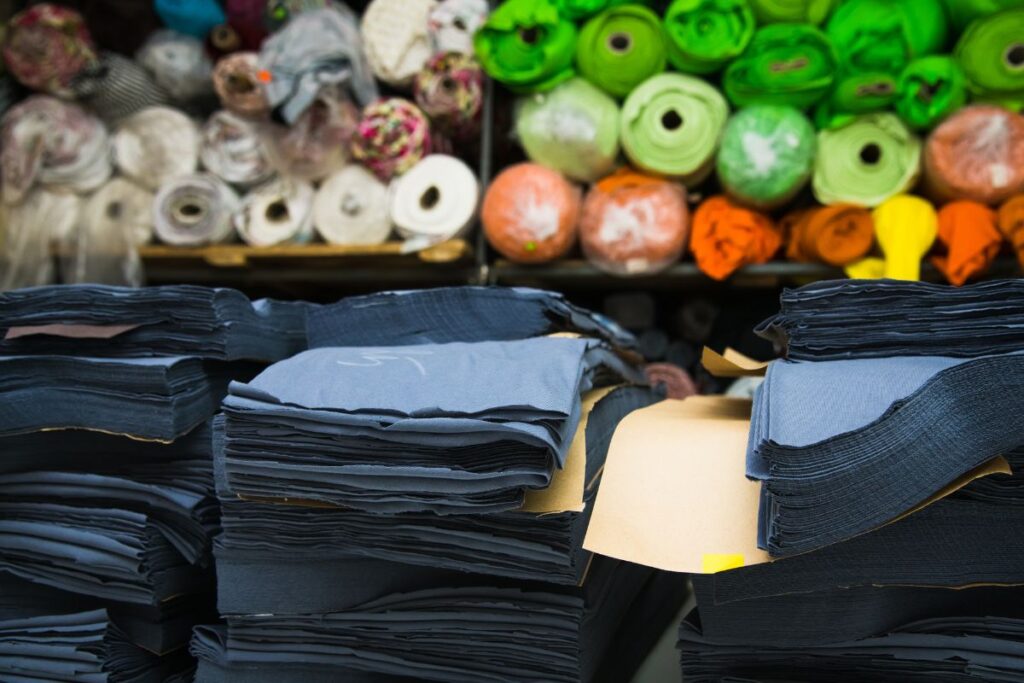
Nominated sourcing is a procurement model where the fashion brand selects and mandates specific fabric or trim suppliers. The garment manufacturer executes production using these approved materials, ensuring brand-level consistency, compliance, and quality control across multiple factories or sourcing regions.

Key advantages of nominated sourcing

  • Material consistency across suppliers: Brands maintain identical fabric specifications across multiple factories and countries, reducing variation risks.
  • Stronger compliance control: Easier alignment with sustainability, chemical, and traceability standards required by global retailers.
  • Centralized cost visibility: Buyers negotiate fabric pricing directly, improving transparency across sourcing regions.
  • Quality assurance at scale: Approved suppliers follow established testing and performance benchmarks.
  • Brand protection: Reduces reputational risk linked to unauthorized or non-compliant materials.

Limitations of nominated sourcing

  • Higher total landed costs: While the brand may negotiate fabric prices, international freight, import duties, and higher MOQs often increase overall material costs.
  • Longer production lead times: Overseas fabric sourcing can delay sampling approvals and bulk production start dates.
  • Reduced manufacturing flexibility: Factories have limited ability to adjust sourcing to improve speed, cost efficiency, or problem resolution.
  • Greater coordination complexity: Successful execution depends on close alignment between the brand, nominated suppliers, and the manufacturing partner.

Considerations before choosing nominated sourcing

Before adopting nominated sourcing, brands should evaluate their need for strict material consistency, compliance requirements, and centralized supplier control. It is essential to assess total landed costs, potential lead-time impacts, and supply-chain resilience, while ensuring manufacturing partners have proven experience managing nominated suppliers and coordinating complex, multi-party sourcing workflows.

nominated sourcing

What is local sourcing?

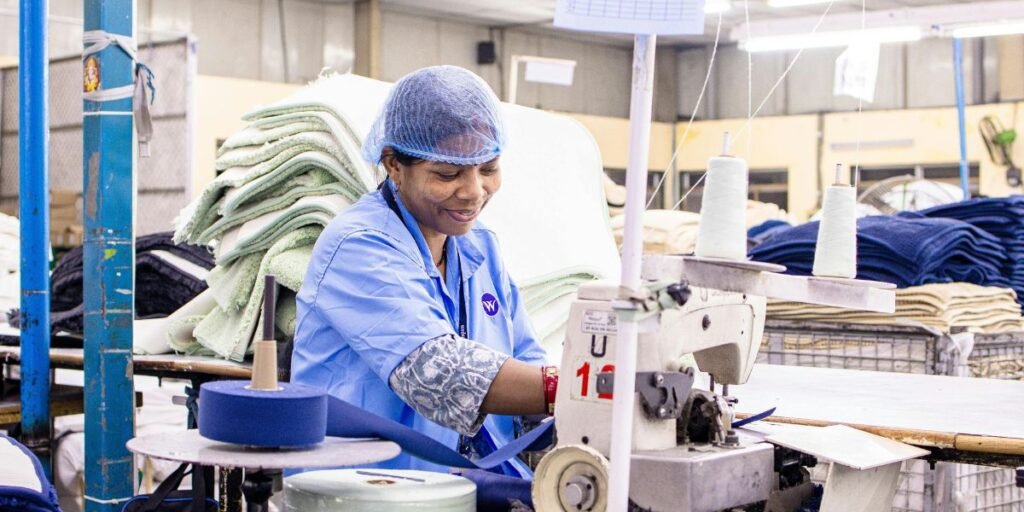
Local sourcing is a supply chain model in which a garment manufacturer sources fabrics and trims from approved suppliers located within the same country or a nearby region. This approach emphasizes shorter lead times, greater production flexibility, and lower logistics costs to support faster, more responsive apparel manufacturing.

Primary benefits of local sourcing

  • Accelerated speed to market: Sourcing fabrics and trims close to the manufacturing site significantly shortens development and production lead times, enabling faster product launches than nominated sourcing models.
  • Lower total landed costs: Reduced international freight, import duties, and inventory holding requirements help brands better control overall sourcing expenses.
  • Greater production agility: Local availability allows quick adjustments to styles, colors, or order volumes in response to real-time sales performance.
  • Lower risk through smaller MOQs: Ideal for testing new designs, managing demand uncertainty, and replenishing bestsellers.
  • Stronger operational collaboration: Proximity between the factory and suppliers improves communication, quality oversight, and problem resolution throughout production.

Challenges of local sourcing

  • Limited material innovation: Local suppliers may lack access to advanced performance, technical, or specialty fabrics, making it harder to support premium or highly differentiated products.
  • Capacity and scalability constraints: Large or long-term production programs may exceed the output capabilities of local mills.
  • Compliance readiness gaps: Not all local suppliers meet international standards for sustainability, chemical management, or social responsibility.
  • Supplier concentration risk: Heavy reliance on a small number of local suppliers increases vulnerability to disruptions, quality issues, or capacity shortfalls.

Considerations before choosing local sourcing 

Before selecting local sourcing, brands should assess their speed-to-market priorities, volume stability, and material complexity. It is important to evaluate the manufacturer’s quality control systems, supplier audit capabilities, and compliance management. Brands should also consider long-term scalability, supplier diversification, and whether local material options align with performance, sustainability, and brand positioning requirements.

local sourcing

How to choose the right sourcing model 

Selecting the right sourcing model depends on your brand’s priorities around cost control, speed, consistency, and supply-chain risk. Both nominated and local sourcing offer distinct advantages, and the optimal approach often varies by product category, volume, and market requirements.

  • Define brand priorities: Decide whether material consistency and centralized control or speed and flexibility matter most.
  • Assess lead-time tolerance: Longer timelines favor nominated sourcing; fast turnarounds suit local sourcing.
  • Evaluate total landed cost: Consider logistics, duties, MOQs, and inventory, not just fabric price.
  • Review compliance needs: Premium and regulated markets may require nominated suppliers.
  • Leverage factory capability: You can consider choosing partners with strong sourcing governance and vertical integration.
how to choose the right sourcing model

Executing the right sourcing strategy with Capital World Group 

Choosing the right sourcing model is only part of building a resilient apparel supply chain. To execute it successfully, brands need a manufacturing partner with proven experience, deep capability, and reliable delivery. Capital World Group combines vertical integration, quality assurance, and sustainability credentials to help brands optimize cost, adapt to market changes, and consistently deliver high-quality ladieswear on time.

With over 40 years of heritage, comprehensive fabric & trim sourcing, globally recognized quality standards, agile sampling, and scalable production capacity, Capital World Group is a trusted partner for global fashion brands seeking end-to-end control and predictable results. Contact us today to explore how Capital World Group can support your sourcing strategy with integrated manufacturing, reliable execution, and long-term supply-chain stability.

Read More
vietnam strongest apparel categories

Vietnam’s strongest apparel categories for export-driven brands

As global apparel brands continue to diversify sourcing beyond China, Vietnam has become a strategic production base for export-oriented manufacturing. Its strengths are not limited to cost competitiveness but extend to category-specific expertise, compliance readiness, and scalable factory infrastructure. Certain apparel categories consistently outperform others in terms of export volume, quality, reliability, and lead-time efficiency

This guideline will explore Vietnam’s strongest apparel categories for export-driven brands, outlining key product segments, manufacturing advantages, and sourcing insights to help brands make strategic, export-ready production decisions.

6 key apparel categories powering Vietnam’s export industry

Vietnam’s apparel export strength is built on a diverse mix of product categories supported by skilled labor, specialized factories, and export-ready compliance, enabling global brands to scale production efficiently.

1. Knitwear & Jersey apparel

Why Vietnam stands out: Vietnam’s garment workforce is highly experienced in knit construction and cut-and-sew operations, delivering consistent stitch quality, minimal defects, and efficient scaling. Its robust machine capacity and reliable quality control enable smooth repeat production runs for export markets.

Best for: T-shirts, polos, knit dresses, ribbed tops, basic jerseys and casual knitwear lines that require scalability and consistent sizing.

2. Woven garments (Shirts, Trousers, Dresses)

Why Vietnam stands out: Precision sewing and stable production control make Vietnam a strong choice for woven apparel. The industry excels at maintaining crisp seams, pattern accuracy, and fit consistency for both casual and semi-tailored pieces across export programs.

Best for: Button-downs, chinos, tailored trousers, woven dresses, blouses and lightweight workwear that demand structured assembly and repeatability.

woven garments

3. Activewear & Athleisure

Why Vietnam stands out: Vietnam’s factories increasingly integrate technical capabilities for performance textiles, including stretch fabrics and moisture-management materials. Combined with strong quality systems and compliance standards, this enables brands to deliver durable, high-performance active products globally.

Best for: Leggings, sports bras, training tops, hoodies, performance tees and athleisure that blend comfort with functionality for export brands seeking premium positioning.

4. Sustainable & Eco-focused apparel

Why Vietnam stands out: With rising investment in sustainable supply chains and certifications like OEKO-TEX and recycled fiber handling, Vietnam is strengthening its role in eco-conscious manufacturing. Local mills increasingly offer traceable, low-impact materials that meet export compliance.

Best for: Recycled fiber tees, organic cotton basics, low-impact casual wear, eco-friendly collections, and brand lines that prioritize environmental transparency.

Explore more: Fast fashion vs. sustainable fashion: Environmental impact

sustainable eco focused apparel

5. Outerwear & Lightweight jackets

Why Vietnam stands out: Vietnam’s production ecosystem supports multi-layer assembly and diverse trim integration, enabling lightweight jacket construction with reliable performance. The industry pairs precision sewing with efficient line balancing, ensuring quality and delivery timelines for export orders.

Best for: Windbreakers, softshells, packable jackets, rain layers, and transitional outerwear that require structured fabrication and finish integrity.

6. Loungewear, sleepwear & soft basics

Why Vietnam stands out: Vietnam’s garment sector combines cost-efficient cut-and-sew expertise with quality finishing standards, making it ideal for soft-hand feel products. Steady production workflows, fabric handling proficiency, and consistency control support high-volume loungewear exports.

Best for: Pajama sets, lounge tops and bottoms, casual shorts, soft tanks, and comfortable basics that emphasize comfort and reliability for export brands.

loungewear and sleepwear

Vietnam’s position in the global apparel export supply chain

In 2025, Vietnam’s textile and garment sector continues to assert itself as a key player in the global supply chain, with export turnover estimated at approximately USD 46 billion, reflecting around 5–6% growth compared with 2024 and maintaining its rank among the world’s top three apparel exporters. Vietnamese textile and garment products are shipped to 138 markets worldwide, showing deep integration into international trade. 

The United States remains the largest export destination, with export revenue expected at about USD 18.6 billion, marking strong year-on-year growth. Within the industry, garment exports continue to dominate, contributing roughly USD 38 billion of the total, underscoring Vietnam’s central role in global apparel sourcing.

How brands can select the best apparel category for export manufacturing in Vietnam

Selecting the right apparel category is a critical first step for export-driven brands sourcing from Vietnam. Each category offers different advantages in terms of cost structure, technical capability, compliance readiness, and scalability. Understanding these differences helps brands align their product strategy with Vietnam’s manufacturing strengths and build a more efficient, resilient export supply chain.

Key decision factors include:

  • Matching product complexity with factory specialization: Technical products such as activewear or performance knits require factories with advanced machinery, skilled labor, and strict quality control, while simpler woven styles may benefit from broader supplier bases.
  • Evaluating target export markets and compliance requirements: Different markets impose different standards (e.g, US vs. EU), making it essential to choose categories supported by compliant factories with proven export experience.
  • Balancing cost, quality, and lead-time expectations: Categories with strong local material availability and stable production capacity typically offer better cost control and faster turnaround.
  • Assessing scalability and long-term production capacity: Export-driven brands should prioritize categories that allow volume growth without compromising consistency, especially for repeat styles and continuous programs.

Capital World Group – A manufacturing partner for scaling Vietnam’s apparel exports

Capital World Group is an apparel manufacturer with long-standing experience in the apparel industry. The group specializes in export-scale production of knit and woven ladies’ apparel for international fashion brands. With end-to-end manufacturing capabilities from fabric sourcing, pattern development, and rapid sampling to bulk production and logistics support. We enable brands to scale efficiently. The Vietnam facility operates multiple production lines, offers a 10-day sample turnaround, and meets key global compliance standards, including Higg FEM, amfori BSCI, and SLCP, ensuring responsible, high-quality manufacturing.

Contact us today to explore how we can support the fashion brand across Vietnam’s strongest apparel categories. From knitwear and activewear to woven garments and sustainable collections, our export-focused manufacturing platform is built to deliver speed, quality, compliance, and long-term scalability for global markets.

Read More
entering new markets a manufacturer’s perspective

Expanding your brand into new markets: A manufacturer’s perspective

Expanding into new markets is an exciting growth opportunity, but it also presents complex production and operational challenges. From a manufacturer’s perspective, successful market expansion depends not only on demand and branding but on scalable production, compliance with international standards, and efficient supply chain management. For apparel brands working with batch manufacturing in Vietnam, understanding these factors is essential to avoid costly mistakes. 

This guide provides practical manufacturing insights to help brands expand into new international markets efficiently, sustainably, and with long-term success in mind.

Why expanding into new markets matters for your brand 

Entering new geographic markets helps fashion brands build a broader customer base, unlock additional revenue channels, and reduce reliance on a single region. This strategic move creates more stability for long-term business growth, especially in an industry affected by seasonal demand and changing consumer trends. Beyond commercial benefits, market diversification also requires brands to rethink how their products are produced and delivered. 

Each region comes with its own expectations for fabric standards, size specifications, regulatory compliance, and shipping timelines. Aligning manufacturing operations with these local requirements is essential for maintaining consistency, efficiency, and brand credibility.

expanding your brand into new markets

Core elements of a successful market expansion

1. Market selection

Market selection determines how effectively a brand can operate in a new region. Demand size, consumer behavior, and regulatory complexity directly influence production feasibility, costs, and long-term business sustainability.

What should you do: Analyze market demand, purchasing power, and fashion trends before entering a new region. Review local import regulations and textile standards to ensure your manufacturing processes and product specifications can meet legal requirements efficiently.

What should be noted: Highly regulated markets may increase production costs and approval timelines. Low-demand regions may not justify batch manufacturing. Cultural preferences also affect product design, materials, and sizing expectations, requiring careful adaptation.

2. Customer & segment definition

Clear customer segmentation helps manufacturers align product design, material selection, and production methods with the expectations of specific consumer groups in each target market.

What should you do: Define your ideal customer based on age, lifestyle, income level, and fashion preferences. Identify pricing expectations and quality standards to guide fabric choices, construction techniques, and finishing processes for consistent market positioning.

What should be noted: Premium segments demand higher material quality and refined craftsmanship, while mass markets prioritize cost efficiency. Poor segmentation often leads to mismatched products, weak market performance, and unnecessary production adjustments.

3. Compliance & quality control

Regulatory compliance and consistent quality control are essential for legal market entry and long-term brand credibility in international apparel markets.

What should you do: Ensure all products meet local safety, labeling, and chemical regulations. Implement standardized quality inspections at each production stage and maintain proper certification and audit documentation to meet international requirements.

What should be noted: Non-compliance can result in shipment delays, financial penalties, or product rejection. Different markets require different certifications, making it important to stay updated on regulatory changes and inspection standards.

4. Production capacity & scalability

Scalable production capacity allows brands to respond to growing demand while maintaining consistent quality, delivery performance, and operational efficiency when entering new markets. Working with an experienced manufacturer like Capital World Group, which has 18 production lines and an 800-person workforce, enables brands to scale confidently without compromising theirstandards.

What should you do: Assess factory capacity, workforce skills, and equipment availability. Standardize production processes and plan gradual volume increases to ensure smooth scaling without disrupting quality control or delivery schedules.

What should be noted: Rapid scaling increases the risk of defects and delays. Limited skilled labor or outdated machinery can restrict output capacity, affecting product consistency and customer satisfaction in expanding markets.

5. Supply chain & material sourcing

A reliable supply chain ensures stable material availability, cost control, and consistent production schedules for international market expansion.

What should you do: Build strong relationships with certified fabric suppliers and secure consistent material sources. Monitor lead times and quality standards to support predictable production planning and cost management.

What should be noted: Material shortages or inconsistent quality can disrupt production. Certified or sustainable fabrics may increase costs, but they improve compliance, product credibility, and market acceptance in regulated regions.

6. Logistics & lead time management

Efficient logistics planning ensures timely product delivery and supports seasonal sales cycles in international apparel markets. Manufacturers such as Capital World Group with vertically integrated production systems will manage fabric sourcing, production, quality control, packing, and export within a single operational framework. This end-to-end control reduces handover delays, improves timeline accuracy, and helps brands respond more quickly to international market demands.

What should you do: Plan production and shipping schedules. Work with reliable freight and customs partners to minimize delays and maintain accurate delivery timelines for international orders.

What should be noted: Poor lead time management can result in missed sales seasons and customer dissatisfaction. International shipping involves customs clearance, documentation, and transit risks that require careful coordination.

Common mistakes brands make when expanding 

While new markets offer growth opportunities, insufficient planning and weak manufacturing coordination can expose apparel brands to operational risks. Understanding common expansion mistakes is essential for minimizing disruptions and ensuring sustainable growth.

  • Choosing markets without studying local requirements leads to mismatched sizing, materials, or labeling that fail to meet customer and regulatory expectations.
  • Underestimating compliance and certification standards can cause shipment delays, legal issues, or rejected products.
  • Failing to plan scalable production capacity results in inconsistent quality when demand increases.
  • Ignoring logistics and lead-time constraints, causing missed seasonal launches and unreliable delivery schedules.
  • Prioritizing low cost over quality damages brand reputation and customer trust.
  • Skipping proper sampling and testing increases the risk of product defects in new markets.

Capital World Group supports fashion brands expanding into international markets by providing reliable, end-to-end garment manufacturing solutions. With vertically integrated operations, and scalable production systems, we help brands maintain quality, compliance, and consistency as they grow across borders.

By combining strong supply chain control with flexible production planning, we reduce operational risks and support sustainable market entry. 

 Contact us today to discuss how we can assist with your international market expansion.

Read More
start manufacturing clothes in vietnam

How to start manufacturing clothes in Vietnam

Vietnam has emerged as a key global hub for apparel manufacturing, offering fashion brands a strong combination of skilled labor, competitive production costs, and reliable export infrastructure. However, successfully manufacturing clothes in Vietnam requires more than simply choosing a factory. It demands a clear strategy, proper planning, and an understanding of local production practices. 

This guideline will explore how brands can start manufacturing clothes in Vietnam step by step, covering industry insights, factory selection, sourcing models, and best practices to help you build a stable and scalable production foundation.

Step-by-Step process to start manufacturing clothes in Vietnam

Successfully manufacturing clothes in Vietnam requires a structured approach that aligns product design, sourcing strategy, factory capability, and production planning to minimize risk and ensure consistent quality outcomes.

Step 1: Define your product, volume & commercial targets

Start by clearly defining your product type, construction complexity, target price, expected order volume, and quality standards. Vietnamese factories are highly specialized, so having clear commercial and technical requirements helps you identify suitable manufacturers, receive accurate costing, and avoid misalignment during sampling and bulk production.

Step 2: Decide your manufacturing & sourcing model

Choose the production model that best fits your brand, such as CMT or FOB, OEM or ODM, and nominated or local sourcing. This decision impacts cost control, material responsibility, lead times, and supply-chain transparency, making it a critical foundation for successful apparel manufacturing in Vietnam.

Step 3: Shortlist the right type of garment manufacturers and evaluate factory capability & credibility

Identify factories based on product specialization, capacity, export experience, and compliance standards. Evaluating factory credibility through references, audits, and production track records helps ensure the manufacturer can scale from sampling to bulk production without compromising quality or delivery timelines.

Step 4: Costing, MOQ & commercial alignment

Review detailed cost breakdowns covering fabric, trims, labor, and overhead while confirming minimum order quantities by style and color. Aligning pricing expectations, payment terms, and lead times early helps prevent hidden costs, margin erosion, and disputes during bulk production.

Step 5: Sampling & product development

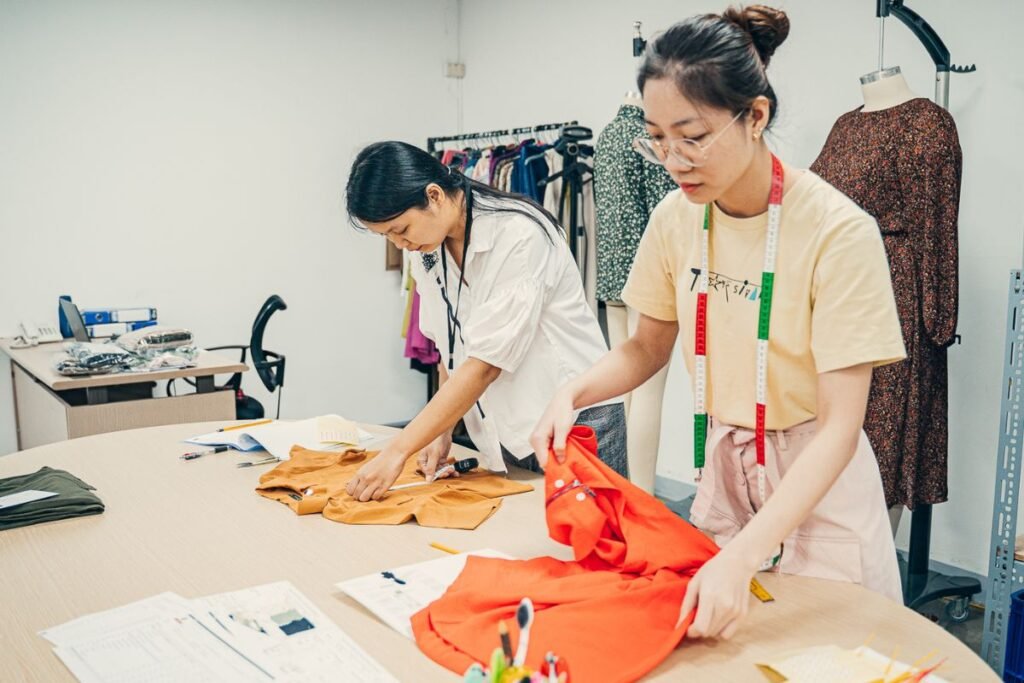
Sampling is where design intent meets factory execution. Providing complete tech packs and allowing sufficient time for revisions helps validate construction, fit, materials, and costing. Well-managed sampling reduces errors and ensures smoother transitions into bulk production.

Step 6: Pre-production planning & quality control setup

Before bulk production begins, align on approved samples, materials, timelines, and quality standards through a pre-production meeting. Establishing quality control checkpoints early minimizes miscommunication, controls defects, and protects delivery schedules throughout the production process.

Step 7: Bulk production execution

During bulk production, closely monitor progress, material readiness, and quality performance. Regular communication and inline inspections help identify issues early, prevent delays, and ensure production stays aligned with agreed specifications and delivery commitments.

Step 8: Build a long-term manufacturing partnership

Vietnamese manufacturing works best through long-term partnerships rather than one-off orders. Building consistent collaboration enables better pricing, priority capacity, improved lead times, and deeper alignment, creating a more stable and scalable production foundation for future collections.

Explore more: Top 8 benefits of continuous production partnerships

Overview of the Vietnam garment industry 

Vietnam’s textile and garment industry continues to affirm its role as a leading global export hub, with apparel export revenues forecast to reach approximately US$46 billion in 2025, reflecting stable growth over 2024 and securing Vietnam’s position among the world’s top three garment exporters. This growth demonstrates the industry’s ability to adapt amid shifting global demand and supply-chain pressures.

In parallel, the sector has recorded a trade surplus of around US$21 billion while raising domestic value-added to roughly 52%, indicating gradual improvements in material sourcing and production depth. Vietnamese apparel is now supplied to more than 138 international markets, with the US, EU, Japan, and South Korea remaining the primary export destinations.

overview of the Vietnam garment industry

Why choose Vietnam for apparel manufacturing in 2026 

As global brands continue to rebalance supply chains in 2026, Vietnam stands out as a manufacturing destination that combines cost efficiency, skilled production, and strong trade access to major consumer markets.

  • Competitive labor and production costs without quality compromise: Vietnam offers cost advantages compared to developed markets while maintaining high workmanship standards, making it suitable for both value-driven and mid-to-premium apparel brands.
  • Favorable trade agreements (EVFTA, CPTPP) reducing tariffs and expanding market access: These agreements enable preferential duty rates when exporting to the EU, Japan, and other key markets, helping brands improve margins and pricing competitiveness.
  • Highly skilled workforce and craftsmanship: Vietnam’s long-established garment industry provides experienced workers capable of handling complex constructions, consistent quality, and scalable production.
  • Modern supply chain and logistics infrastructure: Ongoing investment in ports, industrial zones, and transportation supports reliable lead times and efficient export operations

Common mistakes brands make when manufacturing in Vietnam 

Manufacturing in Vietnam offers strong opportunities, but many brands encounter avoidable challenges due to misaligned expectations, limited preparation, or a lack of understanding of how local garment production actually operates.

  • Choosing factories based on price alone rather than product specialization: Low pricing often comes at the expense of product fit and expertise. Factories in Vietnam are highly specialized, and selecting the wrong one increases quality and delivery risks.
  • Underestimating MOQ and lead-time requirements: Many brands expect high flexibility, but Vietnam’s factories must plan capacity and material sourcing in advance, making realistic MOQ and timeline planning essential.
  • Providing incomplete or unclear tech packs: Ambiguous specifications lead to sampling errors, rework, and misinterpretation during bulk production, directly affecting cost and consistency.
  • Rushing sampling and skipping pre-production alignment: Sampling validates construction and costing. Skipping proper alignment often results in bulk production issues that are costly to correct later.
  • Failing to plan quality control and compliance requirements: Without defined QC standards and compliance planning, brands risk shipment delays, failed audits, or rejected goods.
common mistakes brands make when manufacturing in vietnam 

Why choose Capital World Group as your clothing manufacturer? 

Capital World Group is a trusted Vietnam-based apparel manufacturer operating 18 production lines and employing more than 800 skilled workers through its fully owned garment production facility Kiara Garments.

With a vertically integrated production model, Capital World Group controls fabric and trim sourcing, pattern making, sampling, bulk production, quality control, and export under one roof. This end-to-end approach reduces lead times, improves cost efficiency, and gives brands greater visibility and confidence throughout the manufacturing process in Vietnam.

Contact us today to explore how we can support your apparel manufacturing in Vietnam with a transparent process, efficient execution, and a long-term partnership mindset.

Read More
continuous production partnerships

Top 8 benefits of continuous production partnerships

Continuous production partnerships are long-term manufacturing collaborations where apparel brands work consistently with the same production partner across seasons and collections. 

Instead of shifting suppliers for each order, brands align planning, sourcing, and production into an ongoing workflow. This strategic model helps fashion brands streamline operations, reduce costs, and maintain consistent product quality over time. Unlike project-based or batch production, continuous partnerships improve speed, reliability, and transparency across the supply chain. 

This article explores the top eight benefits of continuous production partnerships and why forward-thinking brands

1. Enhanced production efficiency

Continuous production partnerships significantly improve manufacturing efficiency by eliminating repetitive onboarding, sampling resets, and misaligned processes. When brands work long-term with a vertically integrated partner like Capital World Group, production teams gain a deep understanding of your product standards, materials, and workflows. This familiarity enables smoother planning, faster approvals, and optimized line allocation across seasons. Over time, efficiency gains translate into fewer production disruptions, better capacity utilization, and a more reliable end-to-end manufacturing process that supports consistent brand growth.

enhanced production efficiency

2. Predictable lead times & delivery schedules

Predictable lead times are a key advantage of continuous production partnerships. Ongoing collaboration allows manufacturers to plan capacity, fabric sourcing, and trims, reducing delays caused by last-minute changes or supplier switching. With production, quality control, packing, and export managed from one site, this model supports stronger inventory planning, reduces stock risk, and enables fashion brands to meet retail calendars with greater confidence.

3. Reduced production costs

Long-term production partnerships help brands lower overall manufacturing costs without compromising quality. Continuous orders enable better material forecasting, bulk fabric sourcing, and optimized production runs, reducing per-unit costs. A vertically integrated setup also minimizes third-party markups, logistics inefficiencies, and rework expenses. By consolidating sourcing, sampling, and bulk production under one partner, brands benefit from cost transparency and improved margins. Over time, these efficiencies create a more competitive cost structure that supports scalable, profitable growth.

4. Minimizing waste and maximizing resource efficiency

Continuous production partnerships support more sustainable manufacturing by reducing waste at every stage of production. Stable forecasting allows manufacturers to optimize fabric utilization, minimize excess inventory, and reduce sampling waste. With in-house quality control and aligned production standards, fewer defects mean less rework and material loss.

minimizing waste and maximizing resource efficiency

5. Consistent product quality

Maintaining consistent product quality is easier when brands work with the same production partner long term. Continuous partnerships allow manufacturers to refine patterns, construction techniques, and finishing details over time. Quality benchmarks are clearly understood and embedded into daily operations. With dedicated QC processes and certified management systems, the brand ensures that garments meet the same standards across every production run. This consistency strengthens brand trust, reduces returns, and protects brand reputation in competitive markets.

6. Strategic business growth

Continuous production partnerships enable brands to move beyond transactional manufacturing toward strategic growth. A long-term partner can support volume scaling, category expansion, and product innovation without sacrificing speed or quality. With established processes and shared performance goals, brands gain the confidence to plan further ahead and expand into new markets as well.

Explore more: Expanding your brand into new markets: A manufacturer’s perspective

7. More responsive to market changes

Fashion markets change quickly, and continuous production partnerships improve a brand’s ability to respond. Ongoing collaboration enables faster sampling, flexible MOQ planning, and quicker production adjustments when demand shifts. With fabric and trim sourcing already aligned, brands can react to trend changes, replenishment needs, or regional demand without restarting the supply chain

more responsive to market changes

8. Stronger supply chain coordination

A continuous production model strengthens coordination across the entire supply chain. Design, sourcing, production, quality control, and logistics operate as a connected system rather than isolated steps. This integration improves communication, reduces errors, and increases transparency from raw materials to shipment. Strong coordination ultimately lowers risk, improves accountability, and creates a more resilient apparel supply chain.

Why Vietnam is a strategic hub for continuous garment production partnerships 

Vietnam has emerged as a leading hub for continuous garment production partnerships due to its strong manufacturing infrastructure, skilled workforce, and stable trade environment. The country offers competitive costs while maintaining high compliance with international quality, labor, and sustainability standards. With well-developed textile and apparel ecosystems, Vietnam enables faster sourcing, shorter lead times, and better supply-chain coordination. 

For global fashion brands, partnering with a vertically integrated Vietnam manufacturer supports long-term scalability, consistent quality, and resilient end-to-end production.

Comparing continuous vs. transactional production partnerships in apparel 

Continuous and transactional production partnerships represent two distinct manufacturing approaches in the apparel industry, influencing how brands manage cost efficiency, quality consistency, lead times, and long-term supply-chain stability.

CriteriaContinuous Production PartnershipTransactional Production Partnership
Relationship focusLong-term collaborationShort-term, order-based
Lead timesPredictable and plannedVariable and reactive
Cost efficiencyOptimized over timePrice-focused per order
Product qualityConsistent across seasonsInconsistent between orders
Supply chain stabilityHigh coordination and transparencyFragmented and disconnected
ScalabilitySupports long-term growthLimited scalability

Why trust Capital World Group for your continuous production partnership

Choosing the right manufacturing partner is critical to realizing the full value of continuous production. Capital World Group combines scale, vertical integration, and operational discipline to help fashion brands protect margins, reduce risk, and achieve consistent production outcomes. We offer long-term stability, transparent collaboration, and end-to-end control, ensuring your supply chain remains efficient, predictable, and scalable as your brand grows.

  • Heritage & Business Evolution: Established in 1967, Capital World Group brings decades of expertise in global sourcing and international apparel trade, enabling a deep understanding of market dynamics and buyer expectations.
  • Manufacturing Scale with 18 production lines and over 800 staff, delivering stable, high-volume production with consistent quality and lead times
  • Vertical Integration: End-to-end control from sourcing to export, reducing costs and lead times
  • Quality & Sustainability: ISO 9001, Higg FEM, amfori BSCI, SLCP; RCS-, BCI-, FSC-ready fabrics

Contact Capital World Group to discover how a continuous production partnership can strengthen your apparel supply chain and deliver reliable, long-term results.

Read More
Capital World Group product

Leading Vietnam Ladies’ Apparel Manufacturers for 2026

Leading Vietnam Ladies’ Apparel Manufacturers for 2026

Top Vietnam ladies’ apparel manufacturers for 2026 include Capital World Group, offering vertical OEM/ODM with 3,000 pcs MOQ, 18 lines, and 800+ staff in Ha Nam Province. Vietnam’s exports hit $44B in 2024, projected 10% yearly growth. Prioritize certifications like Higg FEM, BSCI; avoid high MOQs, geography mismatches. Secure speed, sustainability, and quality for Hanoi-area sourcing.

Struggling to pinpoint reliable ladies’ apparel manufacturers in Vietnam for your 2026 collections amid supply chain headaches and quality risks? This article spotlights the top players in Vietnam, plus best practices to avoid costly mistakes. With Vietnam’s apparel exports surging past $44 billion in 2024 and projected to grow 10% yearly, you’ll secure partners delivering speed and sustainability.

dresses by capital world group

Introduction to Vietnam’s Ladies’ Apparel Manufacturing Scene

As of January 2026, Vietnam has firmly established itself as a top-tier destination for sourcing ladies’ apparel. It’s no longer just about low labor costs; the country has evolved into a hub for technical skill and vertical integration. Brands today aren’t just looking for sewing lines—they need partners who handle everything from fabric development to final logistics.

The numbers back this up. Vietnam ranked third worldwide in textile and garment exports in 2026, exceeding $44 billion. For fashion brands, this means access to a mature infrastructure that balances speed, quality, and compliance. Whether you need complex woven dresses or technical knits, Vietnam’s manufacturers have adapted to meet global standards for speed and sustainability.

Why Vietnam Dominates Ladies’ Apparel Production in 2026

Vietnam’s appeal in 2026 goes beyond pricing. The country offers a stable political environment and a workforce that takes immense pride in craftsmanship. Unlike some competitors, Vietnam has aggressively pursued Free Trade Agreements (FTAs), making it an economically strategic choice for Western markets.

The growth is consistent. Vietnam’s textile and garment exports reached approximately $46 billion in 2025, up 5–6% from the previous year (vietnam.incorp.asia). This surge is driven by manufacturers investing in vertical management—controlling the supply chain from yarn to finished product. This reduces reliance on imported raw materials and speeds up production cycles, a critical factor for fast-moving ladies’ fashion trends.

How Ladies’ Apparel Manufacturing Works in Vietnam

From Fabric Sourcing and Pattern Making to Sampling

The process starts long before the sewing machines turn on. In 2026, top manufacturers don’t just wait for fabric to arrive; they actively source and develop it. Companies like Capital World Group utilize networks across Shanghai, Taipei, and Hanoi to secure materials.

Speed is critical here. A competitive manufacturer typically operates with these timelines:

  • Sample turnaround: ~10 days
  • Sampling capacity: ~500 pieces per week
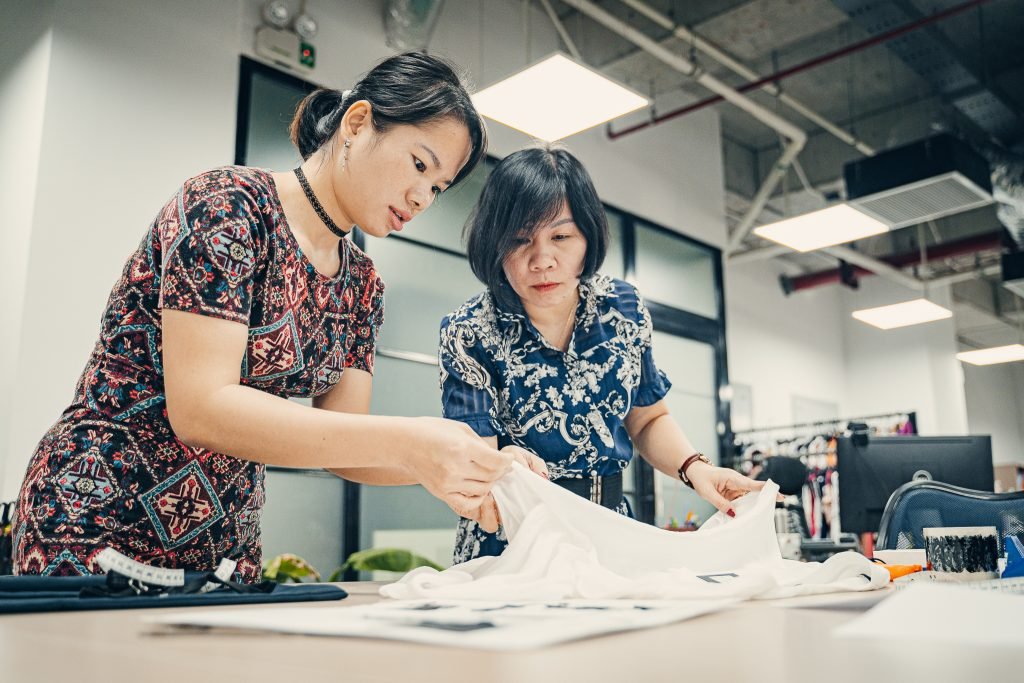
  • Pattern making: In-house digital grading

This agility allows brands to approve prototypes quickly and move to bulk production without missing seasonal windows.

Production, Quality Control, and Shipping

Once samples are approved, production shifts to the factory floor. Facilities in hubs like Nam Dinh province often run dozens of lines simultaneously. For instance, a standard mid-sized facility might operate 18 production lines with a workforce of 800, ensuring scalable output for large global programs.

Logistics are equally streamlined. Goods are typically exported via Hai Phong Port (HPH) for sea freight or Hanoi Airport (HAN) for air cargo. Quality control happens at every stage, often using a “traffic light” system or inline inspections to catch defects early, ensuring the final pack-out meets international AQL standards.

Full OEM/ODM Services Explained

Modern manufacturing in Vietnam revolves around OEM (Original Equipment Manufacturer) and ODM (Original Design Manufacturer) models. This is a “one-stop-shop” approach. Instead of the brand managing five different vendors for fabric, trims, and sewing, the manufacturer handles the entire vertical supply chain.

Services typically include:

  1. Fabric Sourcing & Development: Finding the right knit or woven blend.
  2. Technical Design: Pattern making and grading for size ranges.
  3. Bulk Production: Cutting, sewing, and finishing.
  4. Logistics: Packing and shipping assistance.

This vertical management structure gives buyers better control over price and delivery schedules.

Vertical management process for apparel manufacturer by Capital World Group

Best Practices for Partnering with Vietnam Manufacturers

Success in Vietnam requires more than just sending a tech pack. You need to vet your partners carefully to ensure they match your brand’s ethical and technical standards.

  • Verify Certifications: Look for globally recognized benchmarks. Essential standards include Higg FEM (environmental), Amfori BSCI (social compliance), and SLCP (Social Labor Convergence Program).
  • Centralize Communication: Working with multi-location teams can be messy. Insist on a “single window” of communication—one project manager who coordinates between the fabric sourcers in China and the factory in Vietnam.
  • Check Vertical Capabilities: Ask if they own their factories or just subcontract. Owners, like Capital World Group with their Kiara Garments facility, offer better transparency and accountability than pure trading houses.

Common Mistakes to Avoid When Sourcing Ladies’ Apparel from Vietnam

Even experienced buyers run into trouble by overlooking local nuances. Here are the pitfalls that can derail a production run in 2026.

1. Ignoring Geography

Vietnam is long. Sourcing fabric in the South while sewing in the North adds transit time. Ensure your factory has local material hubs or efficient logistics, like sourcing offices in nearby textile centers (e.g., Shaoxing or Taipei).

2. Overlooking MOQs

Factories have sweet spots. A standard Minimum Order Quantity (MOQ) is often 3,000 pieces per style. Pushing for lower volumes without negotiating upcharges can lead to de-prioritized orders.

3. Skipping Social Compliance

Never assume a factory is compliant. If a manufacturer cannot produce a valid, recent audit report (like BSCI or ISO 9001), it is a major red flag for brand reputation risks.

Leading Ladies’ Apparel Manufacturers in Vietnam for 2026

Finding the right partner depends on your specific product needs. Below is a comparison of key players in the Vietnamese market, ranging from massive state-owned enterprises to agile, family-owned vertical manufacturers.

ManufacturerSpecializationKey StrengthCapacity/Scale
Capital World GroupLadies’ Knit & Woven FashionVertical Management: Owns Kiara Garments factory; offices in Shanghai/Taipei.3,000 pcs MOQ; 18 lines; 800+ staff
VinatexGeneral ApparelMassive scale; state-owned conglomerate.410 million units/year
ViettienMenswear & LadieswearLong history (est. 1975); domestic market leader.High-volume production
MUK Ltd.Fashion WearLadies fashion focus.~200,000 garments/month

Capital World Group stands out for mid-to-high-end ladies’ apparel brands requiring speed and full-service development, leveraging over 40 years of family-owned experience.

Key Trends and Future Outlook for 2026

The industry is pivoting hard toward sustainability and digitalization. It is no longer enough to just make clothes; factories must minimize their footprint.

“We recognize that our industry is a significant contributor to global warming… We not only want to be part of this change, but to drive the change as an industry leader.” — Capital World Group Sustainability Statement

Major trends for 2026 include:

  • Green Manufacturing: Widespread adoption of the Higg Index to measure environmental impact.
  • Vertical Integration: More factories opening their own fabric mills or sourcing offices to control costs.
  • Continued Growth: Vietnam’s textile industry projects continued growth, building on strong 2025 export figures (vietnam.incorp.asia).

Conclusion: Finding Your Ideal Manufacturing Partner

Sourcing ladies’ apparel in Vietnam in 2026 offers a powerful balance of quality, cost, and ethics. The key is finding a partner that offers vertical management—someone who understands the fabric market in China and Taiwan while operating efficient, compliant production lines in Vietnam.

Look for manufacturers who are transparent about their supply chain, hold current sustainability certifications like SLCP and BSCI, and own their facilities. Whether you are a global retailer or a growing fashion label, the right Vietnamese partner can provide the agility and integrity needed to succeed in today’s market.

Frequently Asked Questions

What is the typical lead time for bulk production of ladies’ apparel in Vietnam?

Bulk production lead times average 45-60 days after sample approval, depending on order size and fabric availability. Vertically integrated factories like those in Nam Dinh achieve 30-45 days for standard runs of 3,000+ pieces.

How do Vietnam manufacturers ensure sustainability compliance for ladies’ apparel?

They use Higg FEM for environmental audits, Amfori BSCI for social standards, and SLCP for labor convergence. In 2026, over 70% of top exporters hold these certifications, reducing carbon footprints by 20-30% via green dyeing.

What are the standard payment terms when partnering with Vietnam apparel factories?

Common terms are 30% deposit upfront, 50% after bulk production starts, and 20% upon shipment. Letters of credit (LC) are preferred for new buyers to mitigate risks.

Can small brands source ladies’ apparel from Vietnam with low MOQs?

Yes, some agile manufacturers offer 1,000-2,000 piece MOQs for knits with 20-30% upcharges. Negotiate for trial orders to test quality before scaling to standard 3,000-piece runs.

How has Vietnam’s ladies’ apparel export growth impacted global pricing in 2026?

Exports hit $44 billion in 2026, driving 5-10% cost reductions via FTAs like CPTPP. Ladies’ woven dresses now average $8-12 FOB, competitive with Bangladesh while offering faster 4-6 week deliveries.

Check out our related articles

Read More
fabric testing standard

Fabric testing standards: A complete guide for quality apparel production

Fabric testing standards play a crucial role in ensuring that every garment meets the quality, durability, and performance expectations of today’s consumers. From fiber selection to finished apparel, standardized testing helps manufacturers control consistency, reduce risk, and comply with global market requirements. As consumer demands and regulatory expectations continue to rise, reliable fabric testing becomes essential for building trust and protecting brand reputation.

In this guideline, you will discover everything you need to know about fabric testing standards and how they protect your product quality.

Fabric Quality Standards

Quality supporting elements in fabric testing standards provide structured methods for evaluating textile performance, appearance, and safety. These standards focus on key areas such as textile construction, colorfastness, dimensional stability, strength, and physical performance.

ISO (International Organization for Standardization)

ISO standards are globally recognized and widely used across textile manufacturing countries. They focus on harmonizing testing methods to ensure consistency and comparability in fabric performance, particularly for colorfastness, conditioning, and dimensional stability.

  • ISO 105 applies to colorfastness testing. It evaluates how knitted fabrics resist color change or staining when exposed to washing, rubbing, perspiration, light, or other environmental factors. Its primary purpose is to ensure color durability and appearance retention.
  • ISO 139 defines standard atmospheric conditions for textile testing. It applies to all physical and mechanical tests in the knitting industry, ensuring fabrics are conditioned under controlled humidity and temperature for accurate and repeatable results.
  • ISO 6330 focuses on domestic washing and drying procedures. It evaluates dimensional stability, shrinkage, and appearance changes in knitted fabrics after laundering, helping manufacturers predict real-life garment performance.

AATCC (American Association of Textile Chemists and Colorists)

AATCC standards are commonly used in North American markets and emphasize color performance, fabric durability, and consumer-use simulation. They are especially relevant for apparel brands exporting to the United States.

  • AATCC 61 tests colorfastness to laundering using accelerated washing methods. It applies to dyed or printed knitted fabrics and helps assess how well colors withstand repeated washing over time.
  • AATCC 135 evaluates the dimensional changes of fabrics after home laundering. In the knitting industry, it is used to measure shrinkage, growth, and distortion, ensuring garments maintain fit and shape after washing.
  • AATCC 16 measures colorfastness to light exposure. It determines how knitted fabrics respond to artificial or natural light, helping prevent fading in garments worn or displayed under strong lighting conditions.

ASTM (American Society for Testing and Materials)

ASTM standards focus on the physical performance and mechanical properties of textiles. They are widely used to evaluate fabric strength and construction integrity.

  • ASTM D1686 applies to seam strength testing. It evaluates how well seams in knitted garments withstand stress, helping ensure durability during wear and movement
  • ASTM D5034 measures breaking strength and elongation of fabrics. It assesses tensile performance in knitted textiles, ensuring fabrics can withstand pulling forces without failure
  • ASTM D737 evaluates air permeability. It measures how easily air passes through knitted fabrics, supporting comfort, breathability, and performance requirements in apparel design.

What is the fabric testing standard? 

Fabric testing standards are internationally recognized methods used to evaluate how fabrics perform under different conditions, including washing, wear, strength, and color exposure. They define uniform procedures and benchmarks for measuring fabric quality and performance.

These standards ensure consistent, reliable results across suppliers and production countries, helping brands maintain quality control, reduce defects, and meet global compliance requirements.

discover fabric testing standard

Why fabric testing standards matter 

Fabric testing standards are essential for ensuring that every material used in apparel performs reliably throughout its entire life cycle. By evaluating fabrics under controlled conditions, these standards help verify resistance to shrinkage, fading, tearing, and other common quality issues that often lead to customer dissatisfaction and returns. 

For fashion brands, consistent testing reduces production risks, improves product durability, and supports smoother development and sourcing processes. Ultimately, fabric testing standards protect brand reputation while ensuring garments meet performance expectations from design to retail.

What often goes wrong in fabric testing 

Fabric testing errors often occur when standardized procedures are not followed consistently, leading to inaccurate results and costly quality issues. Small deviations in preparation or testing conditions can significantly affect performance data, especially in knitted and apparel fabrics. When these mistakes go unnoticed, they increase the risk of production defects, failed inspections, and customer complaints.

Common fabric testing mistakes include:

  • Not conditioning fabrics under ISO 139 before testing, which ensures samples reach moisture equilibrium
  • Using incorrect washing procedures under ISO 6330 or AATCC 135
  • Misapplying colorfastness tests that do not match the fabric’s intended end use
  • Cutting test samples against the grain affects the strength and elongation results
  • Ignoring deviations in laboratory temperature and humidity
common fabric testing mistakes

How Capital World Group ensures consistent quality and reliability in every garment 

Consistent fabric testing and quality control are central to Capital World Group’s manufacturing approach. By integrating international testing standards into every stage of production, the company ensures garments meet performance, durability, and compliance expectations across global markets.

Why customers choose Capital World Group:

  • Recognized quality and sustainability credentials, including ISO 9001, Higg FEM, amfori BSCI, SLCP, and access to RCS, BCI, and FSC-ready fabrics
  • Full-package manufacturing solutions covering design support, sampling, sourcing, production, and logistics
  • Advanced in-house technical expertise ensuring accurate fit, construction quality, and production consistency
  • Specialized product expertise in high-quality knit and woven womenswear, such as tops, dresses, skirts, pants, shorts, and jumpsuits

Collaborate with Capital World Group for expertly made, competitively priced womenswear that meets global standards.

Read More
plus size grading myths

6 plus-size grading myths that cost brands money

Plus-size fashion is one of the fastest-growing segments in the apparel industry, driven by rising consumer demand for better fit and comfort. However, many brands still rely on outdated or incorrect grading assumptions that compromise garment performance and wearer experience. When plus-size garments, especially knitwear that is not graded properly, brands face higher return rates, increased production waste, and avoidable revenue loss.

In this guideline, you’ll uncover the hidden misconceptions in plus-size grading that silently drain profit from many fashion brands.

1. You can just scale up smaller sizes to create plus sizes

Why this myth exists

Many brands treat grading as a linear mathematical process, assuming measurements can simply increase evenly from straight sizes. This approach appears efficient when teams lack dedicated plus-size fit expertise.

Why is it wrong

Body proportions change as sizes increase, so bust, armhole, shoulder slope, and torso distribution require reshaping. Simple scaling leads to distorted silhouettes, poor drape, and pressure points, especially in knit garments.

The better approach

Develop plus-size grading rules separately, using block patterns designed specifically for plus-size body structures and fabric behavior.

2. Plus-size grading doesn’t impact cost much

Why this myth exists

Many brands focus primarily on visible costs such as fabric, trims, and labor, while grading is seen as a small technical step in the background. Because grading costs are paid upfront and not tracked against returns or rework, its financial impact is often underestimated.

Why is it wrong

Poor plus-size grading increases fit issues, resampling, and production rejections. Higher return rates and fabric waste quietly raise total product cost and erode margins.

The better approach

Invest in accurate plus-size grading early to reduce downstream costs, improve first-sample approval, and stabilize bulk production.

3. One fit model is enough for plus size

Why this myth exists

Using one fit model feels practical and cost-effective, especially for brands trying to speed up development. Many teams assume that if a garment fits one plus-size body well, it will fit the rest of the size range similarly.

Why is it wrong

Plus-size bodies differ widely in shape, proportion, and weight distribution, even within the same size. A garment that fits one model well may pull, twist, or feel uncomfortable on another, leading to inconsistent fit and higher return rates.

The better approach

Use multiple fit reference points or validate grading across several models. This helps brands identify fit issues early and create garments that feel comfortable and consistent across the entire plus-size range.

one fit model is enough for plus size

4. One standard size chart works for all bodies

Why this myth exists

Brands rely on generic size charts to keep production simple and consistent across regions and collections. Using one chart feels efficient and avoids extra development work, especially when managing multiple product lines.

Why is it wrong

Plus-size consumers differ significantly in bust-to-waist ratios, hip fullness, and vertical proportions. One chart cannot deliver a reliable fit across diverse body types.

The better approach

Use more than one fit reference or validate fit across multiple plus-size sizes. This helps brands see how the garment behaves on different body shapes and improves overall fit accuracy across the size range.

one standard size chart works for all bodies

5. Bigger sizes should just get longer lengths

Why this myth exists

Many people assume that as body size increases, height increases as well. As a result, brands often add length automatically when grading up sizes without checking how garments actually sit on the body.

Why is it wrong

Height does not increase proportionally with size. Adding length without considering body balance causes garments to sit incorrectly and affects the silhouette and movement.

The better approach

Instead of automatically adding length, brands should treat length and width as separate grading decisions. By adjusting garment length based on fit intent, body balance, and product type not size alone, brands achieve better proportions 

6. Plus sizes only need more ease

Why this myth exists

Stretch fabrics and comfort-driven design lead brands to believe ease alone solves plus-size fit challenges. So brands often believe adding extra ease will automatically improve fit

Why is it wrong

Too much ease can cause garments to look shapeless, sag, or twist. Comfort comes from correct shaping, not just extra volume.

The better approach

Adjust key pattern areas such as shoulders, armholes, bust, and waist while controlling ease. This creates garments that feel comfortable, supportive, and flattering at the same time.

Best practices for effective plus-size grading in knitwear 

Effective plus-size grading in knitwear requires a fit-first approach that reflects real body proportions and fabric behavior rather than simple size enlargement. Knit fabrics respond differently to stretch, weight, and recovery as sizes increase, making precise grading essential for comfort, shape, and durability. Brands that invest in thoughtful plus-size grading achieve better fit consistency, fewer returns, and stronger customer loyalty.

Core recommendations for brands include:

  • Develop dedicated plus-size base blocks instead of enlarging straight-size patterns
  • Adjust shoulder, armhole, sleeve, and hip curves based on real plus-size body proportions
  • Recalculate ease values for larger sizes to maintain comfort and shape
  • Test fit on multiple plus-size models to capture diverse body variations
  • Consider yarn weight, fabric density, and stretch behavior when setting grade rules
practices for effective plus-size grading in knitwear

How Capital World Group helps brands avoid plus-size grading myths 

Avoiding plus-size grading mistakes requires both technical expertise and production experience. Capital World Group supports fashion brands by integrating fit accuracy into every stage of development, especially for ladies’ knitwear. By combining pattern knowledge with hands-on manufacturing control, the team helps brands reduce costly errors and improve plus-size performance.

  • Expert pattern making and grading services that apply proper plus-size grade rules rather than simple size scaling
  • Vertical integration from fabric sourcing to bulk production, reducing miscommunication and execution risks
  • Fast sample turnaround and reliable production capability to validate fit early and avoid reworks
  • Deep industry experience and trend insight from a team specialized in women’s knitwear

Connect with Capital World Group today to develop better-fitting, better-performing plus-size products.

Read More
apparel shipments

Air Freight vs. Sea Freight for Apparel Shipments

Vietnam has become one of the leading hubs for apparel manufacturing, especially for brands producing medium to large-sized orders. However, when it comes to shipping apparel batches, choosing between air freight and sea freight can directly impact costs, delivery timelines, and even product launch success. Each option offers distinct advantages depending on order size, urgency, and budget priorities. 

This guide breaks down the key differences between air and sea freight for apparel shipments, enabling fashion brands to make informed decisions.

Side-by-side comparison table

CategoryAir freightSea freight
Transit time to the US3–8 days from origin airport to US destination airport, including export and import customs clearance (excluding final-mile domestic delivery)20–40 days from origin port to US port, including ocean transit and port handling (excluding inland trucking or rail delivery within the US)
Cost structureCharged based on chargeable weightCharged based on cubic meter (CBM) for LCL shipments
Best for (Products)Ideal for samples, first orders, urgent replenishment, or time-sensitive fashion drops.Best for repeat orders, bulkier garments, and brands prioritizing cost efficiency over speed
Risk of delayLower risk overall, with more predictable schedulesHigher risk of delay due to port congestion, vessel rollovers, customs inspections, and peak shipping seasons
Cost efficiencyLowHight
Ideal product typeLightweight, high-value garmentsHeavier garments, bulkier packaging

This comparison highlights the trade-off fashion brands face when shipping apparel batches to large and distant markets like the U.S. Air freight prioritizes speed, control, and launch certainty but comes at a premium cost, making it suitable for time-sensitive or high-value products. Sea freight, while slower and less predictable, offers significant cost advantages for brands with flexible delivery windows. Choosing the right method depends on product value, urgency, seasonal timing, and overall supply chain strategy.

Why freight choice can make or break apparel orders 

For apparel batches, freight is not just a logistics decision; it directly impacts cost control, delivery timelines, and brand credibility. Unlike small orders, bigger shipments are more sensitive to freight rates, consolidation fees, and scheduling delays. 

Choosing the wrong shipping method can lead to missed product launch dates, unexpected cost increases, or inventory arriving too late for the selling season, directly affecting cash flow and market performance.

Understanding air freight for apparel

Air freight is a shipping method that transports apparel by aircraft, offering the fastest transit times between manufacturing hubs like Vietnam and global markets. For fashion brands handling apparel batches, air freight is often chosen when speed, reliability, and launch timing are more critical than shipping cost. While it comes at a premium, air freight can play a strategic role in reducing risk and supporting time-sensitive deliveries.

air freight for clothing orders

Advantages of air freight for clothing orders

  • Fast transit times, often between 3–8 days
  • Ideal for samples, first orders, and urgent product launches
  • Lower risk of long port congestion or vessel delays
  • Better control over delivery schedules and arrival dates

Limitations of air freight

  • Higher cost per kilogram compared to sea freight
  • Shipping costs increase quickly with heavier fabrics or bulky packaging
  • Limited flexibility for oversized or high-volume shipments.

When air freight makes sense for fashion brands

  • Shipping development samples or pre-production prototypes
  • Launching new collections with fixed retail or marketing deadlines
  • Delivering high-value or lightweight garments
  • Managing partial shipments to keep timelines on track, some brands ship a portion of an order by air to support early sales while the balance moves by sea.

Key notes for shipping apparel by air 

  • Use air freight for partial shipments when timing is critical
  • Optimize carton size and packing to reduce chargeable weight
  • Plan production and packing carefully to avoid last-minute surcharges

Overview of sea freight for apparel 

Sea freight is one of the most widely used shipping methods for apparel, especially for brands managing cost-sensitive or repeat orders. Although transit times are longer than air freight, sea shipping offers greater cost efficiency and capacity, making it suitable for heavier garments and less time-critical deliveries. For apparel shipments, sea freight can still be a practical option when planned carefully and aligned with production and sales timelines.

sea freight for apparel

Advantages of sea freight for apparel batches

  • Lower cost per unit compared to air freight
  • Suitable for heavier garments and larger carton volumes
  • Better option for non-urgent deliveries
  • More environmentally efficient for larger shipment volumes

Limitations of sea freight

  • Long transit times, typically ranging from 20 to 40 days
  • Higher risk of port congestion and schedule disruptions
  • Less predictable delivery timelines compared to air freight

When sea freight is the better option

  • Shipping repeat or replenishment orders
  • Delivering seasonal stock with flexible arrival windows
  • Shipping heavier garments or dense fabric styles like knitwear, denim, and multi-piece sets
  • Brands prioritizing cost efficiency over speed, especially on lower-margin items.

Key notes for shipping garments by sea 

  • Plan shipments early to avoid peak-season congestion
  • Factor in buffer time for customs clearance and potential port delays
  • Ensure cartons are properly moisture-protected to prevent fabric damage during transit
  • Confirm Incoterms and port responsibilities, whether shipments are FOB, CIF, or DDP, clearly, to avoid unexpected costs or delays.
  • Work with freight forwarders experienced in apparel

Common mistakes fashion brands make when shipping apparel batches 

When shipping large apparel batches, brands often underestimate how logistics decisions affect cost, timing, and product success. Unlike small orders, large shipments leave little room for error, and poor freight choices can quickly erase margins or delay market entry. 

These mistakes often lead to higher costs, delays, or missed market opportunities:

  • Choosing the cheapest shipping option without considering delivery timelines
  • Using sea freight for first orders with tight launch or marketing deadlines
  • Ignoring packaging optimization and inefficient carton sizing
  • Failing to account for peak-season port congestion and customs delays

Capital World Group will support fashion brands by integrating freight planning into the manufacturing process from day one. With vertically integrated manufacturing from fabric sourcing, sampling, packing, to export, the team helps brands choose the most efficient shipping method for each apparel batch, balancing order size, fabric weight, cost, and launch timelines. Through its vertically managed production approach, Capital World Group reduces logistics risk while keeping deliveries aligned with your goals. 

Contact us today to optimize your apparel production and shipping strategy.

Read More
fast fashion vs sustainable fashion

Fast fashion vs. Sustainable fashion: A Comparison of environmental impacts

Fast fashion and sustainable fashion represent two contrasting approaches within the global apparel industry, each with very different environmental impacts. As clothing production accelerates worldwide, concerns over water consumption, carbon emissions, chemical pollution, and textile waste continue to grow. According to industry data, the fashion industry is now recognized as the second-largest consumer of the world’s water supply, intensifying pressure on natural resources. 

This guideline will clarify both models, analyze their environmental consequences, and help brands make more responsible sourcing decisions.

Comparing fast fashion and sustainable fashion’s environmental impact 

The contrast between fast fashion and sustainable fashion demonstrates that sourcing and production decisions have long-term environmental consequences. Brands that prioritize sustainability can reduce risk, strengthen trust, and contribute to a more responsible apparel industry.

Impact categoryFast fashionSustainable fashion
Water usageVery high: 79–93 billion m³/year globally; 1 cotton T-shirt ≈ 2,700 L Much lower: Organic/recycled fibers reduce water use by 88% 
Carbon emissionsHigh: ~10 % of global carbon emissions from production and logisticsLower: Circular fashion initiatives have diverted over 30% of textile waste from landfills since 2020, promoting reuse and recycling
Chemical pollutionSignificant: 17–20 % of industrial water pollution from dyes and finishing.Minimal: Eco-friendly dyes, less toxic chemicals, water recycling reduces pollution
Material sourcingMostly conventional cotton, synthetic fibers, and non-certified materialsCertified organic, recycled, or sustainably sourced fibers
Product lifespanShort: designed for trend-driven disposabilityLong: designed for durability and multiple uses

What is fast fashion? 

Fast fashion is a business model centered on rapidly replicating runway or social media trends and producing them at scale. It prioritizes speed-to-market, short product lifecycles, low retail prices, and high sales volume, often at the expense of durability and environmental responsibility.

fast fashion

Advantages of fast fashion

  • Affordable pricing for consumers: Fast fashion leverages low-cost materials, efficient production, and global supply chains to offer trend-driven apparel at accessible prices.
  • Fast response to trends and market demand: Brands can quickly translate runway looks or viral trends into retail-ready products.
  • Scalable production volumes: Fast fashion models are designed for mass production, enabling brands to manufacture large quantities quickly
  • Short lead times for brands: Compressed design-to-delivery timelines allow brands to test trends with minimal delay

Disadvantages & environmental risks

  • Significant environmental footprint: Fast fashion consumes large amounts of water, energy, and raw materials, contributing heavily to pollution and carbon emissions.
  • High textile waste generation: Short product lifecycles encourage overconsumption, resulting in millions of garments being discarded each year, most of which end up in landfills or are incinerated.
  • Reputational and regulatory risks for brands: Increased scrutiny from consumers, governments, and NGOs exposes brands to backlash, fines, or loss of trust when sustainability standards are not met.
  • Unsustainable pressure on manufacturing supply chains: Tight timelines and low costs often strain factories, workers, and environmental standards.

Environmental impact of fast fashion 

Fast fashion’s emphasis on speed and volume creates significant environmental consequences across water use, emissions, and chemical pollution.

  • Water usage: The fashion industry contributes around 20% of global wastewater and 8% of global carbon emissions, with greenhouse gas emissions projected to increase by 50% by 2030 due to fast fashion production cycles.
  • Carbon emissions: Apparel production accounts for approximately 10% of global carbon emissions, driven by energy-intensive manufacturing, transportation, and overproduction.
  • Chemical pollution: Textile processing and dyeing release toxic chemicals and untreated wastewater into rivers and soil, damaging ecosystems and posing serious health risks to local communities.

What is sustainable fashion?

Sustainable fashion is an approach to apparel design and production that aims to minimize negative environmental and social impacts. It prioritizes responsible material sourcing, ethical manufacturing, durability, and transparency across the entire supply chain, from raw materials to finished garments.

sustainable fashion

Advantages of sustainable fashion 

  • Reduced environmental impact: Sustainable fashion lowers water use, energy consumption, and pollution by choosing eco-friendly materials and cleaner production processes.
  • Stronger brand trust and long-term value: Brands committed to sustainability build credibility with increasingly conscious consumers, supporting long-term loyalty and differentiation.
  • Better compliance with global sustainability standards: Using certified materials and ethical practices helps brands meet international regulations and retailer requirements.
  • Improved supply chain resilience: Responsible sourcing and long-term supplier partnerships reduce risk and improve production stability.

Challenges & limitations 

  • Higher upfront production costs: Sustainable materials and ethical processes often cost more initially than conventional options.
  • Limited availability of certified materials: Access to certified or recycled fabrics can be constrained depending on the region and supplier networks.
  • Minimum order quantity (MOQ) constraints: Many sustainable mills require higher MOQs, which can be difficult for smaller brands that only need limited quantities or are testing new products.

Environmental benefits of sustainable fashion 

  • Lower water consumption: Recycling and reusing clothing can reduce water use by up to 70% compared to producing new garments.
  • Reduced carbon footprint: Sustainable manufacturing methods and material choices can cut overall fashion industry greenhouse gas emissions by up to approximately 40% versus conventional practices.
  • Waste reduction: Sustainable clothing lasts about 30% longer on average due to better materials and construction, significantly reducing textile waste over time

What fashion brands should consider when choosing suppliers? 

Choosing the right supplier plays a critical role in reducing environmental impact while maintaining product quality and commercial viability. Brands should look beyond pricing and timelines to evaluate how suppliers manage resources, ensure compliance, and support long-term sustainability goals. A well-aligned supplier can help brands balance responsibility with scalability.

Key fashion brands should evaluate:

  • Environmental criteria: water management practices, energy efficiency, waste treatment, and emission control
  • Certifications that matter: Standards such as ISO 9001, Higg FEM, BSCI, GRS, and RCS confirm verified quality and sustainability performance. Capital World Group’s adherence to these frameworks supports responsible production and gives brands confidence in meeting international market requirements.
  • Reducing impact without increasing MOQ: smart production planning, material optimization, and flexible sourcing strategies
  • Consider some common sourcing mistakes: relying on unverified sustainability claims, skipping audits, or focusing only on fabric choice instead of full supply chain practices
consider when choosing suppliers

Capital World Group – Advancing sustainable apparel manufacturing for your brands 

With over 40 years of experience serving international fashion brands, Capital World Group supports responsible apparel production without compromising quality, efficiency, or commercial viability. Our vertically integrated manufacturing model gives brands greater control over environmental impact while maintaining consistent standards across every stage of production. By combining technical expertise with verified sustainability practices, we help brands navigate the transition toward more responsible sourcing and manufacturing.

Get in touch with us to build a long-term partnership with a dependable, sustainable apparel manufacturer

Read More