Capital World Group
  • Shanghai
  • Taipei
  • Shaoxing
  • Hanoi
  • Nam Dinh
operation at ladies’ wear factory in Vietnam

Import clothes from Vietnam to the USA and Canada?

International trade in the fashion industry is complex. Ensuring garment quality, meeting strict customs regulations, and managing global shipping can be challenging, even for established brands. Sourcing apparel from Vietnam, one of the world’s top textile producers, adds layers of documentation and coordination.

However, with the right strategy, Vietnam offers huge opportunities for competitive pricing and skilled manufacturing. This article will guide you through the process of importing clothes from Vietnam into North America.

The Vietnamese garment market

The Vietnamese garment market continues to grow, with apparel export volumes up 9% year-on-year as of May 2025. In the first five months alone, exports reached US$17.58 billion, according to the Vietnam Textile and Apparel Association (VITAS).

The United States is the dominant buyer, taking 38–48% of exports. In Q1 2025, total shipments to the US across all goods surged to US$31.4 billion, up 22% from the prior year.  Japan takes about 10% of Vietnam’s textile exports, South Korea 7–10%, and the EU around 9–10%, with solid demand from the Netherlands, UK, and Germany. Vietnam also supplies to more than 130 countries worldwide alongside other clothing manufacturing countries.  ASEAN markets account for 6.6%, while Canada, China, the Middle East, and Africa represent 28%.

top 10 vietnam garment export markets 2024

Source: Vietnam Customs.

With the current sustainable trend in garment manufacturing, many producers now work with eco-materials and hold certifications such as GOTS or OEKO/TEX along with digital adoption in automation and AI technology in up to 40% of facilities. Production is moving beyond cut-make-trim toward ODM (Original Design Manufacturing) and OBM (Original Brand Manufacturing) models that give manufacturers greater design and branding roles.

Reflecting these shifts, Kiara Garments Factory of Capital World Group provides sustainable garment manufacturing for brands with ISO 9001, amfori BSCI, and Higg FEM certifications, ensuring the highest quality and sustainability standards.

Ensuring alignment with Vietnam export regulations

When exporting clothing from Vietnam, the exporter and importer must prepare mandatory documents to satisfy local laws and smooth customs clearance.

Custom declaration form

Each customs declaration form must specify details about the shipment. This includes the consignor and consignee information, the country of origin of the goods, and the Harmonized System (HS code) classification for the apparel.

It also lists the shipping details (mode of transport, port of loading, and destination), a clear description of the goods (e.g., “100% cotton women’s blouses”), the labeling and packaging information, the total value of goods, and the purpose of the shipment (for export as a commercial sale, samples, etc.).

Bill of Lading

The carrier issues this document to confirm receipt of the goods for transport. It records the goods loaded on the ship (or plane/truck) and serves as a contract of carriage. The B/L includes details like the vessel name, departure and destination ports, a list of the shipped items, and the consignee to whom the goods will be delivered.

Commercial contract

The exporter and importer must finalize a commercial contract that sets out legal, financial, and quality details before shipment. This agreement assures product specifications and standards, confirming that all exported goods meet benchmarks such as ISO or third-party quality checks.

  • Contract Number, Date, and Parties: States the reference number, signing date, and full legal details of the Seller (exporter) and Buyer (importer).
  • Product Commodity Details: It lists the clothing type, material, style, HS codes for customs, and origin (e.g., “Made in Vietnam”).
  • Quality: Defines standards via samples, ISO/ASTM criteria, or third-party checks like SGS; may note warranties.
  • Quantity: Specifies total goods ordered, unit of measure, and acceptable tolerance (e.g., ±5%).
  • Price: Outlines unit price, total value, and currency under an Incoterm (e.g., FOB Haiphong or CIF Los Angeles).
  • Shipment Terms: Sets Incoterms 2020 rules, delivery point, mode (sea/air), and final destination.
  • Payment Terms: States total payable, method (L/C or transfer), responsibility for charges, and timing tied to the Bill of Lading.
  • Packing and Marking: Details packaging, labels, and marks to ensure compliance for export and warehouse use.
  • Penalties: Establishes fines for late shipment or defective goods, ensuring contract discipline.
  • Insurance: Assigns who covers cargo insurance and specifies coverage under the chosen Incoterm.
  • Force Majeure: Lists extraordinary events (war, disasters, bans) excusing performance without liability.

Learn more about FOB term and how it is differentiated from CM (Cut-Make).

Commercial invoice

This is the bill for the goods prepared by the seller. It specifies the amount the buyer must pay for the shipment, the agreed currency and payment method, and typically the seller’s bank account details for the transfer. This invoice is used by customs in the importing country to assess the shipment’s value for duty calculation. It should match the contract and L/C terms. If the shipment is not a typical sale – e.g., samples or gifts – sometimes a pro forma invoice is used instead, but a commercial invoice is standard for normal apparel orders.

Packing list

It details what goods are packed in each box or container, including item descriptions, quantities per carton, carton numbers, dimensions, and weight (net weight of goods and gross weight including packaging).

The packing list mirrors the products and quantities on the invoice but omits any pricing or value information. Its purpose is purely logistical: freight forwarders and customs officers use it to plan storage, arrange handling equipment, and verify the shipment’s contents during inspections.

Export taxes and VAT

Vietnam generally exempts apparel goods from export taxes. This means that most clothing goods are tax-exempt when exported depending on the country, keeping clothes from Vietnam competitively priced for international buyers.

Applying Incoterms in a commercial contract

Incoterms define how shipping, insurance, and customs duties are allocated between parties. In Vietnamese export contracts, the chosen term clarifies who pays for freight, insurance, and duties, and where risk transfers from seller to buyer.

Incoterms 2020 include:

  • CIP (Carriage and Insurance Paid To)
  • CFR (Cost and Freight)
  • CIF (Cost, Insurance, and Freight)
  • CPT (Carriage Paid To)
  • EXW (Ex Works)
  • FCA (Free Carrier)
  • DPU (Delivered At Place Unloaded)
  • DAP (Delivered At Place)
  • FAS (Free Alongside Ship)
  • FOB (Free On Board)
  • DDP (Delivered Duty Paid)

Choosing logistics strategies

Most brands work with freight forwarders to manage shipping, since these experts can consolidate shipments and handle paperwork to reduce delays. The primary freight options are ocean (sea) and air freight.

Logistics options

logistics strategies when importing clothes from vietnam sea freight air freight

Sea Freight – Ideal for companies optimising logistics costs. Ocean transport is the most economical option for bulk orders, though transit to North America can take 3–5 weeks. Two common methods are:

  • FCL (Full Container Load): Best for large shipments. It reduces handling and potential damage.
  • LCL (Less than Container Load): Shares space with other shippers; cost-effective for small volumes but may face extra handling.

Air Freight – Used for smaller, lighter, or urgent shipments. Air cargo reaches the US or Canada within days, which is valuable for fast fashion or restocking. However, it costs far more per kilogram than sea freight and has size limits.

Delivery strategies

Choosing the right delivery model affects cost, risk, and responsibility once goods leave Vietnam. Providers usually offer three main service levels:

  • Port-to-Port: The carrier moves cargo from a Vietnam port (e.g., Haiphong) to a North American port (e.g., Los Angeles). It’s the cheapest option but leaves the importer responsible for customs, duties, and inland transport. Best for those with in-house logistics or a customs broker.
  • Port-to-Door: The forwarder handles transport from the Vietnam port through customs clearance and delivers directly to your warehouse. It balances cost and convenience, bundling inland delivery.
  • Door-to-Door: The provider collects cartons at the origin factory, manages export clearance, international shipping, customs, and last-mile delivery. It simplifies coordination and saves time, but comes at a premium price.

Regardless of strategy, always secure cargo insurance (marine or air) to protect shipment value against loss or damage.

Import regulations and customs duties of the US and Canada

Compliance with customs regulations is essential to prevent border delays. Both the US and Canada have specific textile requirements, so brands should prepare in advance and work with reputable Vietnamese textile manufacturers. Key considerations include:

  • Import quotas and restrictions: Most quotas ended in 2005, but check for embargoes or bans on certain goods (e.g., wildlife-based materials).
  • Tariff classification: Use the correct HS code; errors can cause penalties or higher duties.
  • Environmental regulation: Meet safety laws on dyes, chemicals, or fumigation for used apparel.
  • Intellectual property: Avoid counterfeit logos; customs enforce strict IP rights.
  • Product safety and labelling: Ensure origin, fiber content, and care labels meet US and Canadian rules.
  • Import permits & licenses: Not usually required, but some items (fur, exotic skins) may need permits.

Staying ahead of these rules ensures smooth clearance and avoids costly delays.

Specific documents and other considerations

Import rules differ between the US and Canada, and apparel shipments must meet country-specific filing requirements to avoid delays at the border.

Importing to the US

U.S.-bound importers must file an Importer Security Filing (ISF) at least 24 hours before vessel departure and submit the ACE Import Manifest Documentation through the Automated Commercial Environment. These records verify shipment details, support customs checks, and help importers clear goods legally.

  • Importer Security Filing (ISF): Advance electronic data on shipment details.
  • ACE Import Manifest Documentation: Carrier’s electronic manifest for US Customs.

Importing to Canada

Canada’s process mirrors the US import rules but uses its own systems. Canadian customs regulations require full invoice disclosure and declarations. Shipments valued above CAD$2,500 need a Canada Customs Invoice (CCI/CI1) listing vendor, purchaser, origin, currency, and item details.

The importer or broker must also file an Import Declaration electronically (B3 form) to confirm tariff classification, duty, and GST. Conversely, carriers must submit an Advance Commercial Information (ACI) eManifest before arrival (Canada’s version of the US manifest). Accurate paperwork is vital as errors risk penalties or seizure.

First-time importers should obtain a Business Number from the Canada Revenue Agency for clearance. Many apparel goods qualify for reduced or zero tariffs under the CPTPP, provided a valid Declaration of Origin is issued.

Choose the right partner for streamlined sourcing
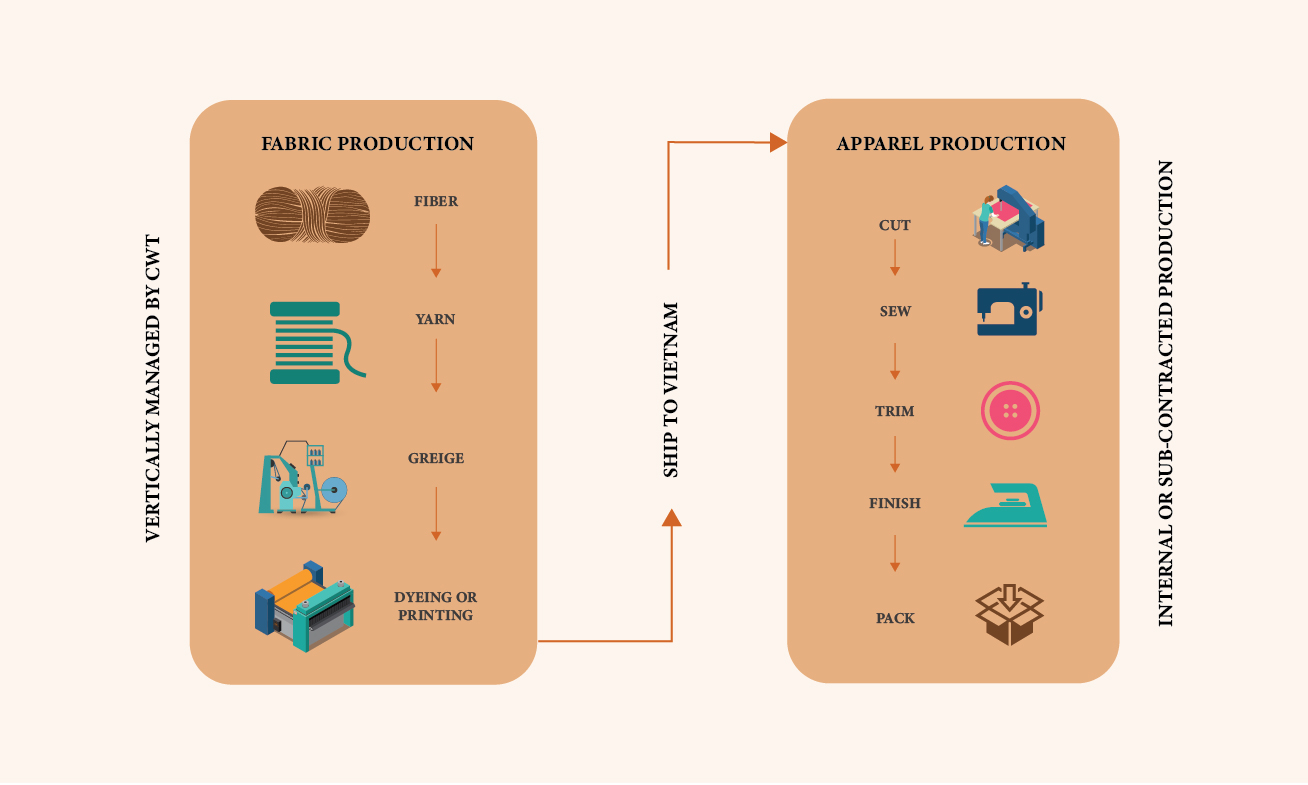
Vertical management process for apparel manufacturer by Capital World Group

Many brands face rising costs, compliance hurdles, and tight deadlines when sourcing apparel from Vietnam. Capital World Group provides the solution through a vertically integrated supply chain with an end-to-end process of fabric sourcing, production, and logistics. Contact us today to secure dependable Vietnam-based production.

See more: Vertical Integration vs. Nominated Suppliers: Which Supply Chain Model Is Right for Your Brand?

Read More
operation at ladies’ wear factory in Vietnam

How to find a textile manufacturer in Vietnam?

Vietnam textile manufacturers have played a major role in the country’s shift into a leading apparel sourcing hub. Over the past few decades, global brands have turned to Vietnam for its growing expertise and reliable production base. The textile industry is now a global cornerstone of the economy and a key partner for fashion sourcing teams. This guide highlights practical ways for your brand to find and evaluate the right suppliers in Vietnam through various methods.

Where to find a textile manufacturer in Vietnam

Finding the right supplier often means combining online research with real-world networking. Brands typically use multiple channels, such as search tools, trade fairs, and personal contacts, to pinpoint quality producers.

Online platforms

The internet is a quick way to find textile suppliers. You can use search engines and trade directories like the Vietnam Textile and Apparel Association (VITAS), the VietnamExport portal, and Statista for company listings and industry data.

Many Vietnamese factories maintain LinkedIn profiles or Facebook pages; so following manufacturer groups and official social accounts can reveal new leads. Online sourcing platforms can also make it easier to find potential suppliers and review their capabilities.

Attend industry events and exhibitions

Manufacturers often present their latest capabilities at major trade fairs. In Vietnam, key events include VIATT (Vietnam International Apparel, Textile and Technologies Expo) and SaigonTex, both regularly hosted at the SECC convention centre in Ho Chi Minh City. These exhibitions showcase new fabrics, machinery, and techniques.

Visiting in person lets buyers meet dozens of garment manufacturing suppliers at once and see sample work firsthand. Networking at shows also helps establish personal connections, making it easier to compare partners and ask detailed questions.

Work with local sourcing agents

A sourcing agent in Vietnam understands language and culture, can arrange factory visits, and handle negotiations on your behalf. Agents give practical, on-the-ground support for sourcing garment factory partners and monitoring production. Their services reduce the risk of miscommunication or quality lapses, though they come at a price: commissions or fees added to factory rates. For many brands, especially when entering a new region, the reliability and time saved outweigh the added expense.

Building networks

Personal connections remain one of the strongest ways to identify good suppliers. Recommendations from other brands, fashion associations, or industry forums often lead to reliable factories and better terms.

Local buyers and trade contacts can also point to manufacturers that are less visible online but deliver consistent results. Local connections also build trust, as factories may offer more competitive pricing or priority to well-connected buyers who come through a solid introduction.

Factory visits

Vietnam’s main manufacturing hubs are in Ho Chi Minh City (and nearby Dong Nai and Binh Duong) and the Hanoi area (Ninh Binh, Hai Phong). Touring factories on-site allows teams to inspect equipment, quality control systems, and working conditions directly. On-the-ground evaluation reveals a factory’s real capacity and standards.

For example, visiting a garment factory lets you confirm production processes and verify compliance with your brand’s requirements. Meeting managers face-to-face helps establish rapport and assess whether the partner is a good long-term fit.

IMG 7273

Capital World Group, one of the leading women’s clothing manufacturers in Vietnam, welcomes sourcing teams to visit its Kiara Garments facility in Ninh Binh. As a trusted Vietnam garment manufacturer, Capital World Group serves global apparel brands that value transparency and certified production. A factory visit offers direct assurance that our manufacturing processes meet international standards.

Let’s dive deeper into the 5 non-negotiable tips on how to choose a women’s wear manufacturer.

Textile and garment industry in Vietnam

Vietnam’s garment and textile sector remains a key economic engine. Its export value reached about US$44 billion in 2024 (up 11% year-on-year). The industry is organized into upstream (fiber production), midstream (fabric production and dyeing), and downstream (garment manufacturing) segments.

Vietnam textile manufacturers are overwhelmingly focused on apparel, VITAS reports show that:

  • Roughly 70% of the country’s 3,800+ textile factories make garments, while only 6% produce yarn.
  • 17% produce fabric and 4% handle dyeing.

These figures highlight Vietnam’s strength in garment output. For more details on Vietnam and other manufacturing hubs, check out this guide on the biggest clothing manufacturing countries in 2025.

What are the potential opportunities for Vietnam’s textile manufacturers?

Vietnam is solidifying its position in global sourcing through strategic policy and market trends. New trade agreements, sustainability initiatives, and workforce improvements create fresh openings for Vietnam’s suppliers.

Global trade agreements

Free trade deals have dramatically improved Vietnam’s market access. Under the EU–Vietnam FTA (EVFTA), 100% of Vietnam’s textiles will eventually enter the EU at zero tariff.

Recently, Vietnam has expanded market reach: in the first 10 months of 2024, Vietnam’s textile and apparel exports hit US$30.57 billion (up 10.5% over last year) with about 16% going to CPTPP markets.

These agreements let Vietnam’s textile industry offer tariff-free access to major economies, making Vietnamese goods more price-competitive. EVFTA and CPTPP provide strong momentum for Vietnam’s exporters by reducing costs for European and Pacific buyers.

Sustainable production practices

Vietnamese manufacturers have stepped up eco-friendly production to meet strict global standards. Many factories now hold international certifications like OEKO-TEX®, GOTS, Global Recycled Standard (GRS), and Fair Trade. For more information on the standard certifications, check out this guide of how to achieve BSCI, WRAP and GOTS certifications.

These labels assure buyers of safe materials, ethical labor, and low environmental impact. In effect, Vietnam is building a pool of sustainable textile suppliers that appeal to brands with strong corporate social responsibility policies. This compliance with green standards strengthens Vietnam’s appeal as a responsible sourcing destination.

High-quality workforce

Vietnam’s expanding and improving labor force is another asset. In 2024, about 53 million working-age people were in the labor pool; an increase of roughly 575,000 from the previous year, with 51.9 million employed. Employment rose by about 1.1% year-on-year, while unemployment remained low at 2.2%.

The government is also reforming training and labor policies, updating vocational education, wage systems, and labor relations to meet modern demands. These changes are creating a more skilled and stable workforce. This helps strengthen Vietnam textile manufacturers, improving the quality and reliability of their production teams.

Together, robust trade agreements, sustainability commitments, and a capable workforce make Vietnam highly competitive in global sourcing.

For fashion brands seeking a partner that brings these advantages together, Kiara Garments of Capital World Group offers a vertically integrated supply chain that reduces cost and boosts flexibility, helping brands grow with confidence.

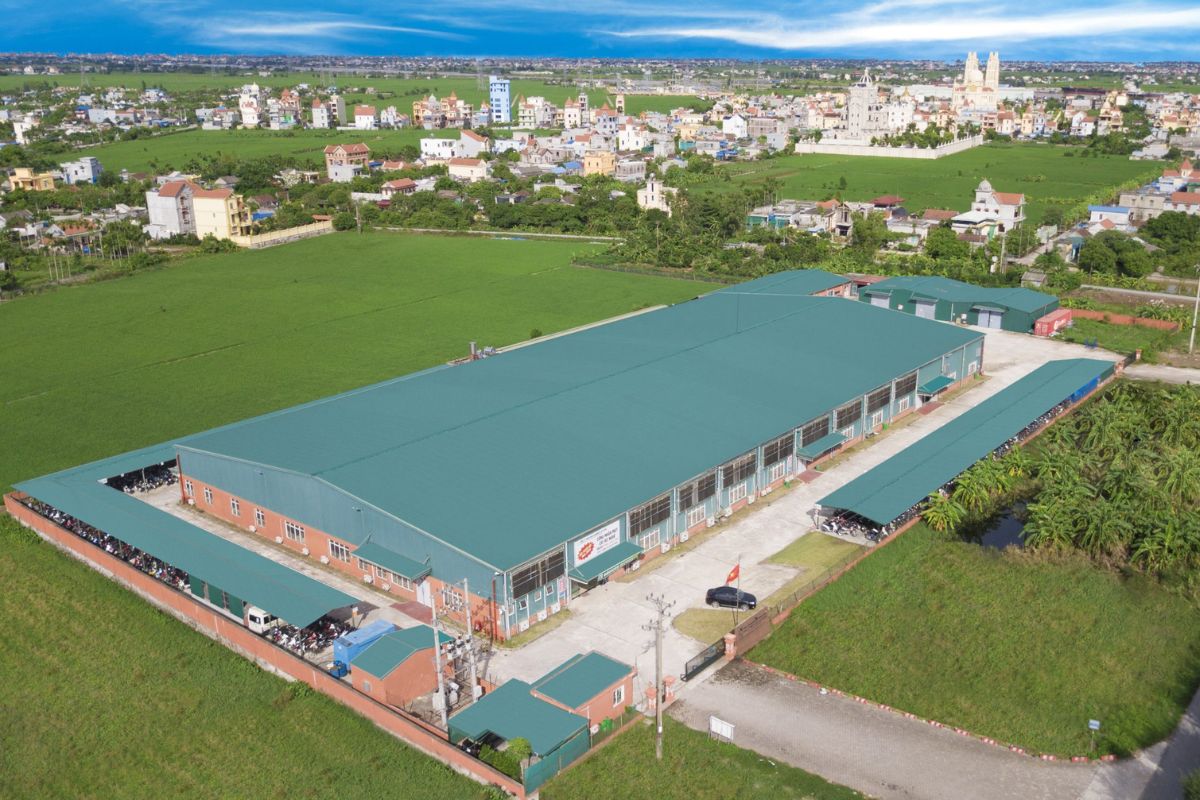
aerial view of kiara garments manufacturing factory capital world group

Capital World Group – A reliable textile manufacturer in Vietnam

If you are searching for a reliable textile manufacturer in Vietnam, Capital World Group provides the stability and end-to-end control that global brands value. Founded in 1967, this group operates 18 production lines and employs over 800 skilled staff, offering the scale, experience, and consistency needed for long-term sourcing partnerships. Its vertically integrated operations,  covering fabric sourcing, sampling, bulk production, quality control, and export, help brands shorten lead times, reduce operational risk, and maintain cost efficiency.

Capital World Group is recognized for dependable quality, strong compliance, and deep expertise in knit and woven ladieswear. Backed by ISO 9001, Higg FEM, amfori BSCI, and SLCP credentials, along with flexible MOQs, fast sampling timelines, and efficient shipping through northern Vietnam ports, the group serves as a customer-focused manufacturing partner for brands seeking reliable textile production in Vietnam.

Contact us today for a consultation on finding the right textile manufacturing solution in Vietnam, from sampling and materials to bulk production and export.

Read More
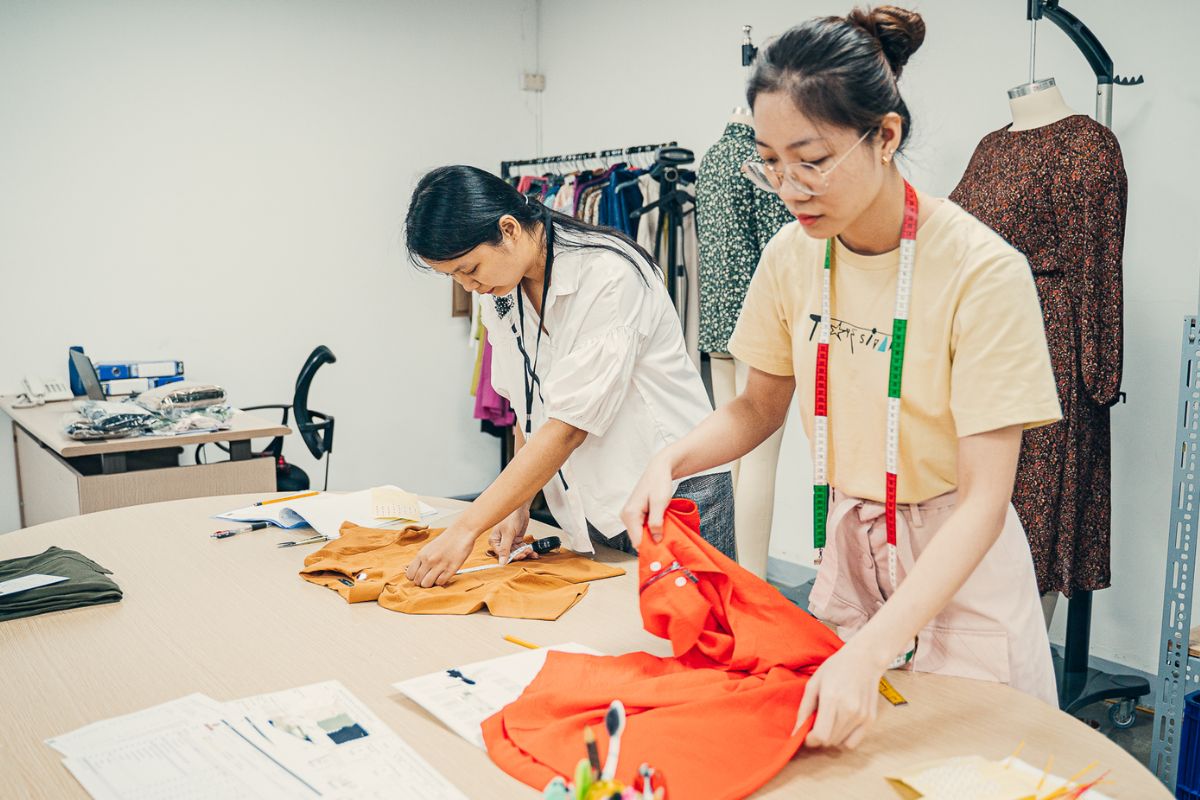
sewing in Kiara Garments Factory

What is the garment manufacturing process?

The apparel manufacturing process begins with an idea and ends with a finished garment ready for market. Turning a sketch into reality requires technical skill and a sharp sense of market demand. Each step is designed to ensure the piece meets quality expectations. Keep reading to learn more about the main steps in the garment manufacturing process.

Fabric preparation

Before garments are produced, fabric undergoes a detailed preparation stage. The way this is managed has a direct impact on durability, color depth, and overall finish. Each decision – whether in fiber choice, weaving method, or textile dyeing – affects how the final garment looks and performs. When handled correctly, the fabric develops the strength, consistency, and texture needed to stand up to everyday use and maintain its appearance over time.

1. Fiber selection and preparation

The first step is choosing fibers that deliver the qualities a brand wants. Work often begins with a fabric supplier, who provides options ranging from cotton and polyester to wool and silk. Each fiber has distinct characteristics: cotton is breathable, while polyester adds strength and resilience. Wool retains warmth, and silk gives a refined finish.

Before spinning, raw fibers are cleaned thoroughly to remove dirt and impurities. Blends like cotton with polyester are also created to balance softness with durability, giving manufacturers flexibility in meeting specific design and performance goals.

Moisture levels are also adjusted to around 50-60% relative humidity for cotton. This prevents static, minimizes breakage, and helps the fibers spin evenly.

2. Spinning the yarn

fibers are spinned into yarns rolls

Once prepared, fibers are carded; that is, aligned into a continuous strand called a sliver. The sliver is twisted into a thinner roving and spun tighter to produce yarn with the desired thickness and strength.

Mills can control yarn weight and performance by adjusting spinning speeds and twist levels. The finished yarn is wound onto spools or cones for storage.

3. Fabric formation

Yarn is made into fabric using several techniques:

  • Weaving places warp and weft threads at right angles on a loom to produce a firm, balanced cloth.
  • Knitting relies on needles or machines to build loops that link together, creating a fabric with natural stretch.
  • Non-woven materials take a different route: loose fibers are layered and bonded through heat, pressure, or adhesives. This stage is often described as the key fabric-to-apparel step, as yarn becomes usable fabric.

4. Dyeing or printing

Color and pattern bring fabric to life. In textile dyeing, materials can be treated in batches, passed continuously through dye baths, or dyed after the garment is completed.

Printing, however, applies surface designs instead of coloring the whole textile. Techniques like screen printing, digital printing, or heat transfer add bold patterns to fine logos.

Apparel manufacturing process

Turning fabrics into finished garments is a structured yet highly creative process. Each stage builds on the last, with checks to ensure durability and market-ready quality.

1. In-house sampling

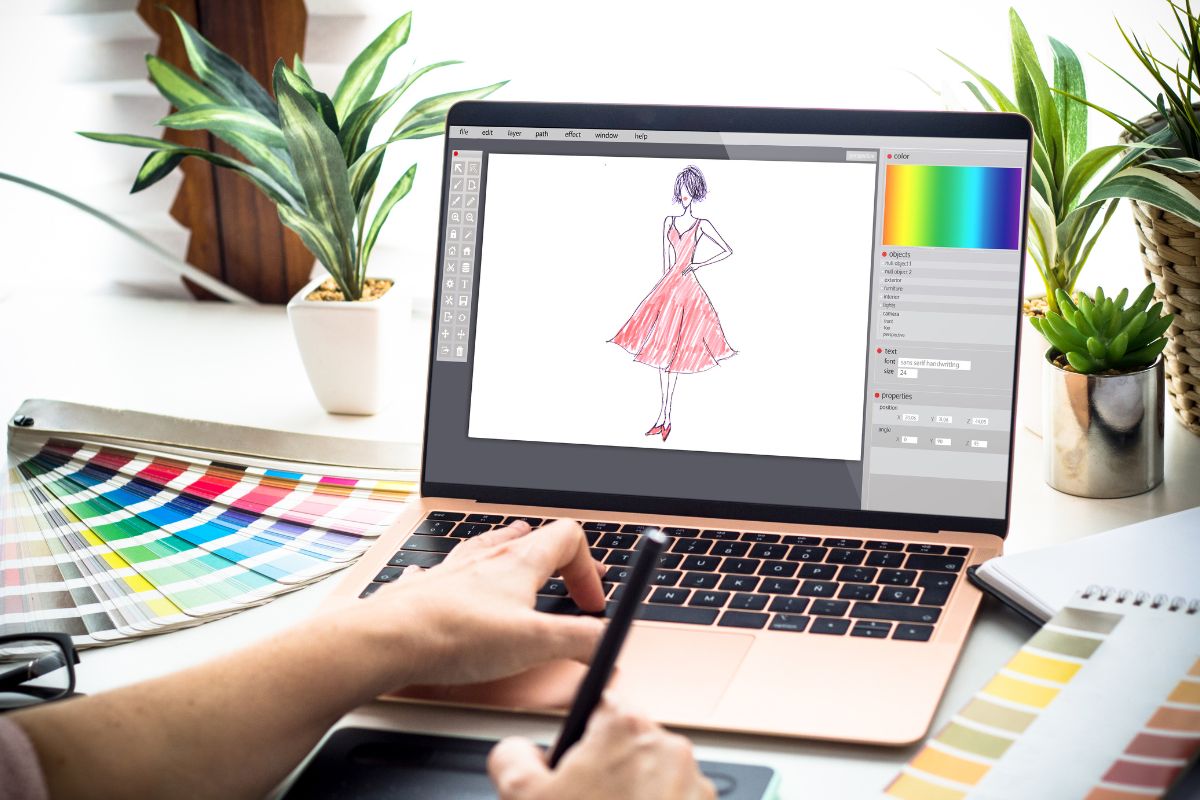
clothes designing using technology on laptop

Production begins in the design room, where teams study market trends and draft sketches by hand or computer.

These ideas are translated into detailed tech packs, graded patterns, and size sets, essential pre-production documents that guide cutting and construction. In-house sample rooms are then used to create prototypes.

Each cut piece is checked carefully for fit points approval, and fabrics are inspected for flaws before moving forward. This stage ensures the design, pattern, and selected materials produce the fit and finish intended.

2. Cutting and marking

After the sample is approved, fabric is laid out in layers and marked with pattern guides. Many workshops use CAD systems to direct automated cutters, producing panels with consistent precision. Sleeves, bodices, and other parts are measured to exact dimensions, allowing maximum use of fabric while minimizing waste.

3. Sewing

sewing fabric by skilled worker in kiara garments factory

Panels are then joined by trained machinists, with stitching methods chosen to match the properties of the fabric.

Straight stitches hold basic seams, zigzag stitches give elasticity to stretch fabrics, while buttonhole stitches reinforce fastenings.

Choosing the right thread and needle is critical; light cotton, for example, requires a fine needle and matching thread.

Operators perform seam inspections throughout this stage to ensure strong, uniform stitching. Early checks identify issues such as skipped stitches or uneven tension before production continues.

4. Trimming

Loose threads and fabric scraps are cut away to give the garment a tidy finish. If there are exposed edges, they are secured with overlocking or binding, especially at points that take strain. At this stage, inspectors also review the seams to confirm they are neat and defect-free.

5. Embellishment and printing

The garment can now be personalized or branded. Common additions include embroidery, screen prints, appliqué, and foil designs.

Functional items such as zippers, buttons, snaps, and labels are also fixed in place. Pockets must align correctly, and fastenings are reinforced so the garment remains durable and wearable.

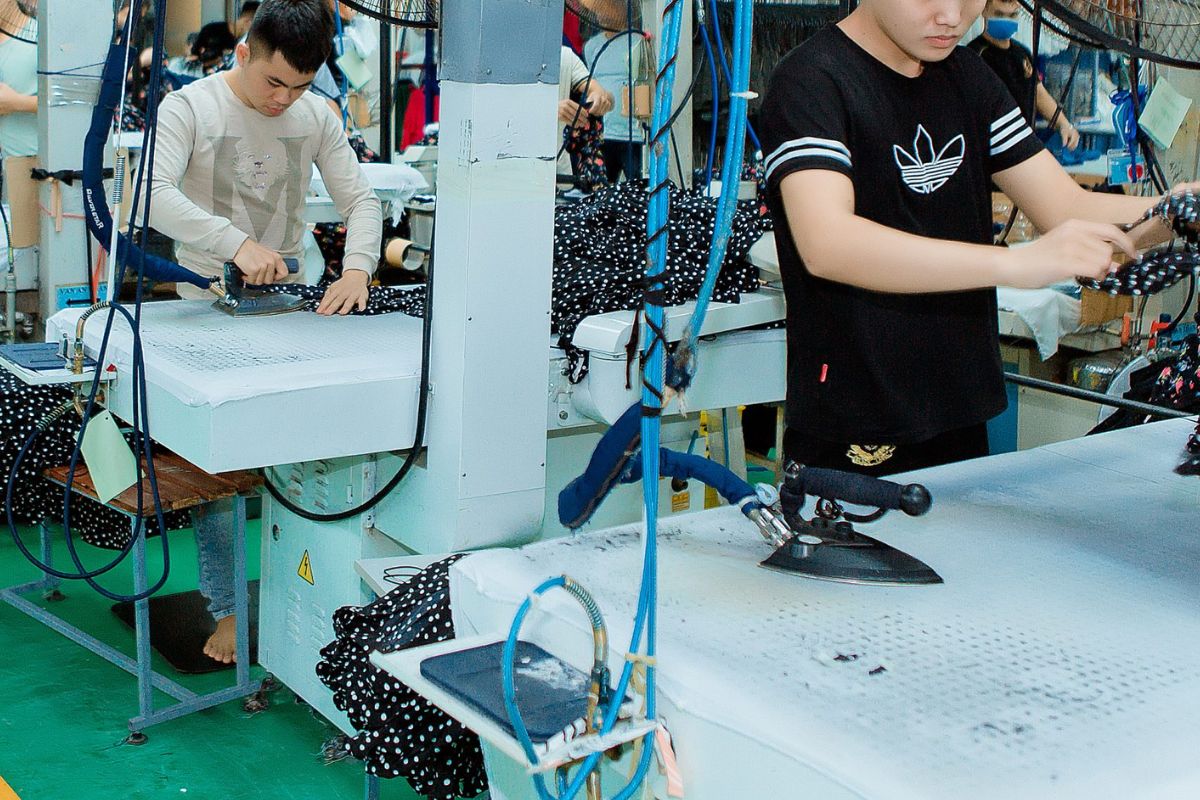
6. Pressing and finishing

pressing finished clothes in kiara garments factory

Pressing sets the garment’s final shape. Press teams use industrial irons, steam tunnels, and spot presses to smooth seams, open pleats, and lock creases at the correct temperature and dwell time.

Finishing details for clothes like stitch lines are also flattened, collars and cuffs are shaped, and shine is prevented with covers or vacuum tables. The next line is labels and tags; brand, size, and care are fixed exactly as the tech pack specifies, with placement tolerances checked in millimeters.

Before goods move to packing, inspectors perform a final quality check. They look for loose threads, skipped stitches, puckering, shade variation, print alignment, and off-spec measurements. These quality control procedures form a critical safeguard. They help brands maintain consistency and reputation.

Capital World Group’s strict quality control process, certified to ISO 9001 and audited under Higg FEM, amfori BSCI, SLCP, and other standards, delivers consistent, defect-free output.

7. Packing

At the packing stage, pieces are folded to the approved template, wrapped in tissue where required, sealed in polybags with size stickers and desiccants, and sorted by size/color into barcoded cartons.

The packing list, commercial invoice, and certificate of origin are prepared; cartons receive SSCC labels and are palletised to spec. This post-production stage maintains traceability, protects the finish in transit, and readies orders for global shipment.

8. Shipping

Before leaving the factory, shipments are checked against the order for accuracy. Cartons are sealed and labelled, then exported to ports or airports.

Whether delivered FOB (Free On Board) or through managed logistics, clear documentation ensures each order arrives at its intended destination, completing the garment’s journey from design sketch to retail floor.

What is garment manufacturing?

At its core, the apparel industry connects creative design with large-scale production. It begins with sketches and market research, moves through fabric sourcing and textile production, and ends with fully assembled garments ready for consumers. This sequence links designers, mills, and factories into one continuous chain that fuels fashion trends and global trade.

The economic impact of this sector is enormous. The global apparel industry was valued at $1.84 trillion in 2025, representing about 1.65% of world GDP. Projections show a compound annual growth rate (CAGR) of roughly 2.8% between 2025 and 2028, underlining the resilience of clothing production even in a competitive global economy.

Within this growth, women’s apparel plays the leading role. In 2024, the segment generated an estimated $930 billion and is forecast to exceed $1 trillion by 2027. Dresses, blouses, skirts, and other categories dominate retail shelves, making womenswear the driver of expansion.

In practical terms, garment manufacturing encompasses all the clothing production steps: fiber preparation, spinning, weaving or knitting, sewing, embellishment, finishing, trimming, packing, and shipping.

Each stage adds value and quality, transforming raw fiber into polished products. For fashion brands, mastering these processes ensures reliable supply chains, consistent quality, and the ability to meet market demand on time.

How to optimize the garment manufacturing process?

Many brands struggle with shipping delays and extra costs when materials and production steps happen at distant locations. The solution is to choose a fully managed production workflow run by a trusted garment manufacturer.

An example is Kiara Garments Factory of Capital World Group, which follows a fibre-to-fashion, full-package model. This vertical management compresses lead times and maintains in-line QA/QC at each step, thanks to in-house development and owned production capacity.

Capital World Group maintains a vertically integrated supply chain system that ensures predictable timelines and consistent apparel quality. Capital World Group targets brands seeking a Vietnam apparel manufacturer with end-to-end supply-chain control through its Kiara Garments Factory.

Vertical management process for apparel manufacturer by Capital World Group

Read More
qc procedure checking fabric capital world group

What are Capital World Group QC procedures?

Many garment brands face challenges with outsourced manufacturing, defects, late deliveries, or ethical lapses that can lead to costly recalls and damaged trust. Capital World Group (CWG) addresses this pain point as a Vietnam-based ladies’ wear manufacturer with fully integrated production. By implementing robust QC procedures at every stage, from fabric sourcing to final packaging, CWG ensures each garment meets spec and global standards.

Why are quality check procedures important in garment manufacturing?

A single quality slip in fashion manufacturing can damage a brand’s reputation and cause costly delays. That’s why quality check procedures are a strategic safeguard.

  • Ensure products meet specifications: Thorough inspections verify garments match the original design and technical specs.
  • Verify measurement, fit, and appearance: Inspectors confirm size, color, shape and quality, measuring dimensions and checking colors for accuracy.
  • Reduce waste and cost: A garment’s quality procedure catches defects early, cutting rework and preventing wasted materials and labor.
  • Save time and ensure on-time delivery: In-process QC prevents delays by fixing issues before production ends.
  • Build trust and long-term relationships: Consistent quality strengthens client and customer confidence, fostering lasting partnerships.

Capital World Group’s standard QC procedures

As a trusted women’s clothing manufacturer in Vietnam, Capital World Group (CWG) implements a structured, multi-stage quality control system to maintain high standards throughout production. This standardized QC process monitors every critical step, from raw material inspection to final shipment, beginning with material quality control (Material QC).

1. Source inspections

Capital World Group begins quality assurance at the point of material receipt. All incoming fabrics and trims are inspected against approved specifications before being released to production. Fabric lab tests, colorfastness rub tests, and visual defect checks are conducted to identify risks such as shade variation, bleeding, or surface flaws.

This early-stage inspection ensures that only compliant materials enter the production line, preventing downstream quality issues and costly rework.

2. Fabric sourcing

During fabric sourcing, we verifie supplier documentation and material certifications, including organic, recycled, or sustainability claims when required by buyers. Test reports are collected and reviewed to confirm fabric composition, weight, durability, and performance standards.

Each fabric roll is checked for consistency with buyer-approved specifications, ensuring full alignment with technical sheets and reducing compliance risks in international markets.

3. Sample development QC

Create development samples that match all sizes and fit requirements. For example, when calculating how much fabrics is needed to make a jumpsuit, QC teams measure prototypes for correct measurements to confirm they comply with specified sizes and to have the correct amount of fabrics.

They also review stitching and construction details, securing pre-production approval. This step in the garment manufacturing process ensures any design issues are resolved before bulk production.

clothes development qc procedures

4. Inline QC

Inline quality control focuses on real-time monitoring throughout the sewing process. QC staff inspect semi-finished garments directly on the production line, checking workmanship, stitching consistency, seam alignment, and overall assembly quality.

By identifying defects early, we prevent error accumulation and ensure issues are corrected immediately. This proactive approach improves production efficiency, reduces waste, and supports stable output quality during high-volume orders.

5. Endline QC

Perform a thorough final inspection of finished garments. This quality audit includes a final measurement check, visual examination and a metal needle detector scan to ensure no broken needles remain in garments (a crucial safety step).

Inspectors also conduct physical tests on a sample from each batch to identify any defects with accessories like zippers, snaps, buttons, or elastic. Any garment failing these checks is pulled out or reworked.

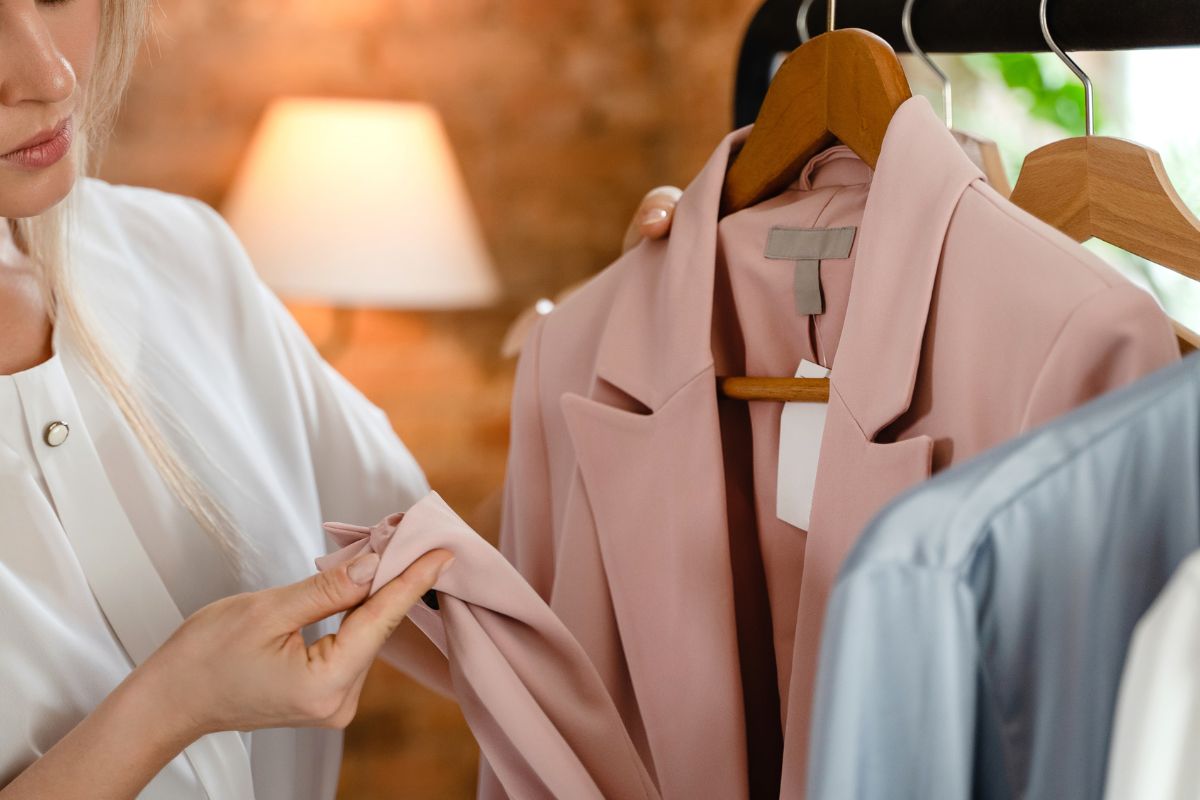
woman checking quality of finished clothes

6. Customer audits

Capital World Group actively supports customer audits and welcomes third-party inspectors for social compliance, ethical sourcing, or technical quality assessments. Many international buyers conduct on-site audits, which we facilitate transparently to demonstrate operational standards and manufacturing discipline.

These audits provide brands with added assurance of factory compliance, production capability, and the reliability of long-term partnerships.

7. Label verification

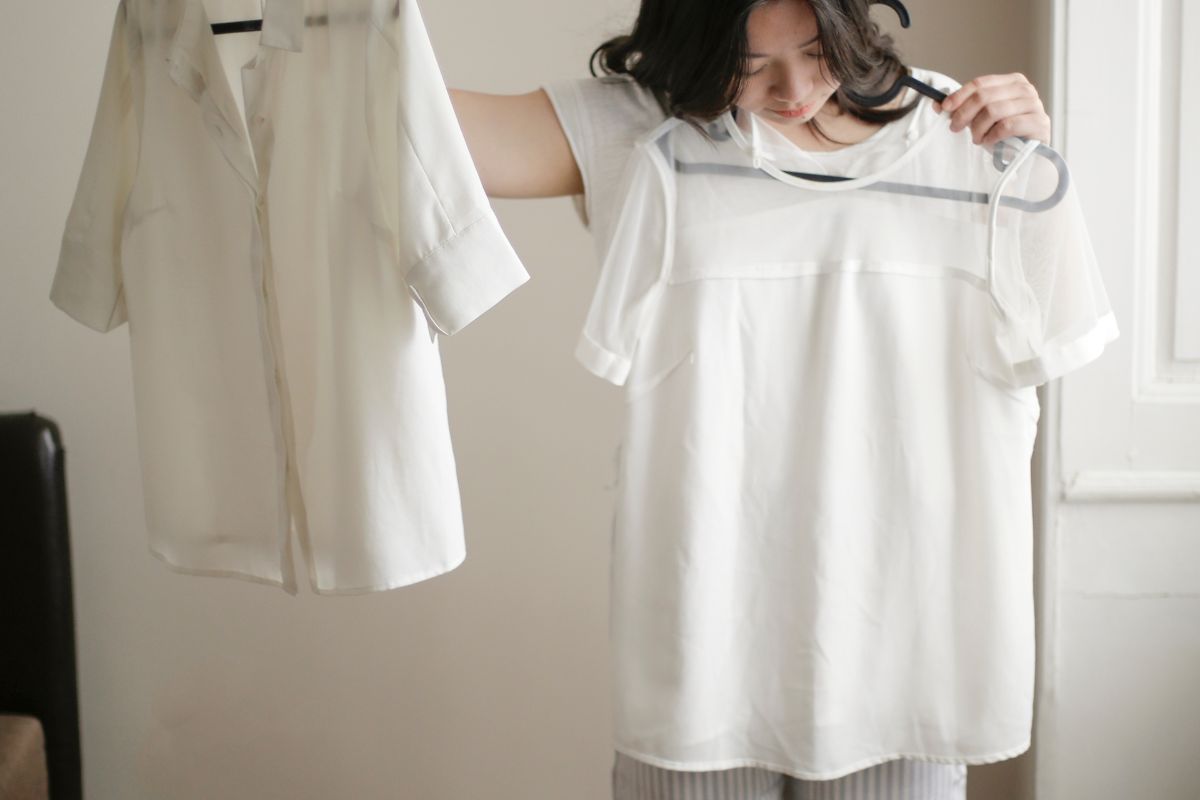
Check that every garment’s labeling complies with the rules of its target market. This means verifying that tags clearly state the fibre composition, country of origin, manufacturer or importer information, size, and proper care guidance. Missing or inaccurate labels can trigger customs refusals or regulatory penalties.

label of clothes verification

8. Packaging inspection

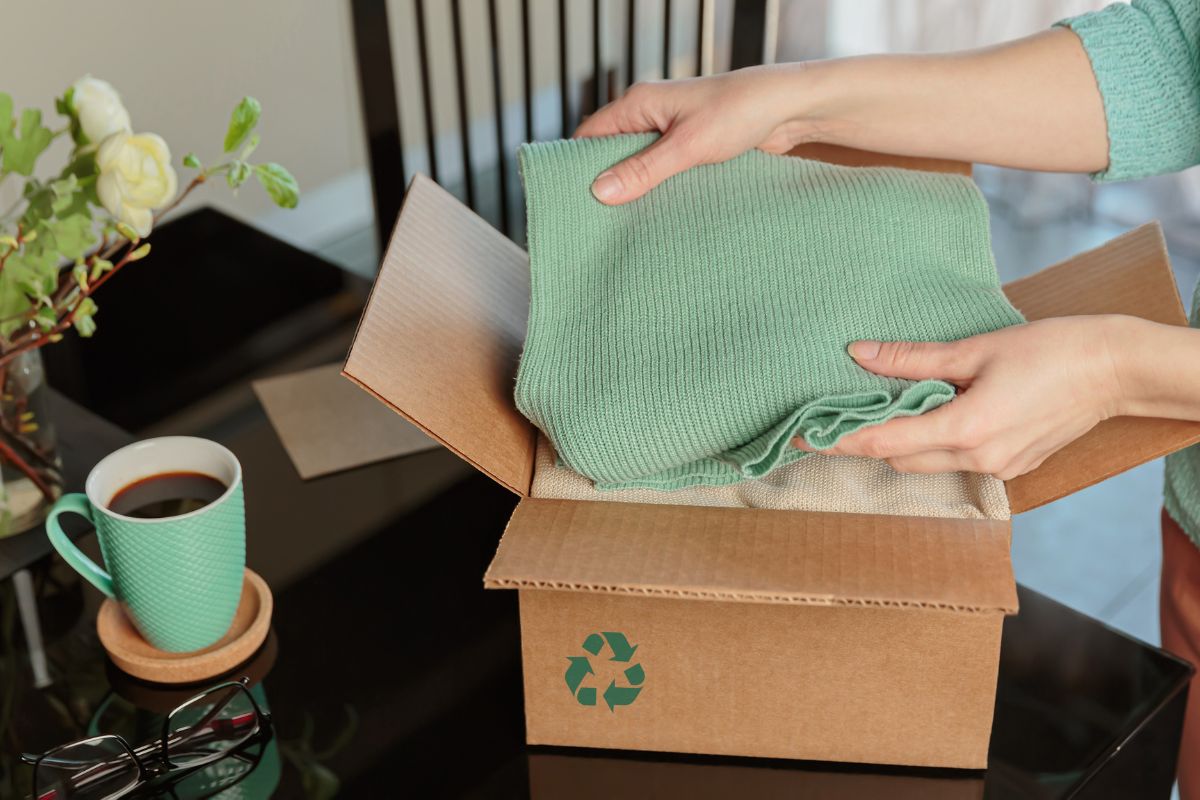
Finally, verify that packing meets both client specifications and transit safety standards. Inspectors ensure the correct number of pieces and assortment are packed per carton, and that each shipping carton is of appropriate size, weight, and durability. They check that inner boxes or polybags are adequately sealed and that the carton protects the goods from damage.

If polybags are used, they must have the proper suffocation warning labels. A packaging check also confirms all shipping marks are correct, legible, and complete, including buyer name and PO, item description, carton count and dimensions, and country of origin.

Every detail is reviewed so that when goods depart the factory, they are retail-ready and compliant with import regulations when importing clothes from Vietnam to other countries.

Kiara Garments Factory of Capital World Group – a Vietnam garment manufacturer

Many brands struggle with delays, inconsistent sizing, and unclear compliance, but CWG solves this by combining certified processes with transparent operations, giving clients faster speed-to-market and dependable quality. Explore our homepage or contact us to see how we can deliver quality, consistency, and trust every step of the way.

One company is CWG’s Kiara Garments factory in Ninh Binh. This family-owned factory gives CWG end-to-end control from sourcing to export, operating 18 production lines with 800 skilled staff and specialising in manufacturing women’s tops and bottoms.

Read More
Capital World Group

Women’s set manufacturer – Capital World Group

Women’s sets have become a core part of modern wardrobes, valued for their practicality, versatility, and polished look. Coordinated designs make styling easier for customers and offer brands a simple way to deliver on-trend, ready-to-wear options. In Vietnam, Kiara Garments Factory, part of Capital World Group (CWG), produces women’s sets that balance style with functionality.

As a fully integrated women’s set manufacturer, CWG manages everything from fabric sourcing to final export, giving fashion brands a reliable way to access high-quality collections through a professional women’s set manufacturer online.

Materials made by experienced manufacturers

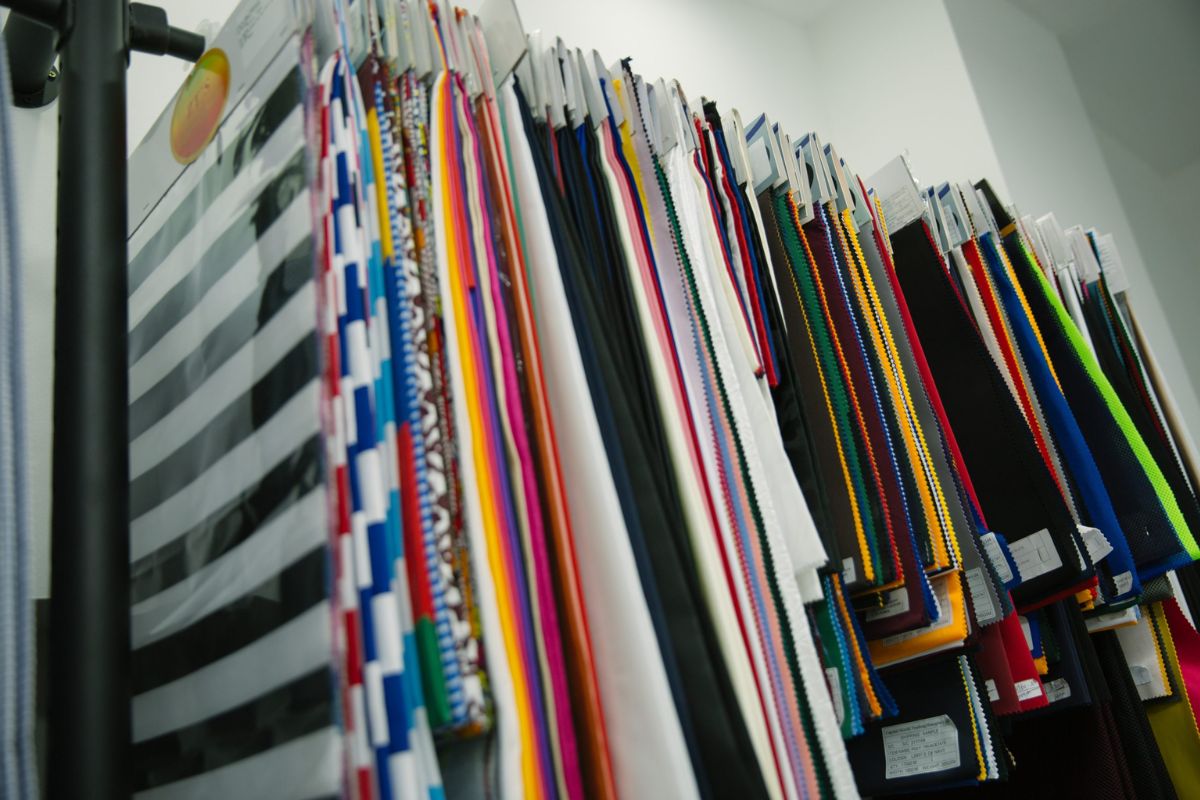
CWG’s comprehensive knowledge of textiles, from cotton and viscose to performance blends, means we can recommend the ideal materials for every design. Our experts understand which regions and mills produce the best fabrics, giving women clothing brands efficient options in both quality and cost.

professional designers making clothes from materials in kiara garments factory
Whether your design is a simple knit set or a customized concept, our know-how ensures an optimal result. Backed by a heritage of craftsmanship and modern sustainability standards, we deliver consistent material excellence for all your ladies’ wear collections.

Catch up with the latest trends

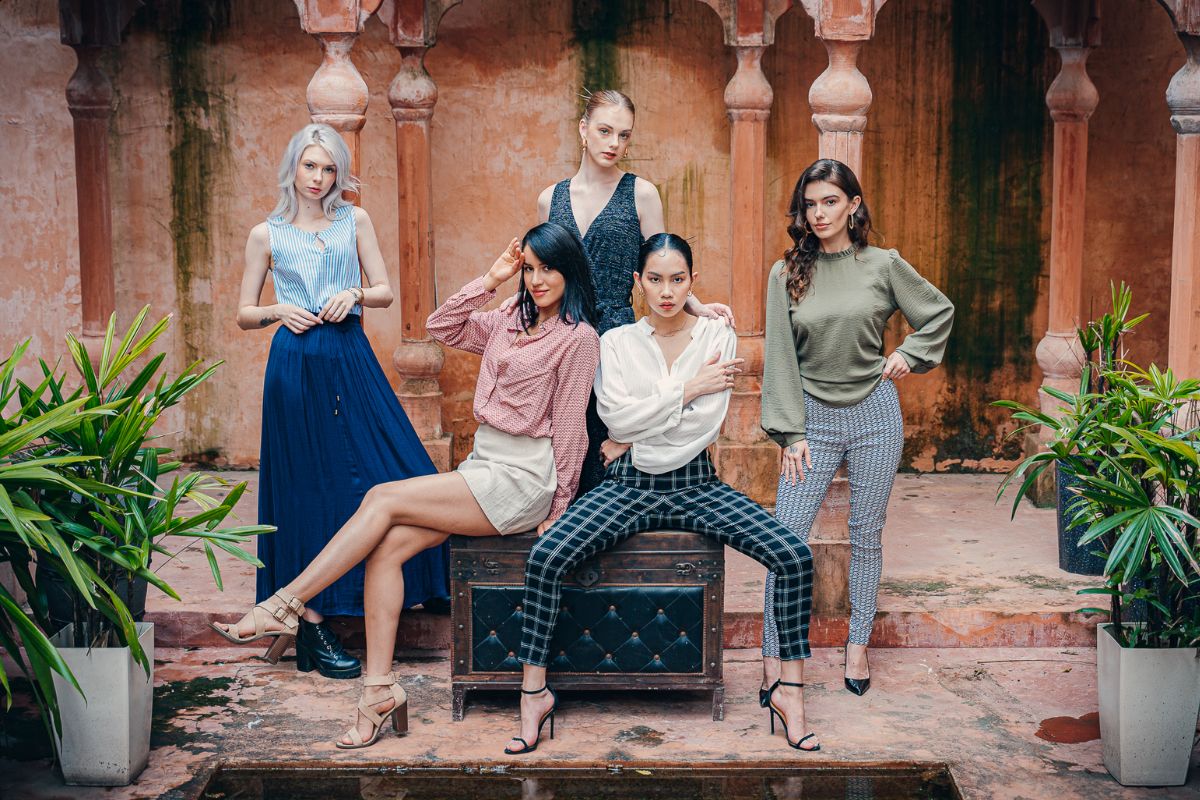
Staying ahead of trends is key for any fashion label competing in today’s fast-moving market. Capital World Group‘s expertise as a two-piece women’s set manufacturer is part of a broader capability that covers casual, formal and trend-driven women’s tops and bottoms.

Our fabric innovation teams and dedicated development centers work alongside 50+ merchandisers to track emerging styles, colors and consumer preferences worldwide.

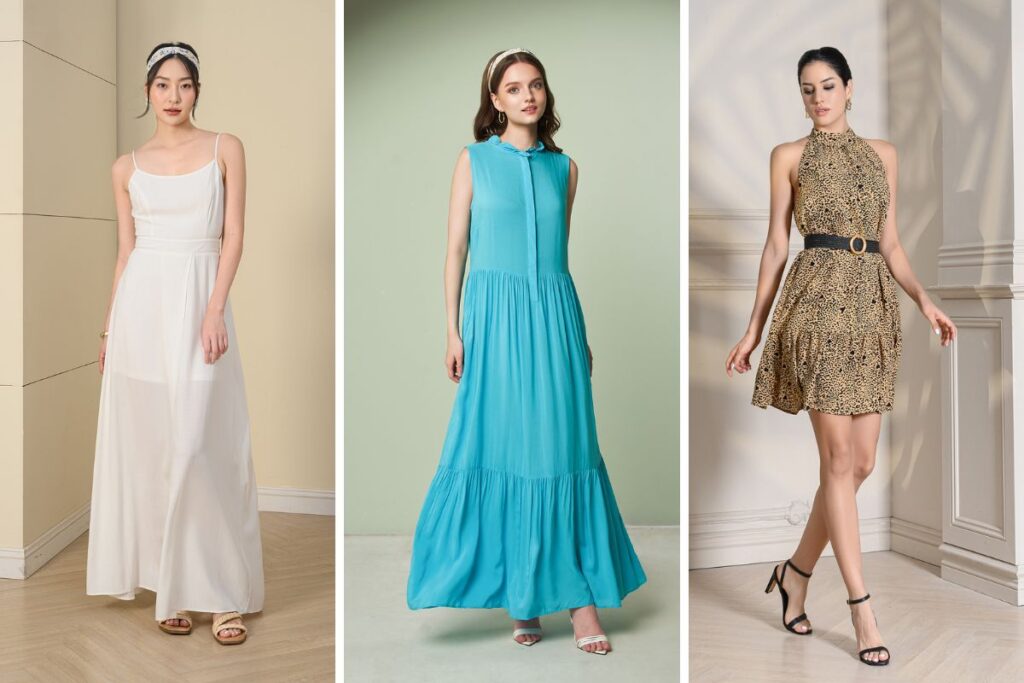
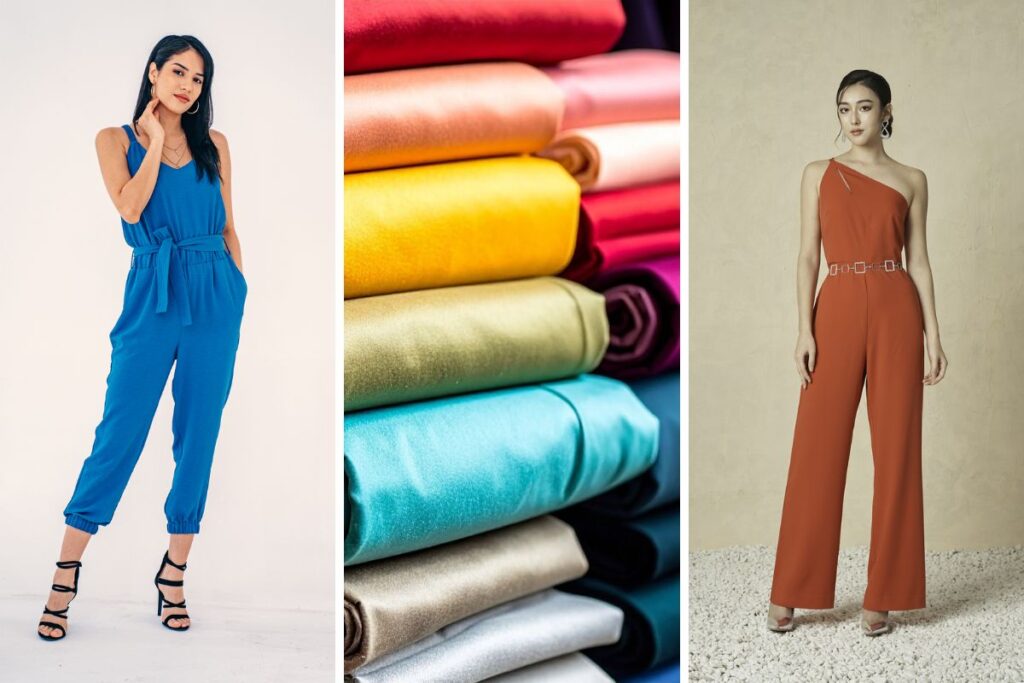
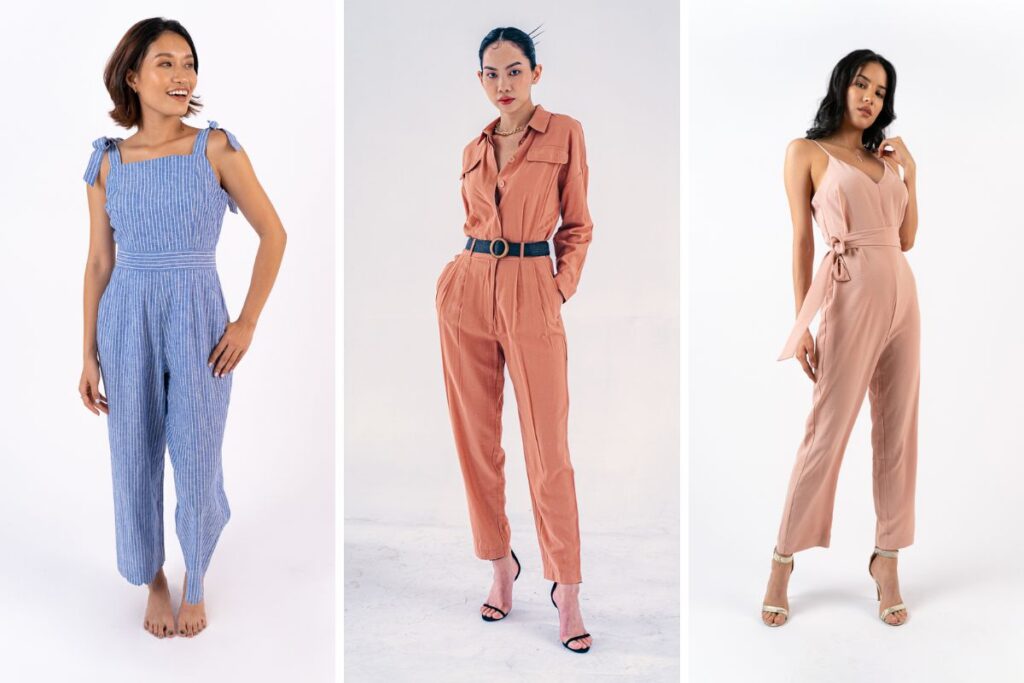
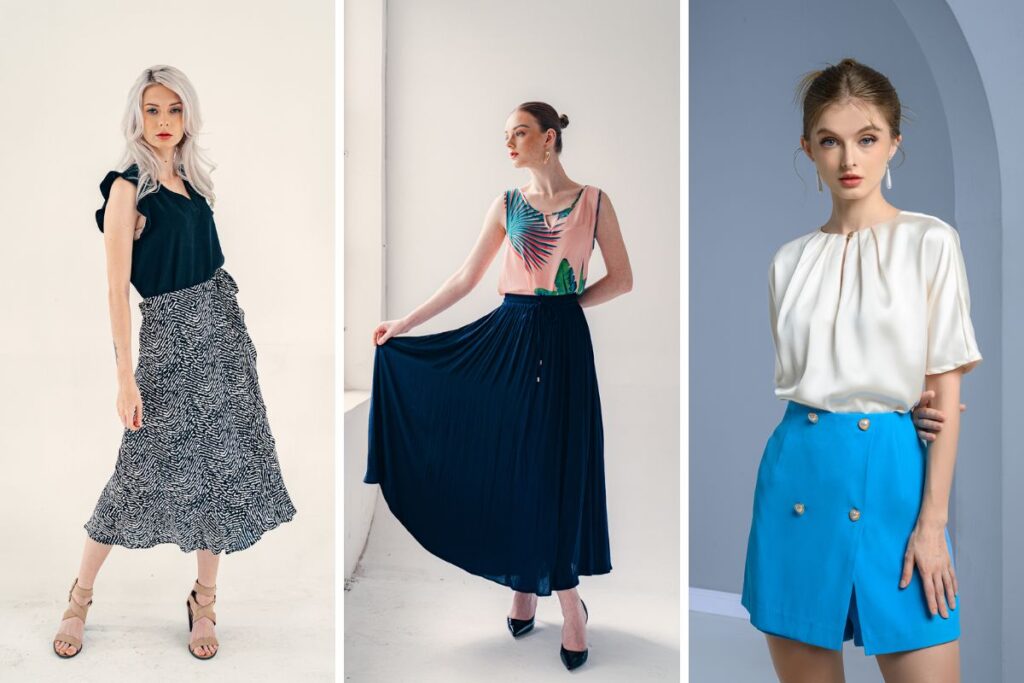
women clothes design modelsThis ensures your collections feature trendy clothes that resonate with your audience and arrive in stores at the right moment. From manufacturing women’s jumpsuits to sharp office-ready co-ords and runway-inspired women’s dresses, we adapt designs to meet both seasonal shifts and long-term brand identity.

Each set is created with a balance of style, comfort, and functionality, helping women feel confident while giving your brand a clear competitive edge.

Detail-focused designs

Design precision is the foundation of how we create garments that win repeat customers for your brand. Decades of textile know-how allow us to choose materials, cuts, and details that elevate both the look and feel of each set.

In the garment manufacturing process, our focus is on delivering pieces that capture attention on the rack and also become lasting favorites in a woman’s wardrobe.

  • Fabric selection rooted in experience: Sourcing from trusted mills, we match material type to design intent, whether for structure, drape, or breathability.
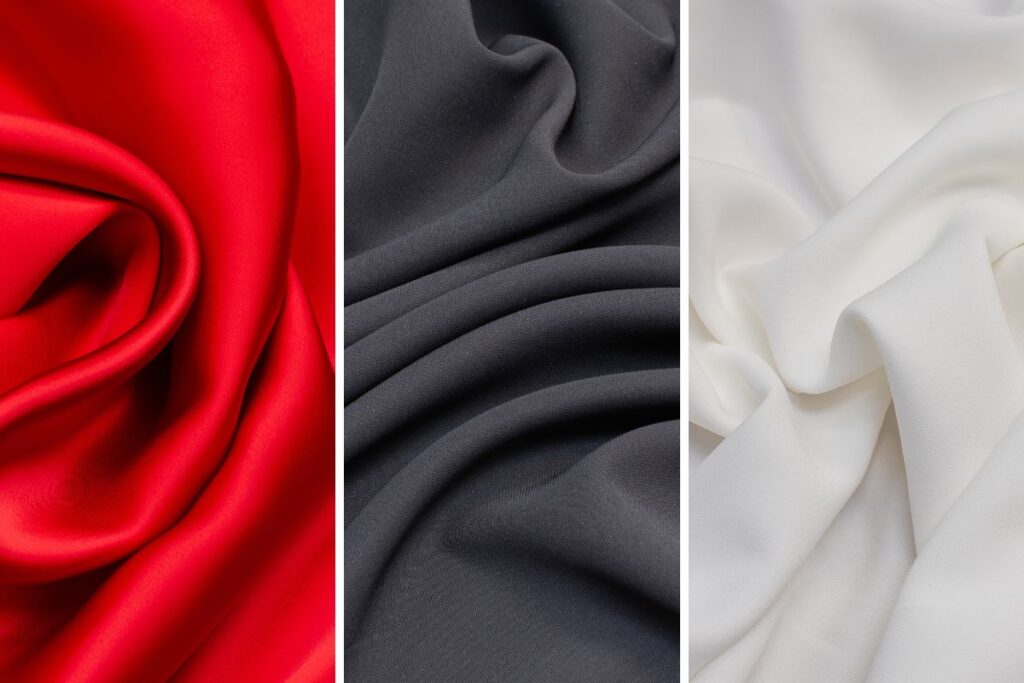
  • A color library that works for retail seasons: We match muted pastels for spring, bold neons and coral pinks for summer, richer reds and deeper tones for cooler months.
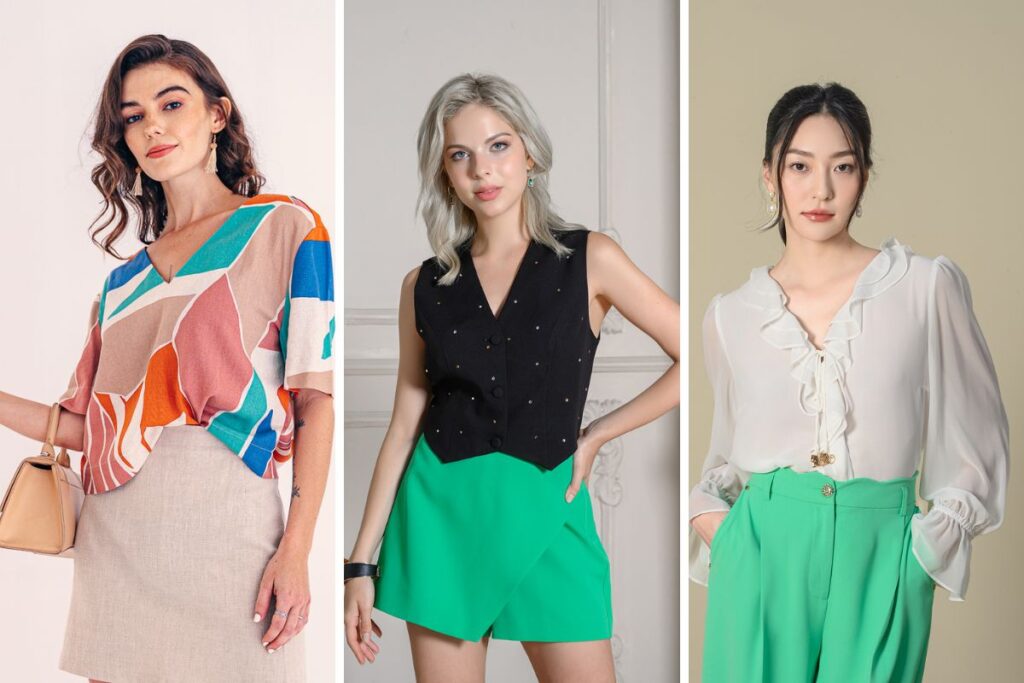
  • Pattern variety with market fit: From timeless stripes to seasonal florals and high-impact abstract prints, each is chosen to complement your brand’s identity.
  • Shape and silhouette engineering: We create varied shapes, from V-necks that flatter to relaxed forms that move effortlessly with the wearer.
  • Functional details with style impact: These include belts that cinch perfectly, ruffles that hold shape, pleats that add depth, and buttons aligned with garment flow.
  • Built-in versatility: Each design pairs easily with existing wardrobe staples, giving end customers more reasons to return for repeat purchases.

sewing in Kiara Garments Factory

Kiara Garments Factory of Capital World Group – Professional women’s set manufacturer

Finding a women’s clothing manufacturer in Vietnam who can keep pace with shifting trends while maintaining consistent quality is a big challenge for many fashion brands. Capital World Group addresses this need as a professional women’s set manufacturer with a full-service model through its fully owned Kiara Garments factory, together covering design, sampling, production, and export.

Let’s dive deeper into the 5 non-negotiable tips on how to choose a women’s wear manufacturer.

aerial view of kiara garments manufacturing factory capital world groupOur end-to-end production approach ensures each stage, cutting, sewing, and finishing, is coordinated under one roof, enabling cost efficiency and rigorous quality control. We are committed to ethical and sustainable manufacturing, which is verified through internationally recognised standards such as the Higg Index and Amfori BSCI.

If you’re ready to develop your next collection with a trusted women’s set manufacturer online, contact our team to discuss your requirements.

Read More
what is lead time

What is lead time in the garment industry?

The fast lead time in the fashion industry reflects a broader shift in the time-to-market in fashion, where responsiveness determines a collection’s success. Managing lead time well allows brands to respond quickly to trends and limit waste. Some of the world’s largest garment exporters, such as those in Vietnam, have emerged as major hubs for supply chains built to meet these tighter timelines and shifting market pressures.

What is the lead time in the garment industry?

lead time progress in garment manufacturingIn apparel manufacturing process, lead time is the full span from the confirmed purchase order to the buyer receiving finished goods. This order-to-delivery time covers sourcing fabrics, developing and approving samples, bulk manufacturing, quality inspections, and shipment. For example, ordering 1,000 jackets might require 12 weeks from fabric procurement through production and delivery.

The lead time formula in the garment industry is most often calculated by subtracting the order request date from the delivery date. However, some brands track it from initial order placement to final shipping.

Tracking this metric allows brands to measure efficiency, forecast timelines, and adapt to changing fashion demands.

Why is lead time important?

Reducing lead time between order submissions and processing deliveries enables faster responses to emerging trends and ensures assortments remain relevant as demand peaks.

Shorter cycles also improve cash flow by moving inventory to market sooner, freeing capital for reinvestment.

According to McKinsey, faster turnaround supports higher full-price sell-through and limits markdown risk.

In a competitive, trend-driven market, mastering lead time helps brands stay agile, align production to demand, and protect margins through timely, efficient deliveries.

Key milestones affecting lead time in the garment supply chain

Each stage in the supply chain can compress or stretch the lead time in the garment industry, depending on efficiency, coordination, and external conditions.

  • Fabric sourcing: If you can get fabrics and trims locally, things move quickly. But when you’re importing speciality textiles or big runs from overseas – especially if they need to be woven or dyed to order – it can add a lot of extra time.
  • Design approval: Slow feedback, last-minute changes, or unclear specifications can quietly halt progress for days or weeks. Prompt, well-documented approvals prevent this bottleneck and keep production start dates intact.
  • Lab dips (color matching): Matching fabric to the exact color standard is a technical but time-sensitive step. Producing a lab dip typically takes about 7 to 10 working days, and multiple rounds are common when precision is essential.

lab dip with small colored square fabric cuttings

  • Sampling: Development and fit samples ensure the design translates accurately into a finished garment. Every revision cycle adds days for sewing, shipping, and review.
  • Vendor reliability and factory efficiency: Well-integrated operations or factories with lean processes can begin production sooner and maintain consistency. Conversely, overbooked lines, outdated equipment, or workforce disruptions slow progress and extend the garment industry’s lead time.
  • Customs clearance: Export and import procedures can cause unpredictable hold-ups once garments are produced. Documentation errors, random inspections, or port congestion can add days or weeks.
  • Local transport logistics: Moving finished goods from the factory to the port can even become a bottleneck if the infrastructure is poor or the distances are long.

Each of these checkpoints contributes to the cumulative total production cycle. The goal is to address delays at the source so that brands can streamline the lead times in the garment industry processes.

Reduce lead time with the vertical management model

A well-integrated supply chain can sharply reduce lead time in fashion industry operations compared to other types of sewing lines by consolidating multiple production stages under one coordinated system. A vertical management model removes many dependencies by managing sourcing, pattern making, sampling, sewing, finishing, and packaging within a single unified system. This structure allows for overlapping stages, such as beginning fabric preparation while final samples are still in review, without waiting for external suppliers to free up capacity.

It also strengthens quality control procedures by embedding inspections at every step, ensuring issues are resolved before they disrupt the schedule.

In practice, end-to-end coordinated production supports faster approvals, better inventory handling, and closer alignment between design and production teams. For example, in-house fabric teams can manage the sampling of their procurement precisely to avoid material shortages, while production lines stay ready to pivot quickly after sample approval.

Proximity to export hubs further shortens delivery windows. These efficiencies significantly compress the overall order-to-delivery cycle while maintaining the quality and compliance standards expected in modern apparel manufacturing.

Vertical management process for apparel manufacturer by Capital World GroupAt Capital World Group, we provide the solution thanks to this end-to-end supply chain control as well as having full ownership of our Kiara Garments factory. We offer competitive, high-quality women’s wear manufacturing tailored to premium market demands, a result of faster turnarounds, greater flexibility, and consistent quality at scale.

Check out how Capital World Group Vertical Management model can help you deliver on time and ahead of the competition.

Read More