
Lead time in the garment industry directly affects when fashion brands launch collections, replenish inventory, and deliver products to retailers. A delay in fabric sourcing, sample approval, or bulk production can disrupt an entire seasonal schedule.
Understanding each stage helps apparel brands set realistic deadlines, coordinate suppliers, and reduce avoidable production delays. This guide explains how garment lead time works, which factors influence it, and how brands can plan more reliable manufacturing schedules with the right production partner.
What is The Lead Time in The Garment Industry?
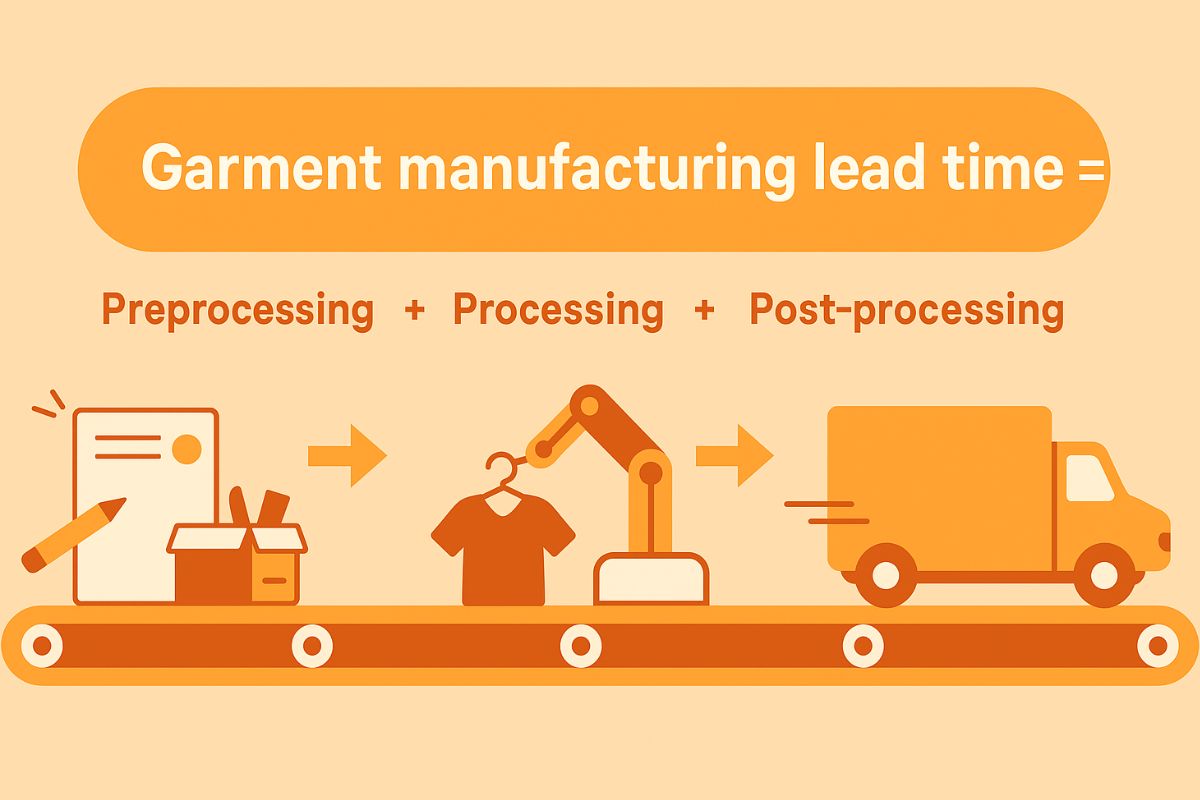
Lead time in the garment industry is the period between a defined starting point in an order process and its completion. For fashion brands, this often means the time from confirmed purchase order to delivery of finished garments. The exact definition depends on whether the agreement includes material sourcing, sampling, bulk production, and shipping.
Brands should distinguish total order-to-delivery lead time from production lead time. Production time covers manufacturing activities, while shipping time covers transportation after dispatch. If a manufacturer quotes only bulk production time, buyers need to account separately for material preparation, approvals, and logistics.
A basic formula is:
- Lead time = Delivery date − Start date
For example, if a brand confirms an order on March 1 and receives the finished goods on May 24, the total lead time is 84 calendar days. This example illustrates the calculation rather than a standard industry timeline.
In the apparel manufacturing process, lead time is the full span from the confirmed purchase order to the buyer receiving finished goods. This order-to-delivery time covers sourcing fabrics, developing and approving samples, bulk manufacturing, quality inspections, and shipment. For example, ordering 1,000 jackets might require 12 weeks from fabric procurement through production and delivery.
Why is Lead Time Important?
A reliable production timeline helps brands coordinate collection launches with retail calendars and seasonal demand. When orders arrive late, brands risk stock shortages, missed selling opportunities, and additional freight costs.
Lead time also affects cash flow and inventory planning. Earlier delivery gives brands more time to sell products within the intended season, while predictable schedules help purchasing teams decide when to place orders and how much inventory to commit.
When comparing suppliers, brands should assess more than the shortest quoted timeline. The women’s wear manufacturer explains other important criteria, including production capacity, quality control, compliance, and communication. These factors help buyers judge whether a supplier’s lead-time commitment is realistic.
Key Milestones Affecting Lead Time in The Garment Supply Chain
Garment lead time depends on the coordination of product development, materials, manufacturing, quality checks, and logistics. A delay at one stage can affect the activities that follow, particularly when teams cannot begin the next step until they receive an approval or material delivery.
- Product development and sample approvals
Incomplete tech packs, unclear measurements, late feedback, and repeated sample revisions delay production readiness. Brands should finalize construction details, size specifications, colors, and fit requirements before authorizing bulk manufacturing. Reviewing fit points before bulk ordering helps teams identify potential fit and measurement problems before they affect larger quantities.
- Fabric and trim sourcing
Standard materials that are readily available generally require less preparation than custom fabrics, special dyeing, or imported trims. Color matching and laboratory approvals can also extend the schedule when several rounds of review are necessary. Brands should confirm material availability and testing requirements early. Capital World Group’s fabric capabilities provide a relevant starting point for understanding its material offering.
- Order volume and factory capacity
Larger orders require more production time and capacity planning. Garment complexity, the number of styles, sewing operations, and factory workload also influence output. Buyers should confirm the manufacturer’s available capacity and planned production window before agreeing to delivery dates.
- Quality control and finishing
Inspection, measurement checks, repairs, pressing, labeling, and packing all contribute to the final timeline. Identifying defects during production helps prevent larger rework requirements near shipment. Brands should agree on inspection criteria and approval responsibilities before production begins.
- Shipping and export logistics
Transport from the factory to the port, export documentation, customs clearance, transit time, and destination handling affect the order’s final arrival date. Brands should clarify whether a quotation ends at factory completion, port departure, or delivery to the final destination.
These factors explain why no single lead-time estimate applies to every garment order. The most useful schedule identifies each milestone, its dependencies, and the person responsible for completing it.

Reduce Lead Time with The Vertical Management Model
Brands can improve timeline reliability by planning backward from the required delivery date and managing approvals, materials, and production milestones proactively. The goal is not simply to shorten every stage; it is to remove avoidable waiting time while maintaining product quality.
- Start with the required delivery date. Work backward from the date the goods need to arrive. Allow time for shipping and customs, final inspection, packing, bulk production, and material preparation. Confirm the sequence with the manufacturer rather than relying on a single overall estimate.
- Finalize product specifications early. Provide complete tech packs, approved measurements, construction details, artwork, labels, and packaging requirements. Consolidate sample feedback and appoint clear decision-makers so the factory does not wait for multiple rounds of conflicting instructions.
- Confirm material readiness and production capacity. Check fabric availability, trim lead times, testing requirements, and the factory’s planned production slot. If a material requires custom development, include that work in the schedule rather than starting the clock only when bulk sewing begins.
- Track milestones with a production calendar. A Time and Action (T&A) calendar should show target dates for sample submission, sample approval, material readiness, bulk production, inspection, packing, and shipment. Review the schedule regularly and flag missed milestones before they affect the delivery date.
- Plan contingency time for risks. Build appropriate buffers around stages with uncertain approvals, custom materials, or international shipping. If a delay occurs, assess its effect on downstream activities and agree on corrective action with the supplier. Avoid recovering time by skipping essential quality checks.
Production-line efficiency also affects how smoothly garments move through the factory. Capital World Group’s article on different types of sewing lines explains how layouts such as U-shaped, cellular, and modular lines support different production requirements. The appropriate setup depends on the garment, order volume, and need for flexibility.
How Does Vertical Integration Help Manage Garment Lead Time?
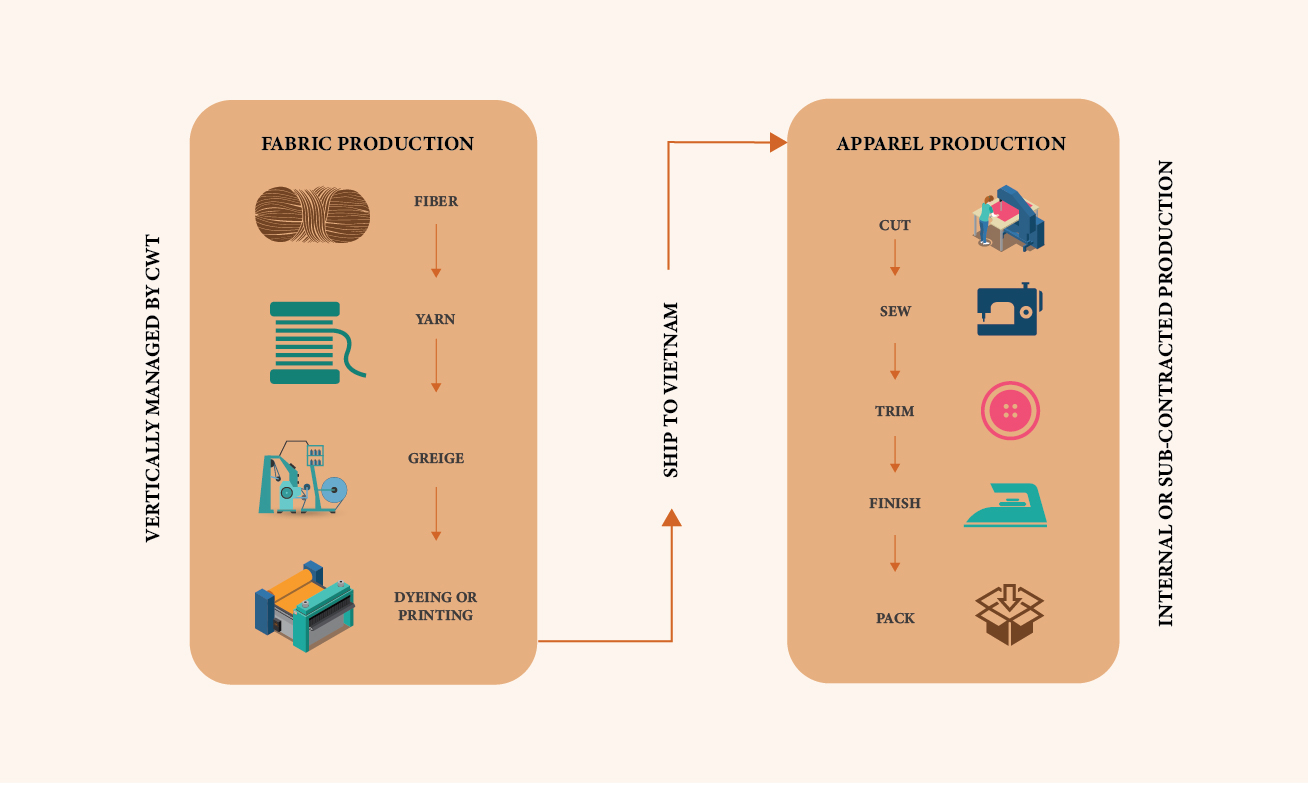
Vertical integration connects key production stages, from fabric sourcing and sampling to sewing, quality control, and shipping. This reduces handoffs between suppliers and helps teams coordinate schedules, materials, and approvals more efficiently.
How it helps reduce delays:
-
Better coordination: Teams can align production schedules and material availability.
-
Earlier problem detection: Quality checks at each stage help identify issues before they cause further delays.
-
Improved production visibility: Connected teams can track progress and address bottlenecks sooner.
Capital World Group uses a vertically managed apparel supply chain to coordinate manufacturing and quality control. Learn more about its vertical management model.
However, vertical integration cannot eliminate every delay. Material shortages, late approvals, and shipping disruptions can still affect delivery schedules.
How to Evaluate a Garment Manufacturer’s Lead-Time Commitment
A manufacturer’s quoted lead time is useful only when both parties understand what it covers. Before placing an order, buyers should ask when the timeline begins, what activities it includes, and which approvals or materials must be ready before production starts.
Use this checklist when comparing suppliers:
-
Timeline scope: Does the quotation cover sampling, material sourcing, bulk production, inspection, packing, and shipping, or only selected stages?
-
Material readiness: Are the required fabrics and trims available, or do they need custom development?
-
Capacity and order volume: Can the factory allocate sufficient production capacity for the order quantity and required delivery date?
-
Approval process: Who approves samples, colors, measurements, and packaging, and how quickly must they respond?
-
Quality control: What inspections take place during production, and how are defects or rework handled?
-
Progress reporting: How often does the supplier update the schedule, and how does it communicate a potential delay?
-
Shipping arrangements: Which transport mode, destination, and delivery terms determine the final arrival date?
At Capital World Group, we provide the solution thanks to this end-to-end supply chain control as well as having full ownership of our Kiara Garments factory. We offer competitive, high-quality women’s wear manufacturing tailored to premium market demands, a result of faster turnarounds, greater flexibility, and consistent quality at scale.
Conclusion
Managing lead time in the garment industry requires more than choosing a factory with a short production estimate. Fashion brands need clear specifications, timely approvals, available materials, coordinated production, effective quality control, and realistic shipping plans. By tracking milestones and evaluating suppliers against consistent criteria, brands can improve delivery planning and reduce avoidable delays.
Capital World Group supports fashion brands seeking coordinated womenswear manufacturing through its vertically managed supply chain in Vietnam. Contact Capital World Group to discuss your product requirements and production schedule.