
Sourcing teams shortlisting a Vietnam factory face a crowded field. Vietnam exported about US$46 billion of textiles and garments in 2025, making it the world’s third-largest exporter in the sector after China and Bangladesh, according to the Vietnam Textile and Apparel Association (VITAS). That scale means thousands of factories, but only a handful will fit your product, order size, and compliance needs.
This guide profiles 11 established Vietnam clothing and garment manufacturers, from vertically integrated groups running retail-scale programmes to knit specialists that accept a few hundred pieces per style. Each profile covers location, speciality, scale, and certifications. The list is a factual directory grouped by speciality and order size, not a ranking. After the list, you will find practical guidance on choosing a factory and on what drives production cost.
How we chose these Vietnam clothing manufacturers?
Each manufacturer on this list was selected on publicly verifiable criteria, not on price. We looked for four things:
- Export track record: an established history of producing for overseas brands and retailers.
- Documented compliance: social, environmental, or quality certifications that buyers can request and check.
- Clear speciality: a defined product focus, such as womenswear, denim, activewear, or uniforms.
- Stated capability: published information on factory locations, workforce, or production lines.
We also covered different order sizes, so a brand placing 300 pieces per style and a retailer placing 30,000 both find a relevant option. Vietnam has thousands of garment factories, so this is a representative shortlist rather than a complete one. Capital World Group publishes this guide and appears as one entry, described against the same criteria. Entries are grouped by speciality and are not ranked against each other.
Best 10+ Vietnam clothing & garment manufacturers in 2026
The 11 manufacturers below cover womenswear, activewear, denim, tailoring, uniforms, basics, and small-batch knits. Use the table for a quick comparison, then read each profile for location, scale, and certifications.
| Manufacturer | Location | Speciality | Best for |
|---|---|---|---|
| Capital World Group | Nam Dinh, Thanh Hoa | Womenswear, knit and woven | 5,000+ pcs/style |
| Vinatex | Hanoi HQ, nationwide | Yarn-to-garment group | Retail-scale programmes |
| Maxport | Hanoi, Nam Dinh, Thai Binh | Performance, outdoor | Technical apparel |
| TCE Denim | Nam Dinh | Denim | Documented denim |
| TAL Apparel | Thai Binh, Vinh Phuc | Dress shirts, tailoring | Large woven orders |
| DUGARCO | Hanoi | Jackets, uniforms | Volume workwear |
| TNG | Thai Nguyen | Sportswear, outerwear | Large sportswear orders |
| Song Hong Garment | Nam Dinh | Basics, casualwear | US retail basics |
| Thanh Cong (TCM) | Ho Chi Minh City | Knitwear | Full-package knits |
| Thai Son S.P | Ho Chi Minh City | Light knits, activewear | 200–300 pcs/style |
| Dony Garment | Ho Chi Minh City | Uniforms, casualwear | Low-MOQ uniforms |
Capital World Group (Kiara Garments and HP Vina Garment)
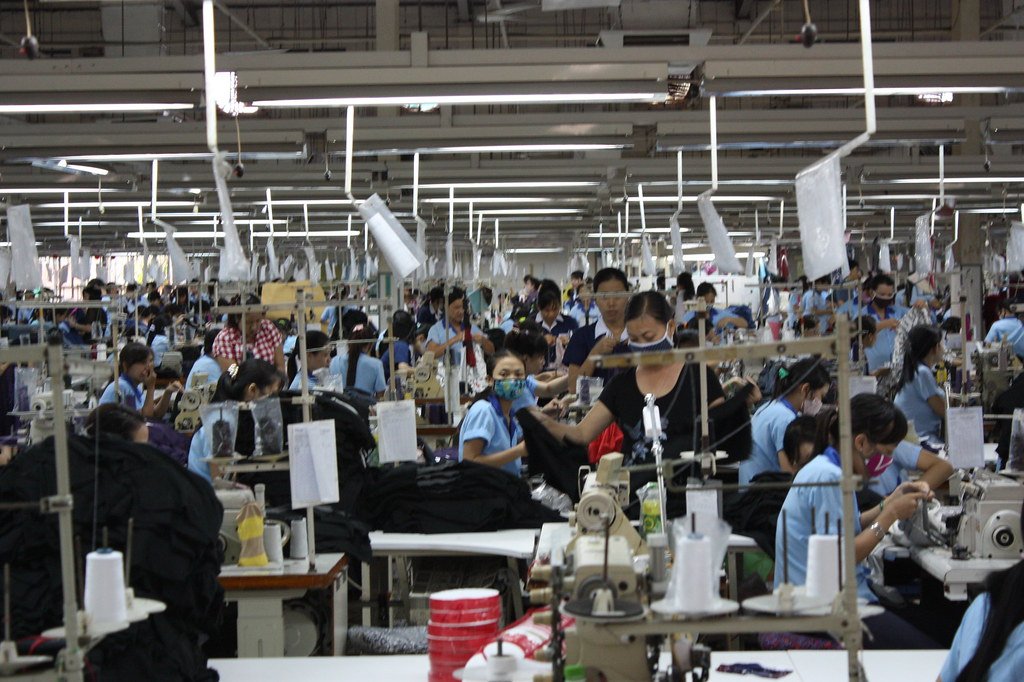
Production line at Kiara Garments Vietnam Limited in Nam Dinh
Capital World Group is a family-owned textile and apparel group, founded in 1967, that makes ladies’ knit and woven apparel in its own Vietnam factories. Kiara Garments Vietnam Limited in Nam Dinh runs 18 production lines with 800 staff, and HP Vina Garment in Thanh Hoa specialises in pants. The group is a member of amfori BSCI (Business Social Compliance Initiative), uses the Higg Facility Environmental Module (Higg FEM), and holds a Social & Labor Convergence Program (SLCP) ID. Standard terms are 5,000 pieces per style and a 10-day average sample turnaround.
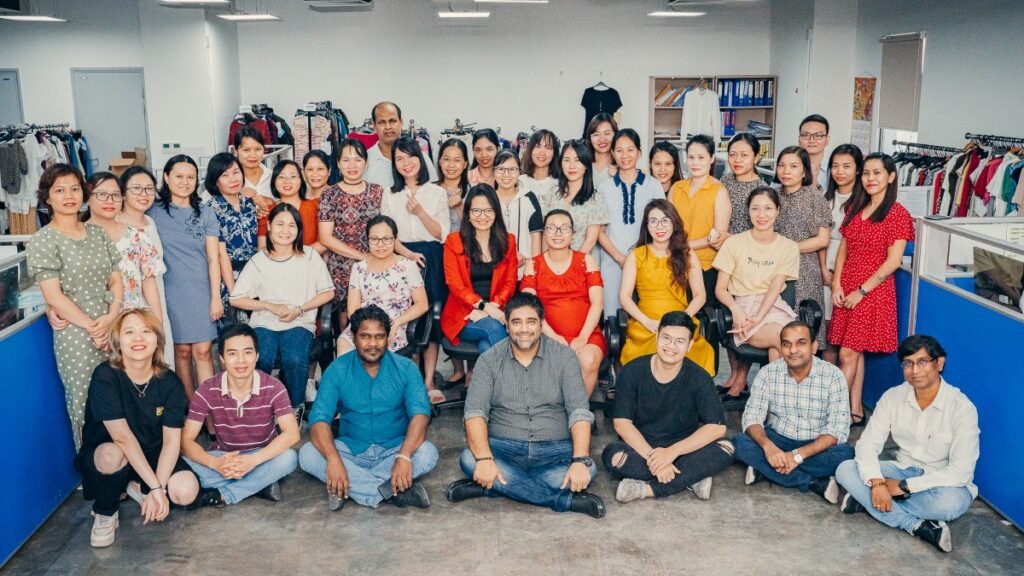
Kiara Garments Vietnam Limited (Nam Dinh)
Kiara Garments Vietnam Limited is the group’s wholly owned womenswear factory in Truc Ninh District, Nam Dinh, about 130 km south-east of Hanoi. It opened in July 2016 and was designed by JG Consulting Hong Kong for compliance, safety, and lean manufacturing. The factory runs 18 production lines with 800 staff in a 5,000 sqm workshop. It focuses on ladies’ knit and woven tops and dresses, with automatic spreading and cutting, and needle detection at finishing.

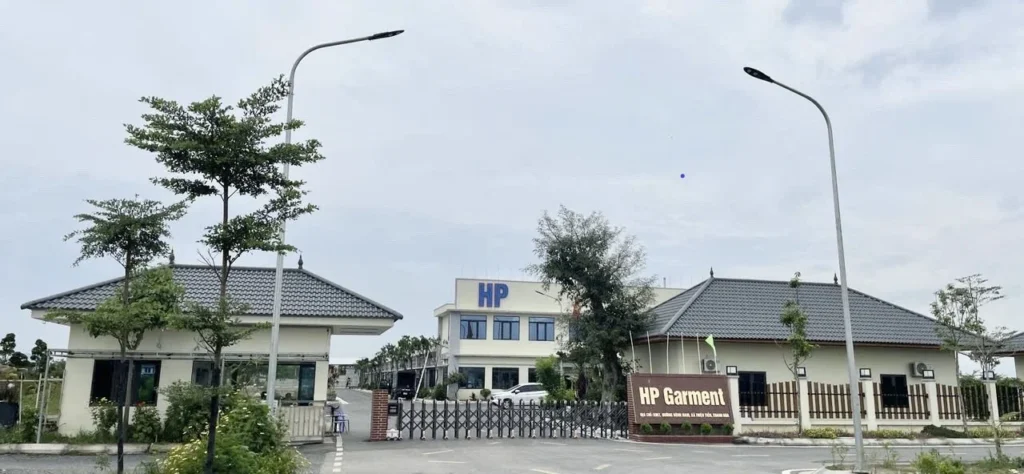
HP Vina Garment (Thanh Hoa)
HP Vina Garment is the group’s pants specialist in Thanh Hoa, acquired by Capital World Group to expand its Vietnam manufacturing network. Basic pants are its core product, and the factory handles cutting, sewing, ironing and finishing, inspection, and packing in-house. HP Vina reports a capacity of about 120,000 to 200,000 pieces per month and has export experience in the US, Brazil, South Korea, Italy, and Japan.
Vinatex (Vietnam National Textile and Garment Group)
Vinatex is Vietnam’s state-backed textile and garment group, headquartered in Hanoi with more than 50 member companies nationwide. Its network covers the full chain, from fibre and yarn through fabric, dyeing, and finished garments. That vertical reach suits retailers that need large programmes with integrated material supply. Buyers typically place orders with an individual Vinatex member company rather than with the group itself.
Maxport Limited
Maxport Limited makes performance and outdoor apparel in five factories across Hanoi, Nam Dinh, and Thai Binh, with more than 6,000 workers. Its range includes technical knits and wovens, seam-sealed jackets, base layers, leggings, and sports bras. Maxport is accredited by the Fair Labor Association and takes part in the Better Work programme. It fits sports and outdoor brands with demanding technical specifications.
TCE Denim (TCE Group Vietnam)
TCE Denim is a joint venture between South Korea’s TCE Group, Vinatex, and Thien Nam, with its largest Vietnam project in Nam Dinh. The company produces jeans, denim jackets, skirts, and shirts across two Vietnam factories. Its process credentials include water-saving dyeing, one-bath sulphur dyeing, and aniline-free indigo. It suits denim brands that need process documentation for their sustainability reporting alongside volume capacity.
TAL Apparel
TAL Apparel is a Hong Kong-headquartered group with Vietnam factories in Thai Binh and Vinh Phuc provinces. It specialises in dress shirts and woven shirts, and also produces polos, blouses, pants, and suits. Across its Asian factory network, TAL employs around 25,000 people. Its programmes are built for large retail orders, often tens of thousands of units per style each season.
DUGARCO (Duc Giang Corporation)
DUGARCO is headquartered in Hanoi and operates 25 factories across northern and central Vietnam, with more than 8,000 workers and more than 160 production lines. It produces jackets, casualwear, uniforms, workwear, and sportswear under both OEM and ODM models. The group holds amfori BSCI membership and Worldwide Responsible Accredited Production (WRAP) certification. Orders typically start at around 3,000 pieces per style.
TNG Investment and Trading
TNG Investment and Trading is based in Thai Nguyen province in northern Vietnam and runs 11 sewing factories with about 220 production lines. Its core products are outerwear and sportswear, alongside a growing fashion and uniform business. TNG is listed on the Hanoi Stock Exchange and holds amfori BSCI, WRAP, and ISO 9001 credentials. It suits large sportswear and outerwear programmes.
Song Hong Garment JSC
Song Hong Garment was founded in 1988 in Nam Dinh, employs around 11,000 workers, and is listed on the Ho Chi Minh Stock Exchange under the ticker MSH. It produces export garments on both cut-make-trim (CMT) and FOB terms. Its main strength is basics and casual apparel for the US market. It suits retailers buying core basics in volume, season after season.
Thanh Cong Textile and Garment JSC (TCM)
Thanh Cong (TCM) was founded in 1967 and is based in Ho Chi Minh City. It is a vertically integrated knitwear producer covering yarn, fabric, and finished garments, which supports full-package knit programmes. Its reported certifications include WRAP and ISO 14001. It suits brands that want knit fabric development and garment production managed by a single supplier.
Thai Son S.P
Thai Son S.P is a family-owned knit specialist in Ho Chi Minh City, with two facilities and around 990 workers. It produces activewear and lightweight knits, including single jersey, piqué, and French terry. Minimum orders start at 200 to 300 pieces per style, with samples in 7 to 14 days. It holds SA8000 and amfori BSCI credentials, with OEKO-TEX certification on selected fabrics.
Dony Garment
Dony Garment is a Ho Chi Minh City manufacturer of uniforms, workwear, casualwear, and promotional clothing, with full-package production available. It accepts low minimums, from around 200 pieces per style. The company reports ISO 9001 certification and exports to the US, the EU, Japan, and the Middle East. It suits brands testing a uniform or casualwear range before committing to larger volumes.
Is Vietnam a good place to manufacture clothing?
Yes. For most mid- and high-volume apparel programmes, Vietnam combines scale, skills, and export experience. VITAS estimated the country’s textile and garment exports at about US$46 billion in 2025, up 5.6% on 2024, which kept Vietnam the world’s third-largest exporter in the sector. In the first half of 2026, exports reached about US$22.2 billion, with the United States taking roughly 45% of shipments, according to VITAS.
Several factors support that position:
- Workforce depth: industry estimates put textile and garment employment at 2.5 to 2.7 million people.
- Knit and woven capability: factories cover everything from jersey basics to tailored outerwear.
- Fabric proximity: short transit from China’s fabric hubs, such as Shaoxing, keeps material lead times manageable.
- Export logistics: ports such as Hai Phong and Cai Mep handle large apparel volumes.
One caveat: VITAS notes that the industry still imports much of its raw material, so fabric planning matters. For a wider view, see our overview of the biggest clothing manufacturing countries.
How to choose the right Vietnam clothing manufacturer?
Start with your order size and product, then check compliance and process. A factory that suits a 300-piece capsule is rarely the right partner for a 20,000-piece retail programme, and the reverse is also true.
- Match the MOQ to your volume. Large groups usually quote from several thousand pieces per style, while small-batch specialists start at a few hundred. Ask whether the MOQ applies per style, per colour, or per order.
- Check category fit. Knit and woven production use different equipment and skills. A womenswear specialist is more likely to get fit, drape, and grading right for women’s sizing. Our guide to choosing a women’s wear manufacturer sets out five non-negotiables.
- Verify certifications. Separate facility-level credentials, such as amfori BSCI, SLCP, and Higg FEM, from material certifications that apply order by order. Ask for current certificates, not logos.
- Ask who controls production. An owned factory with vertical management controls quality and lead time directly. A sourcing agent adds flexibility, but also adds a layer between you and the sewing line.
- Test sampling and fit. Ask for sample turnaround times and how fit approvals work before bulk. Fast, accurate samples usually signal an organised development team.
- Confirm quality and lead-time processes. Our guide on how to choose a bulk apparel supplier covers quality checks, MOQ, and lead time in detail. You can also see how Capital World Group documents compliance.
What drives clothing manufacturing costs in Vietnam?
Clothing costs in Vietnam depend on five variables: the production model, materials, order volume, construction, and compliance requirements. Factories quote per style, so one factory can price two garments very differently.
- Production model: under FOB (free on board), the factory sources fabric and trims and delivers finished goods to the port. Under CM or CMT, the buyer supplies materials and pays mainly for labour. Our explainer on FOB vs CM in apparel manufacturing compares both.
- Fabric and trims: materials often make up the largest share of an FOB quote, and certified or recycled fibres add cost.
- Order volume: higher quantities per style spread the cost of setup, sampling, and line changeovers.
- Construction and finishing: linings, washes, embroidery, and complex seams add sewing minutes.
- Compliance and testing: lab tests, audits, and material certificates add cost but reduce risk.
For an accurate figure, share a tech pack and target quantity with each shortlisted factory.
Conclusion
The right Vietnam clothing manufacturer is the one whose order size, speciality, and compliance record match your programme. Large groups such as Vinatex and TAL Apparel suit retail-scale orders, while Thai Son S.P and Dony Garment serve smaller runs. Shortlist two or three factories, request certificates and samples, and compare how each handles fit and lead time.
If you produce womenswear at 5,000 pieces per style or more, Capital World Group can support the full journey from tech pack to bulk, with its own factories in Nam Dinh and Thanh Hoa, in-house sampling, and documented compliance. Contact our team to discuss your next collection, or download our company profile.
Frequently Asked Questions
Who is the largest clothing manufacturer in Vietnam?
Vinatex (Vietnam National Textile and Garment Group) is the largest player in Vietnam’s textile and garment industry by overall scale. It operates through more than 50 member companies and covers the supply chain from yarn to finished garments. Among individual manufacturers, Song Hong Garment employs more than 10,000 workers. The best factory for your business, however, depends on your order volume, product requirements, and production needs.
Is Vietnam a good country for clothing manufacturing?
Yes. Vietnam is a major global textile and garment exporter, with exports reaching approximately US$46 billion in 2025, according to VITAS. Its clothing manufacturers produce knits, wovens, denim, outerwear, and tailored garments, and many hold international social and environmental certifications. Vietnam also benefits from proximity to China’s fabric supply base and access to major shipping ports, including Hai Phong. Most factories are best suited to mid- to high-volume orders.
How much does it cost to manufacture clothing in Vietnam?
Clothing manufacturing costs in Vietnam vary by garment style, so there is no standard price per piece. Key factors include the production model (FOB or CMT), fabric and trims, order quantity per style, construction complexity, and testing or certification requirements. Larger orders generally reduce the unit cost. To obtain accurate pricing, send your tech pack and target quantity to two or three shortlisted factories and compare their quotations.
What is the minimum order quantity (MOQ) for clothing manufacturers in Vietnam?
Minimum order quantities (MOQs) vary by factory and production model. Small-batch manufacturers such as Thai Son S.P and Dony Garment may accept orders starting at around 200–300 pieces per style. Mid-sized manufacturers often require 1,000–3,000 pieces, while large vertically integrated groups may set MOQs of 5,000–10,000 pieces or more. Capital World Group’s standard MOQ is 5,000 pieces per style. Always confirm whether the MOQ applies per style, per colour, or per order.
Which clothing manufacturers in Vietnam specialise in womenswear?
Several Vietnam clothing manufacturers produce womenswear, but fewer specialise in it. Capital World Group focuses on ladies’ knit and woven apparel, including tops, blouses, dresses, jumpsuits, pants, skirts, and blazers, manufactured in its own factories in Nam Dinh and Thanh Hoa. Larger woven apparel groups, such as TAL Apparel, also produce blouses as part of broader shirting ranges. Explore our guide to Vietnam ladies’ apparel manufacturers for more options.
How can I verify a clothing factory’s certifications in Vietnam?
Request current certificates and audit reports directly from the factory, then verify them with the issuing organisation. amfori BSCI audits can be traced using the factory’s amfori DBID, Higg FEM results are shared through the Higg platform, and SLCP assessments carry a facility ID. Check expiry dates, certification scope, and the specific factory site covered, as some credentials apply only to certain locations or materials. For large production programmes, consider a factory visit or an independent third-party audit.
How long does clothing manufacturing take in Vietnam?
Clothing production timelines in Vietnam depend on the factory, garment type, and fabric availability. Sampling typically takes one to two weeks at established manufacturers. Thai Son S.P quotes 7–14 days for samples, while Capital World Group averages 10 days. Bulk production can take several weeks to three months; Capital World Group’s standard lead time is 90 days from order confirmation. Allow additional time for shipping to the US and plan your production schedule backwards from your required in-store date.