
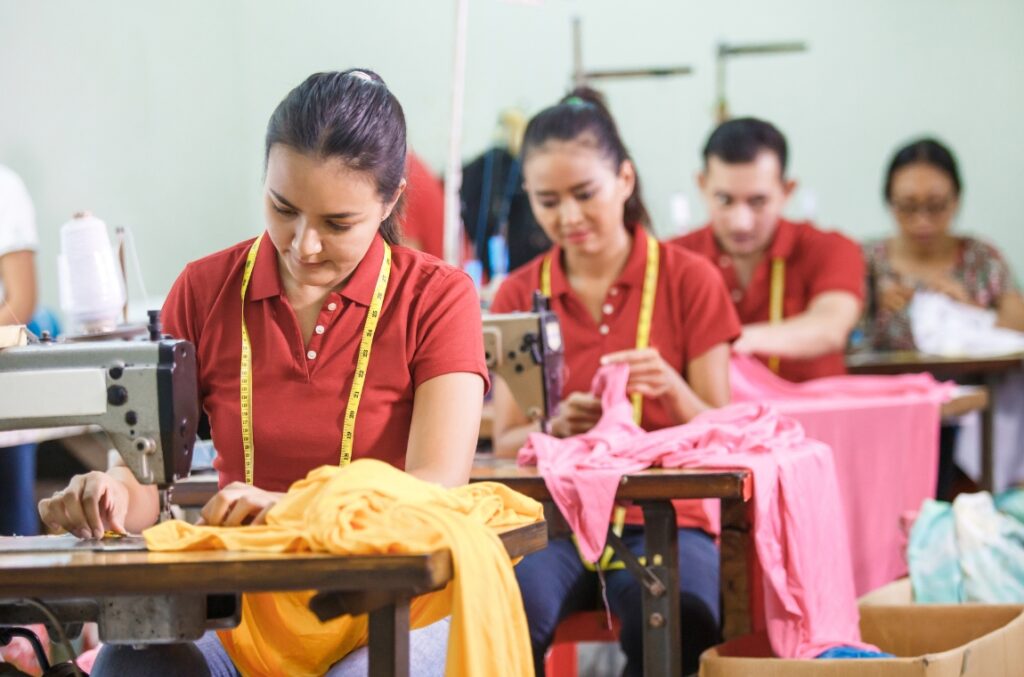
Continuous production partnerships are long-term manufacturing collaborations where apparel brands work consistently with the same production partner across seasons and collections.
Instead of shifting suppliers for each order, brands align planning, sourcing, and production into an ongoing workflow. This strategic model helps fashion brands streamline operations, reduce costs, and maintain consistent product quality over time. Unlike project-based or batch production, continuous partnerships improve speed, reliability, and transparency across the supply chain.
This article explores the top eight benefits of continuous production partnerships and why forward-thinking brands
1. Enhanced production efficiency
Continuous production partnerships significantly improve manufacturing efficiency by eliminating repetitive onboarding, sampling resets, and misaligned processes. When brands work long-term with a vertically integrated partner like Capital World Group, production teams gain a deep understanding of your product standards, materials, and workflows. This familiarity enables smoother planning, faster approvals, and optimized line allocation across seasons. Over time, efficiency gains translate into fewer production disruptions, better capacity utilization, and a more reliable end-to-end manufacturing process that supports consistent brand growth.
2. Predictable lead times & delivery schedules
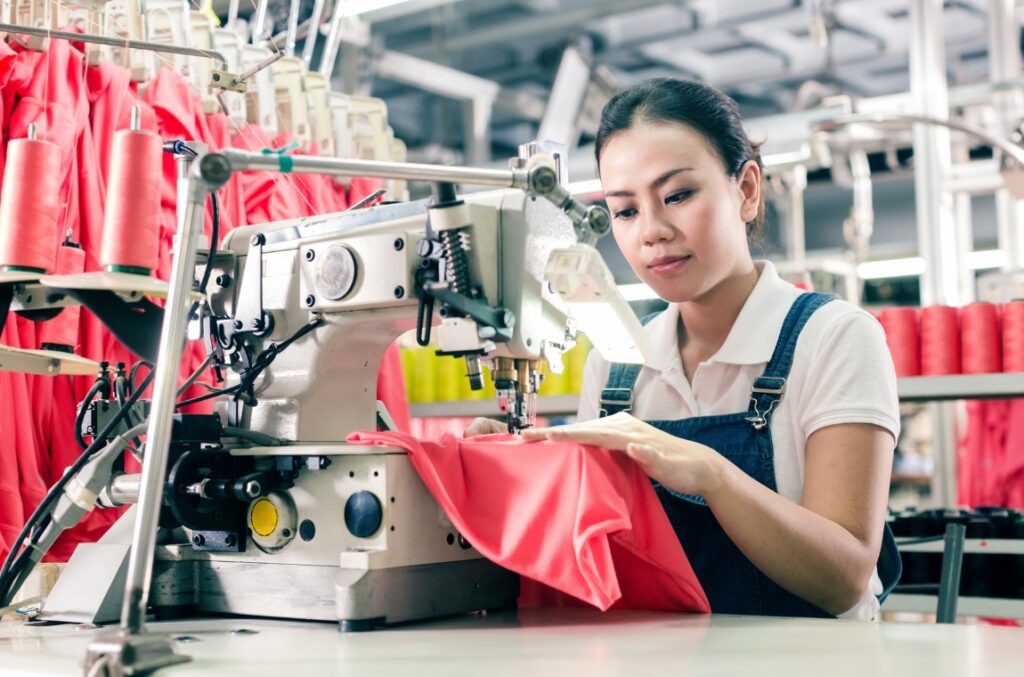
Predictable lead times are a key advantage of continuous production partnerships. Ongoing collaboration allows manufacturers to plan capacity, fabric sourcing, and trims, reducing delays caused by last-minute changes or supplier switching. With production, quality control, packing, and export managed from one site, this model supports stronger inventory planning, reduces stock risk, and enables fashion brands to meet retail calendars with greater confidence.
3. Reduced production costs
Long-term production partnerships help brands lower overall manufacturing costs without compromising quality. Continuous orders enable better material forecasting, bulk fabric sourcing, and optimized production runs, reducing per-unit costs. A vertically integrated setup also minimizes third-party markups, logistics inefficiencies, and rework expenses. By consolidating sourcing, sampling, and bulk production under one partner, brands benefit from cost transparency and improved margins. Over time, these efficiencies create a more competitive cost structure that supports scalable, profitable growth.
4. Minimizing waste and maximizing resource efficiency
Continuous production partnerships support more sustainable manufacturing by reducing waste at every stage of production. Stable forecasting allows manufacturers to optimize fabric utilization, minimize excess inventory, and reduce sampling waste. With in-house quality control and aligned production standards, fewer defects mean less rework and material loss.
5. Consistent product quality
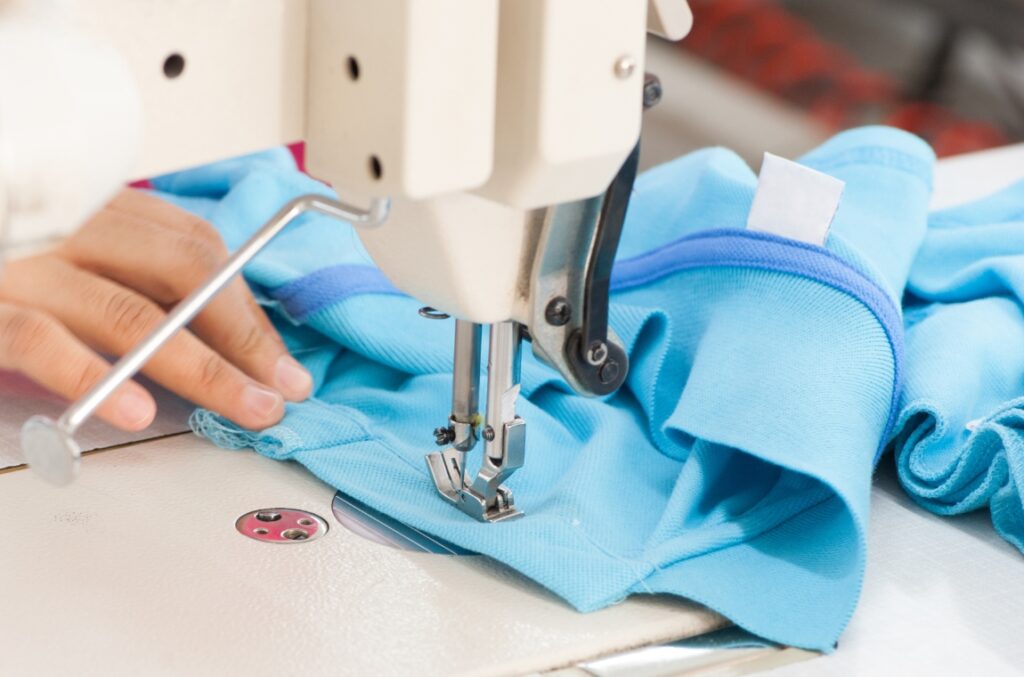
Maintaining consistent product quality is easier when brands work with the same production partner long term. Continuous partnerships allow manufacturers to refine patterns, construction techniques, and finishing details over time. Quality benchmarks are clearly understood and embedded into daily operations. With dedicated QC processes and certified management systems, the brand ensures that garments meet the same standards across every production run. This consistency strengthens brand trust, reduces returns, and protects brand reputation in competitive markets.
6. Strategic business growth
Continuous production partnerships enable brands to move beyond transactional manufacturing toward strategic growth. A long-term partner can support volume scaling, category expansion, and product innovation without sacrificing speed or quality. With established processes and shared performance goals, brands gain the confidence to plan further ahead and expand into new markets as well.
Explore more: Expanding your brand into new markets: A manufacturer’s perspective
7. More responsive to market changes
Fashion markets change quickly, and continuous production partnerships improve a brand’s ability to respond. Ongoing collaboration enables faster sampling, flexible MOQ planning, and quicker production adjustments when demand shifts. With fabric and trim sourcing already aligned, brands can react to trend changes, replenishment needs, or regional demand without restarting the supply chain
8. Stronger supply chain coordination
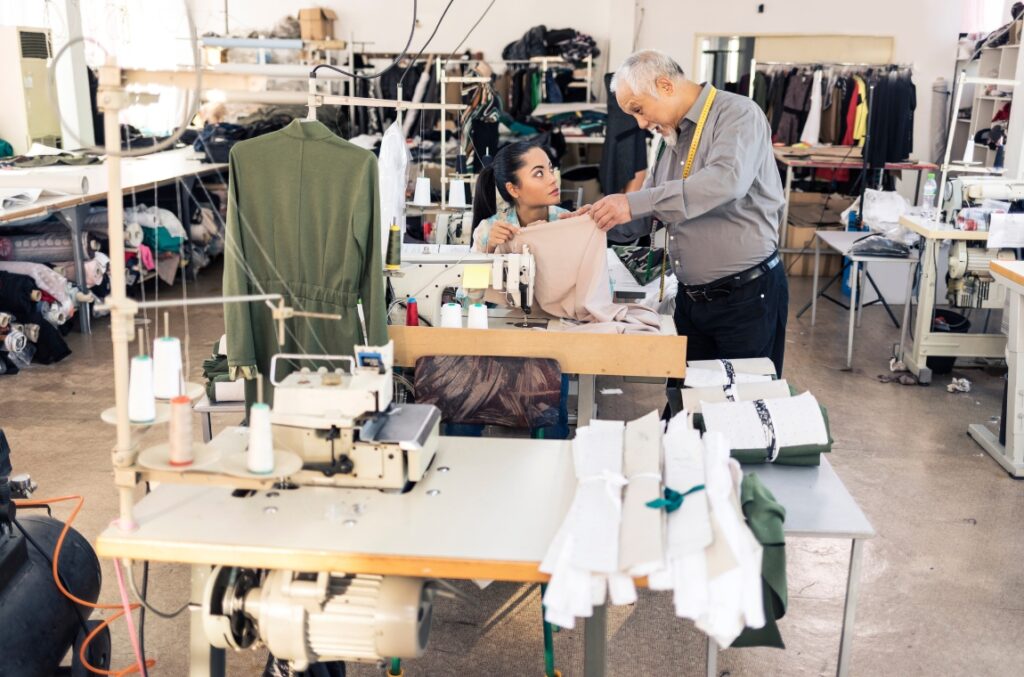
A continuous production model strengthens coordination across the entire supply chain. Design, sourcing, production, quality control, and logistics operate as a connected system rather than isolated steps. This integration improves communication, reduces errors, and increases transparency from raw materials to shipment. Strong coordination ultimately lowers risk, improves accountability, and creates a more resilient apparel supply chain.
Why Vietnam is a strategic hub for continuous garment production partnerships
Vietnam has emerged as a leading hub for continuous garment production partnerships due to its strong manufacturing infrastructure, skilled workforce, and stable trade environment. The country offers competitive costs while maintaining high compliance with international quality, labor, and sustainability standards. With well-developed textile and apparel ecosystems, Vietnam enables faster sourcing, shorter lead times, and better supply-chain coordination.
For global fashion brands, partnering with a vertically integrated Vietnam manufacturer supports long-term scalability, consistent quality, and resilient end-to-end production.
Comparing continuous vs. transactional production partnerships in apparel
Continuous and transactional production partnerships represent two distinct manufacturing approaches in the apparel industry, influencing how brands manage cost efficiency, quality consistency, lead times, and long-term supply-chain stability.
| Criteria | Continuous Production Partnership | Transactional Production Partnership |
| Relationship focus | Long-term collaboration | Short-term, order-based |
| Lead times | Predictable and planned | Variable and reactive |
| Cost efficiency | Optimized over time | Price-focused per order |
| Product quality | Consistent across seasons | Inconsistent between orders |
| Supply chain stability | High coordination and transparency | Fragmented and disconnected |
| Scalability | Supports long-term growth | Limited scalability |
Why trust Capital World Group for your continuous production partnership
Choosing the right manufacturing partner is critical to realizing the full value of continuous production. Capital World Group combines scale, vertical integration, and operational discipline to help fashion brands protect margins, reduce risk, and achieve consistent production outcomes. We offer long-term stability, transparent collaboration, and end-to-end control, ensuring your supply chain remains efficient, predictable, and scalable as your brand grows.
- Heritage & Business Evolution: Established in 1967, Capital World Group brings decades of expertise in global sourcing and international apparel trade, enabling a deep understanding of market dynamics and buyer expectations.
- Manufacturing Scale with 18 production lines and over 800 staff, delivering stable, high-volume production with consistent quality and lead times
- Vertical Integration: End-to-end control from sourcing to export, reducing costs and lead times
- Quality & Sustainability: ISO 9001, Higg FEM, amfori BSCI, SLCP; RCS-, BCI-, FSC-ready fabrics
Contact Capital World Group to discover how a continuous production partnership can strengthen your apparel supply chain and deliver reliable, long-term results.