Capital World Group
  • Shanghai
  • Taipei
  • Shaoxing
  • Hanoi
  • Ninh Binh
vietnam vs bangladesh garment manufacturing

Comparison between Vietnam vs Bangladesh garment manufacturing

Vietnam and Bangladesh are two of the world’s leading garment manufacturing hubs, each playing a critical role in global apparel supply chains. This comparison explores how both countries differ in cost, production strengths, efficiency, and trade advantages, helping brands understand which sourcing destination best fits their manufacturing needs.

Quick comparison table – Vietnam vs Bangladesh

FactorVietnamBangladeshWinner
Cost & Labor advantagesHigher (~$2-3/hr)Lowest (~$0.6-1.3/hr)Bangladesh
Product strengths & SpecializationHigher efficiency & technical capabilityGood for basicsVietnam
Lead times & Supply chain speedGenerally shorter (better raw material access)45-90 days (local fabrics faster)Vietnam
Growth & investment opportunitiesHigh-efficiency export hubHigh-growth potential marketBoth
Supply chain resilience & DiversificationDiversified integrated ecosystemRMG concentrated volatilityVietnam
Sustainability & CSR initiativesStrong CSR leadershipEarly-stage adoptionVietnam
Trade agreements & Market accessStrong (FTAs)Excellent (LDC preferences)Bangladesh

Overview of Vietnam garment manufacturing

Vietnam garment manufacturing industry has grown rapidly since the economic reforms introduced after 1986. Foreign direct investment has played a key role, bringing modern machinery, advanced production systems, and improved efficiency across factories. Strong trade agreements have also helped Vietnam integrate deeply into global apparel supply chains.

Today, Vietnam generates around $44 billion in annual apparel exports, supported by roughly 2 million workers in textile and garment production. The sector is known for efficient manufacturing, competitive lead times, and strong export orientation, making Vietnam a major global sourcing hub in the apparel industry.

Overview of Bangladesh garment manufacturing

Bangladesh’s garment industry began in the late 1970s and officially took off in 1980 with just $1.8 million in exports. Since then, it has expanded dramatically due to low-cost labor, supportive government policies, and strong global demand. It is now the backbone of the national economy and export sector.

Today, Bangladesh produces around $50 billion in annual garment exports. The industry employs over 4 million workers and accounts for approximately 85% of total export earnings, highlighting its role in global apparel manufacturing.

Comparison between Vietnam and Bangladesh garment manufacturing 

1. Cost & Labor advantages

Bangladesh maintains a significant labor cost advantage, with garment wages typically around $0.60-$1.30 per hour, roughly 30-40% lower than Vietnam’s $2-$3 per hour in key industrial zones. This gap directly translates into lower FOB pricing for high-volume, labor-intensive products such as t-shirts, hoodies, denim, casual dresses, and basic knitwear.

Vietnam, while more expensive in labor, offsets part of the cost through higher productivity, better finishing quality, and stronger compliance systems. This makes it more suitable for mid-to-high complexity styles where consistency and construction matter.

In short, Bangladesh is ideal for maximum cost efficiency on large, simple orders, while Vietnam offers better overall value for brands prioritizing quality, speed, and technical execution despite higher unit costs.

2. Product strengths & Specialization

Bangladesh has large-scale garment production with modern machinery, automation, ERP systems, and digital monitoring for efficiency and quality. Vietnam focuses on higher-value, more vertically integrated, compliance-driven production with greater flexibility than Bangladesh’s cost-led mass manufacturing.

Vietnam’s garment manufacturing specializes in:

  • Performance sportswear & activewear (leggings, bras, compression)
  • Outerwear & jackets
  • Lingerie & intimate apparel
  • Tailored / fashion-forward garments

Bangladesh’s garment manufacturing specializes in:

  • Cotton knits (t-shirts, polos, casual dresses)
  • Denim & chambray
  • Sweaters & heavy knits
  • Workwear & uniform styles

So, Vietnam relies more on imported materials and leads ladies’ apparel manufacturers, but has superior access to high-tech fabrics from nearby China, Korea, and Taiwan.

3. Lead times & Supply chain speed

Vietnam generally delivers faster lead times thanks to its closer proximity to key raw material suppliers, particularly synthetic fabrics, and efficient logistics. Port clearance is typically around 24 hours, compared with 48 hours or even several weeks for imported inputs in Bangladesh. This speed advantage makes Vietnam suited for fast-fashion programs and seasonal drops requiring rapid turnaround and flexible replenishment cycles.

Bangladesh offers competitive lead times for repeat orders using locally sourced fabrics, typically around 45–75 days after PP approval. However, timelines can extend when imported trims are required or during peak production seasons, despite ongoing infrastructure improvements across the industry.

4. Growth and investment opportunities

Bangladesh shows stronger long-term growth potential due to its large domestic market, supportive government policies, and ambition to capture 10% of global apparel exports by 2025. Vietnam, meanwhile, is more export-focused, benefiting from established manufacturing ecosystems, higher operational efficiency, and stronger integration into global supply chains.

5. Supply chain resilience & Diversification

Vietnam offers a more stable political environment and proactive trade diplomacy, reducing exposure to abrupt policy changes. Its currency, the dong, shows relatively steady performance. The supplier ecosystem is more diversified, with strong upstream integration across fabric mills, trims, accessories, and technical textiles, enabling brands to source product assemblies through a network.

Bangladesh experiences occasional transport disruptions linked to political transitions though export-led policies support growth. Currency volatility remains moderate. Its ecosystem is concentrated in RMG with limited diversification and technical textiles.

6. Sustainability & CSR initiatives

Vietnam is advancing sustainability through policy and factory upgrades. Government targets 30% renewable energy integration by 2027, while over 35% of major producers report on-site solar installations and energy-efficient machinery. Trade-association-funded vocational training partnerships enhance workforce skills, with Patagonia, H&M, and Nike citing Vietnamese factories’ CSR best practices as widely recognized.

About Bangladesh, they come up with ~20% of medium to large factories use solar or biogas, but high capital costs restrict wider adoption. Better Work Bangladesh, with the ILO, strengthens skills, grievance systems, and gender equity.

7. Trade agreements & Market access 

Vietnam benefits from multiple FTAs, including CPTPP, EVFTA, RCEP, and UKVFTA, providing preferential access across the US, EU, Japan, and Asian markets. These agreements often deliver lower tariffs than non-FTA competitors, strengthening export competitiveness in diversified sourcing programs globally today.

Bangladesh, as an LDC, receives EU EBA/GSP duty-free access, plus preferential entry to the UK, Canada, and others, creating a landed-cost advantage; US tariffs remain manageable across categories in 2026.

Capital World Group – A reliable garment manufacturer in Vietnam

This comparison examines Vietnam and Bangladesh garment manufacturing across cost, product specialization, lead times, sustainability, and trade advantages, helping fashion brands choose the most suitable sourcing destination for their needs.

Capital World Group is a vertically integrated Vietnam garment manufacturer specializing in high-quality ladieswear production for global fashion brands. With over 40 years of industry heritage, 18 production lines, and around 800 skilled staff, CWG delivers end-to-end manufacturing solutions from fabric sourcing to final export.

As a trusted partner for brands across Europe, North America, Brazil, and Russia, CWG combines competitive production costs with strong compliance standards, certified sustainability systems, and efficient lead times. Its in-house capabilities help reduce supply chain complexity while ensuring consistent quality, speed, and flexibility for womenswear collections.

Contact us for sourcing and manufacturing with dependable, customer-focused solutions from development to bulk production.

Read More
aerial view of kiara garments manufacturing factory capital world group

Why Capital World Group Specializes in High-Volume Clothing Manufacturing in Vietnam

High-volume garment production sounds simple on paper: make more, faster. In practice, it requires infrastructure, systems, and supply chain control that most manufacturers can’t sustain without compromising quality. Capital World Group was built specifically to meet that standard.

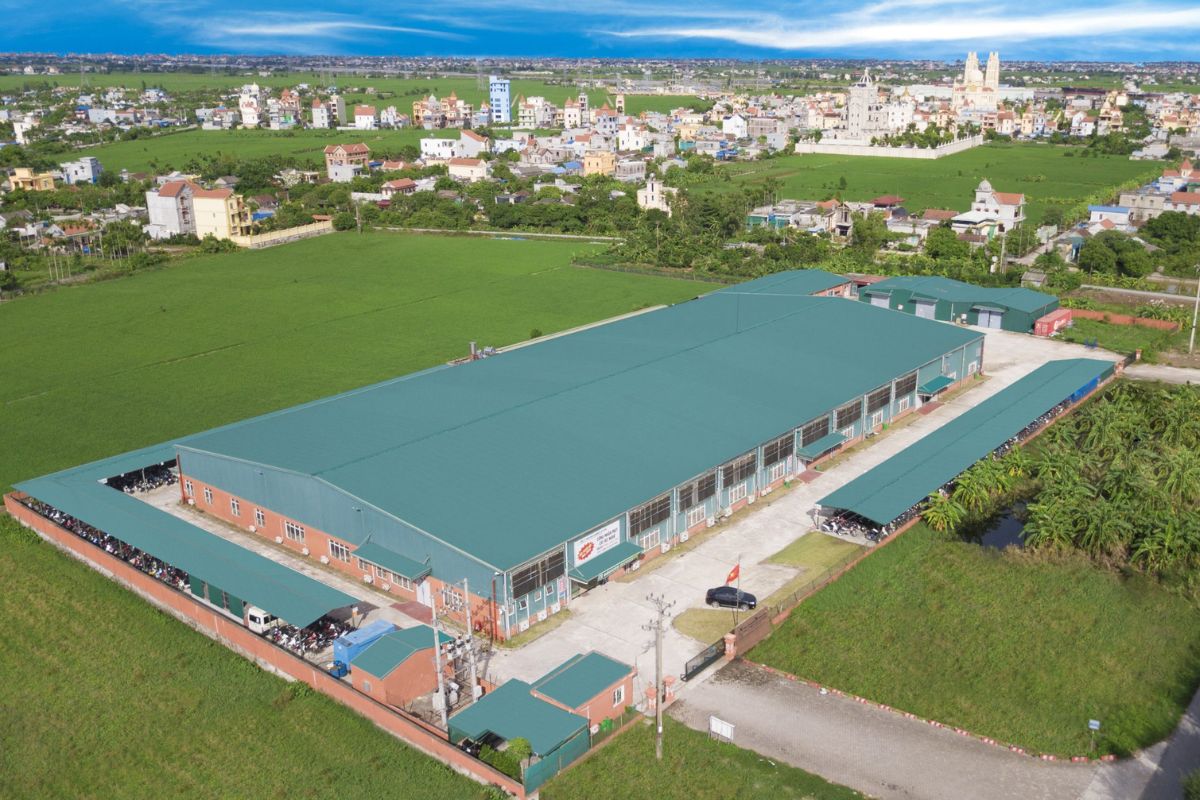
With Kiara Garments’ facility in Ninh Binh Province (formerly Nam Dinh), Vietnam, Capital World Group delivers bulk ladies’ apparel at scale – without the quality drift that typically follows when output increases.

What High-Volume Manufacturing Actually Requires

Running bulk production at consistent quality is a question of setup.

Most sourcing managers have experienced the same problem: a manufacturer hits your first order well, but quality slips by the third or fourth run. The root cause is almost always the same – too many handoffs, too little internal control, and no systemic QC at scale.

High-volume production done right requires:

  • End-to-end process control under one roof
  • Automated cutting and lean line management
  • Dedicated QC at each production stage – not just end-of-line inspection
  • A workforce trained specifically for the product category

Capital World Group’s Kiara Garments factory was purpose-built to meet exactly these requirements for ladies’ knit and woven apparel.

The Infrastructure Behind Capital World Group’s Output

Kiara Garments operates 18 production lines across a 100% Capital World Group-owned facility in Ninh Binh Province (formerly Nam Dinh) – one of Vietnam’s established textile manufacturing centers. The facility runs automated systems and lean processes across every stage: fabric and trim sourcing, pattern making, sampling, bulk cutting, quality control, packing, and export.

That vertical integration is deliberate. When every stage happens under one roof, your brand avoids the margin compression and lead time risk that comes from outsourcing steps to third parties. It also gives our team direct visibility over quality at each handoff point – not just the final inspection.

For brands ordering at MOQ 5,000 pieces per style, this setup means consistent output from run one to run ten.

High Volume Doesn’t Mean Low Standards

A common concern for sourcing managers moving into higher-order quantities: will compliance documentation hold up at scale?

For Capital World Group, certifications aren’t tied to order size – they’re embedded in how the factory operates.

Kiara Garments Vietnam holds:

  • ISO 9001 – quality management systems
  • Higg FEM – facility environmental performance
  • amfori BSCI – business social compliance
  • SLCP – social and labor convergence

These aren’t box-ticking exercises. They reflect the audit and process standards your brand’s compliance team will ask for – and they scale with production volume because they’re built into facility operations, not applied case-by-case.

Sustainability at Scale

High-volume production carries an environmental footprint. Capital World Group addresses this directly through its materials sourcing program, which has prioritized sustainable fabrics.

CWG works with mills across China and internationally to source:

  • RCS-certified recycled textiles
  • BCI cotton – Better Cotton Initiative
  • FSC-ready viscose – responsibly sourced cellulosic fibre

For your brand, this means bulk orders don’t require a trade-off between volume and sustainability credentials. You can source at scale and meet the material traceability standards your market increasingly expects.

Explore CWG’s fabric sourcing capabilities for a full overview of available materials.

Built for Brands Sourcing at Scale in Vietnam

What does a global fashion brand actually need from a high-volume clothing manufacturer in Vietnam?

Consistency, compliance documentation, fast sampling, and a supplier who can absorb order growth without quality degradation. Capital World Group was structured around those four requirements: High Capacity, Full Vertical integration, social compliance, and a fast 10-day sample turnaround with a capacity for 500 samples per week.

Capital World Group serves global apparel brands seeking a Vietnam garment manufacturer with end-to-end supply chain control. If your brand is moving into higher-order volumes and needs a manufacturing partner that can match, contact the CWG team to discuss your sourcing requirements.

Read More
us china trade war about tariff

Garment manufacturing industry – US-China trade war and Vietnam’s role

The US-China trade war has unsettled supply chains worldwide, driving tariff levels and disrupting trade flows. Apparel has been among the hardest-hit sectors, as every garment factory that depends on cross-border sourcing now faces higher costs and shifting production strategies.

The impact of the US-China trade war has not been limited to Washington and Beijing. Higher tariff costs are filtering down to consumers and unsettling global trade. In this environment, Vietnam has drawn greater attention from sourcing teams. With a stable economy and expanding garment factory capacity, Vietnam’s garment manufacturers are becoming reliable partners for brands looking to reduce dependence on China and secure a steady supply.

Overview of the US-China trade war

The trade war between the US and China, the two countries that ranked in top 10 clothing manufacturing countries, has began in 2018 with an initial 25% tariff on Chinese goods, and it only intensified in subsequent years. What started as a dispute over trade imbalances and technology transfer quickly became a prolonged confrontation that unsettled global supply chains. Labor-intensive sectors, particularly apparel and footwear, were hit early as duties pushed up import costs for products that had long relied on China’s scale and efficiency.

According to CNN, in April 2025, the US-China trade war reached a peak when The United States raised tariffs on Chinese imports to 145%, and China responded with 125% duties on American goods. These extreme rates cut into business margins and lifted retail prices, straining both companies and consumers. Manufacturers that relied on cross-border parts also saw production expenses climb sharply, forcing some to rethink sourcing strategies.

The World Trade Organization estimated the fallout would trim global merchandise trade by 0.2% in 2025. As of August 27, US duties on Chinese exports averaged 57.6%, while China’s stood at 32.6%. Even at these revised levels, the dispute continued to weigh on profitability and limit growth in global trade, creating ripple effects across supply chains and highlighting the need for alternatives, such as garment manufacturers from the third countries.

These third countries felt the impacts sharply. Exporters tied to raw materials and intermediate goods faced shrinking demand as production costs rose in both the U.S. and China. Regional suppliers dependent on cross-border inputs also saw their margins narrow, while consumer markets endured higher prices. That said, some producers gained opportunities as brands shifted sourcing to avoid escalating tariffs.

Vietnam’s role in the US-China trade war

Vietnam, one of the competitive clothing manufacturing countries, has become stronger as the trade conflict reshape global sourcing patterns. Its garment industry has become central to this shift.

The potential garment manufacturing hub

Many companies have adopted a China plus one strategy, diversifying production beyond China to mitigate risk. Vietnam has quickly become the leading alternative hub. It is now the world’s second-largest exporter of textiles and garments, showing how far its supply chain has advanced in just a few years. Export performance reflects this momentum: by May 2025, Vietnam’s textile and garment shipments reached $17.58 billion, a 9% increase compared with the previous year. 

Global brands are reinforcing the trend. Nike, Adidas, and Uniqlo have all built strong sourcing relationships in Vietnam, valuing its reliability and competitive costs. With average labor expenses of about $3 per hour versus $5 in China, the country holds a clear advantage in labor-intensive manufacturing.

pressing finished clothes in kiara garments factory

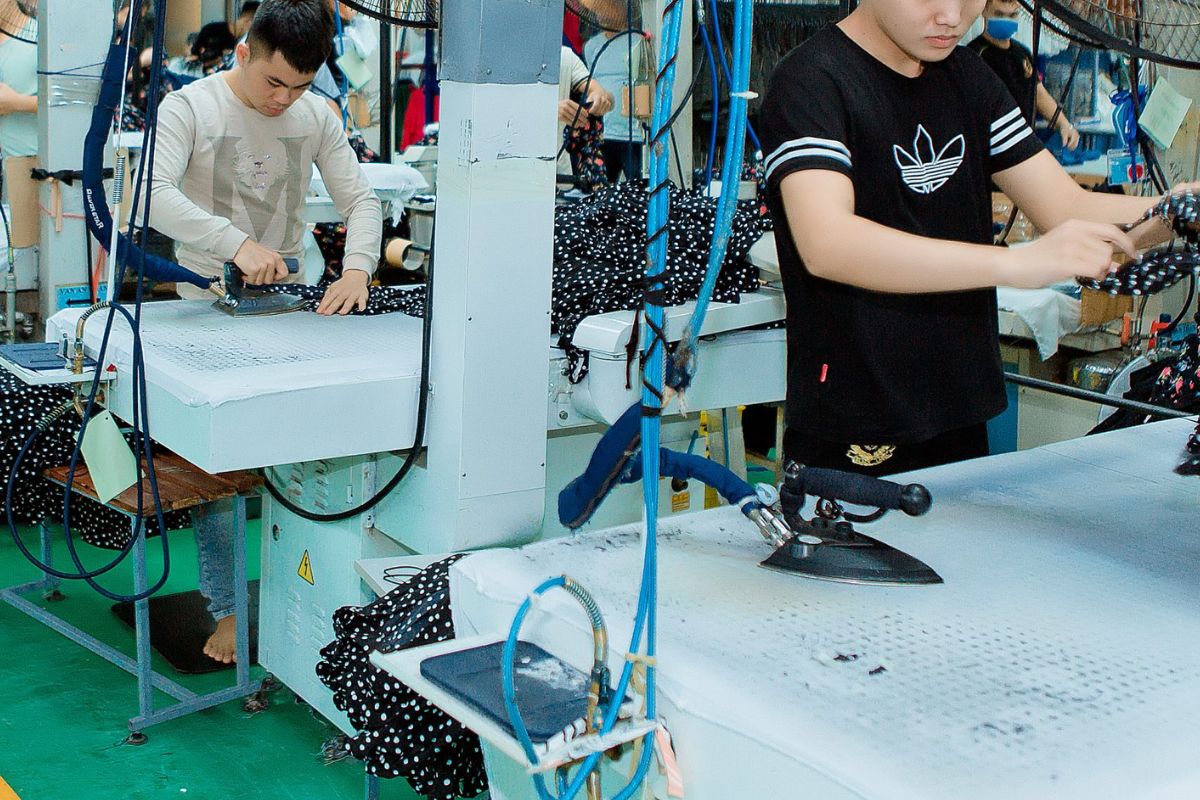
At the same time, Vietnam is expanding garment factory capacity through new facilities and modern industrial zones. This growth and a skilled workforce enable manufacturers to handle orders redirected from China. As a result, many global firms are partnering with Vietnamese textile manufacturers to safeguard supply chains and maintain production stability during uncertain trade conditions.

Experience dynamic shifts

Recent trade agreements have strengthened Vietnam’s role in apparel sourcing. The EU–Vietnam Free Trade Agreement (EVFTA) allows near-zero duties on clothing shipped to Europe, cutting costs for brands. Through the Comprehensive and Progressive Agreement for Trans-Pacific Partnership (CPTPP), Vietnam also gains access to partners such as Canada, Japan, and Australia. These deals lower tariff barriers and make Vietnam’s garment manufacturers more competitive in global trade, attracting brands that want stable, cost-effective production outside China.

In July 2025, General Secretary To Lam and US President Donald Trump agreed to cut US tariffs on Vietnamese exports from 46% to about 20%, with apparel at 20–25%. This deal improved access to the American market and reinforced Vietnam’s role as a key sourcing base. These measures strengthen Vietnam’s garment manufacturers and expand garment factory networks.

Many garment producers in Vietnam that once focused only on Original Equipment Manufacturing (OEM) now offer Original Design Manufacturing (ODM), giving buyers design input and production. At the same time, factories are putting money into greener operations, using less water, reducing waste, and meeting international audit standards. These steps show how Vietnamese garment manufacturers are adapting to new market expectations.

The other aspects being introduced on factory floors to improve efficiency, quality, and scalability are digital tools and automation. Major infrastructure upgrades in ports and industrial zones are now meant to expand capacity for rising export volumes. Even niche players, such as Kiara Garments of Capital World Group, one of the leading women’s clothing manufacturers in Vietnam, are embracing these advances to meet international expectations.

Learn more about The differences between OEM vs. ODM vs. Private Label for your garment production.

aerial view of kiara garments manufacturing factory capital world group

Capital World Group serves global apparel brands seeking a reliable Vietnam garment manufacturer. Furthermore, Capital World Group provides design development, sampling, scalable runs, certified fabrics, and end-to-end logistics. This integrated approach helps cut costs, shorten lead times, and align production with global compliance benchmarks, building a supply chain that balances speed, quality, and responsibility. 

Read More