Capital World Group
  • Shanghai
  • Taipei
  • Shaoxing
  • Hanoi
  • Nam Dinh
global apparel supply chain and market data

Global apparel supply chain evolution & Market data in 2026

The global apparel supply chain market was valued at approximately USD 991.6 billion in 2025 and is projected to reach around USD 1.27 trillion by 2032. This growth reflects a compound annual growth rate (CAGR) of 3.6% between 2026 and 2032, driven by increasing apparel demand, supply chain diversification, and the continued expansion of global sourcing networks.

At the same time, the broader global apparel industry generates around USD 1.8 trillion in annual revenues and supports approximately 300 million jobs worldwide. 

In this blog, Capital World Group shares key apparel industry data and supply chain insights to help fashion brands better understand global sourcing trends, market growth, and evolving manufacturing strategies in 2026.

Why global apparel supply chains are evolving in 2026

The apparel supply chain market is being reshaped by rapid e-commerce growth, with online apparel sales expected to account for 25% of total retail sales by 2025. This trend is pushing fashion brands to build more agile supply chains that can support high-volume direct-to-consumer fulfillment while improving inventory efficiency across global distribution networks. According to industry analysis, sourcing teams are shifting from reactive sourcing decisions toward long-term resilience planning. 

Resilience over costs

For decades, global apparel sourcing strategies were largely driven by one goal is reducing manufacturing costs as much as possible. In 2026, however, fashion brands are shifting toward sourcing models that prioritize efficiency, supply chain resilience, and sustainability alongside cost control. According to McKinsey & Company, 71% of apparel brands now view supplier restructuring and consolidation as a medium-to-high strategic priority for the next five years.

At the same time, brands are investing more heavily in long-term supplier partnerships instead of short-term transactional sourcing. McKinsey’s research shows that deeper strategic supplier relationships increased from 26% of supplier networks in 2019 to 43% recently, with expectations that this figure could reach 51% by 2028. These stronger partnerships help fashion brands improve planning accuracy, reduce operational disruptions, and build more stable and flexible production strategies for long-term growth.

Tariff and trade pressure

Global apparel brands are increasingly adopting China-plus-one and multi-country sourcing strategies by shifting parts of their apparel supply chains to countries such as Vietnam, Bangladesh, Indonesia, as well as emerging sourcing hubs like Myanmar and Cambodia.

Vogue Business reported that tariffs are becoming a long-term strategic factor rather than a temporary sourcing issue. Many fashion brands are now redesigning supply chains to reduce dependence on single-country sourcing models. 

Vietnam’s exports to the United States reached a record $153 billion in 2025, while the country’s total exports increased 17% year-over-year to $475 billion. Additional industry data showed that Vietnam became the largest apparel supplier to the U.S. market during several periods in 2025, overtaking China as brands accelerated sourcing diversification strategies at 21% to &6.9 billion over the same periods. 

ESG and compliance demands

Environmental and social compliance requirements are becoming increasingly important across the global apparel industry. Fashion brands now face growing pressure from regulators, retailers, investors, and consumers to improve supply-chain transparency and sustainability performance. Compliance expectations extend beyond finished products and increasingly include raw material sourcing, labor conditions, emissions reporting, and traceability systems.

McKinsey reported that more than 80% of apparel sourcing executives now consider ESG certifications, transparency, traceability, and sustainable material usage as prerequisites during supplier selection. 

Brands increasingly prefer suppliers that already maintain internationally recognized certifications because this helps reduce compliance risk and simplifies onboarding processes. As ESG expectations continue rising, compliance readiness is becoming a competitive advantage within global apparel sourcing. 

Core strategy of sourcing diversification

Global apparel brands are increasingly shifting away from single-country sourcing models as supply-chain risks continue rising in 2026. Instead of concentrating manufacturing in one region, brands are building diversified sourcing networks to improve flexibility, reduce disruption risks, and strengthen long-term operational stability.

More than 30% of survey respondents plan to increase sourcing volumes in Southeast Asia over the next five years, while many brands continue reducing dependency on concentrated sourcing markets. 

However, managing multiple sourcing regions also creates greater operational complexity. Brands must coordinate quality standards, compliance expectations, communication workflows, and production timelines across different supplier networks.

Artificial intelligence supports proactive decision-making

AI supports sustainability by optimizing material selection and energy consumption. By analyzing supplier performance, production data, logistics patterns, weather events, geopolitical signals, and demand trends, AI tools can support more proactive decisions. 

Companies can benefit fully from AI-powered analysis, they need stronger data discipline. This includes standardized reporting, clear supplier data requirements, integrated systems, and accurate milestone tracking. As AI technologies continue to evolve, their applications in the textile industry are expanding, driving new innovations and pushing the boundaries of textile production and design.  

How Capital World Group supports diversified apparel sourcing strategies

As global sourcing conditions continue evolving, fashion brands increasingly require manufacturing partners that combine operational flexibility, compliance readiness, and supply-chain visibility. Capital World Group supports global apparel brands through a vertically integrated manufacturing model designed to improve sourcing efficiency and strengthen long-term supply-chain resilience. 

Founded in 1967, Capital World Group is a high-volume clothing manufacturing in Vietnam, with 18 production lines and approximately 800 staff. This scale supports a minimum order of 3,000 pieces per style while meeting short timelines, with 500 samples per week capacity and a 10-day prototype turnaround.

With our experience, certified quality, and end-to-end service, you gain reliable production, transparent pricing, and on-time delivery every season. Let CWG turn your next collection into a success story, starting now.

Read More
vietnam vs bangladesh garment manufacturing

Comparison between Vietnam vs Bangladesh garment manufacturing

Vietnam and Bangladesh are two of the world’s leading garment manufacturing hubs, each playing a critical role in global apparel supply chains. This comparison explores how both countries differ in cost, production strengths, efficiency, and trade advantages, helping brands understand which sourcing destination best fits their manufacturing needs.

Quick comparison table – Vietnam vs Bangladesh

FactorVietnamBangladeshWinner
Cost & Labor advantagesHigher (~$2-3/hr)Lowest (~$0.6-1.3/hr)Bangladesh
Product strengths & SpecializationHigher efficiency & technical capabilityGood for basicsVietnam
Lead times & Supply chain speedGenerally shorter (better raw material access)45-90 days (local fabrics faster)Vietnam
Growth & investment opportunitiesHigh-efficiency export hubHigh-growth potential marketBoth
Supply chain resilience & DiversificationDiversified integrated ecosystemRMG concentrated volatilityVietnam
Sustainability & CSR initiativesStrong CSR leadershipEarly-stage adoptionVietnam
Trade agreements & Market accessStrong (FTAs)Excellent (LDC preferences)Bangladesh

Overview of Vietnam garment manufacturing

Vietnam garment manufacturing industry has grown rapidly since the economic reforms introduced after 1986. Foreign direct investment has played a key role, bringing modern machinery, advanced production systems, and improved efficiency across factories. Strong trade agreements have also helped Vietnam integrate deeply into global apparel supply chains.

Today, Vietnam generates around $44 billion in annual apparel exports, supported by roughly 2 million workers in textile and garment production. The sector is known for efficient manufacturing, competitive lead times, and strong export orientation, making Vietnam a major global sourcing hub in the apparel industry.

Overview of Bangladesh garment manufacturing

Bangladesh’s garment industry began in the late 1970s and officially took off in 1980 with just $1.8 million in exports. Since then, it has expanded dramatically due to low-cost labor, supportive government policies, and strong global demand. It is now the backbone of the national economy and export sector.

Today, Bangladesh produces around $50 billion in annual garment exports. The industry employs over 4 million workers and accounts for approximately 85% of total export earnings, highlighting its role in global apparel manufacturing.

Comparison between Vietnam and Bangladesh garment manufacturing 

1. Cost & Labor advantages

Bangladesh maintains a significant labor cost advantage, with garment wages typically around $0.60-$1.30 per hour, roughly 30-40% lower than Vietnam’s $2-$3 per hour in key industrial zones. This gap directly translates into lower FOB pricing for high-volume, labor-intensive products such as t-shirts, hoodies, denim, casual dresses, and basic knitwear.

Vietnam, while more expensive in labor, offsets part of the cost through higher productivity, better finishing quality, and stronger compliance systems. This makes it more suitable for mid-to-high complexity styles where consistency and construction matter.

In short, Bangladesh is ideal for maximum cost efficiency on large, simple orders, while Vietnam offers better overall value for brands prioritizing quality, speed, and technical execution despite higher unit costs.

2. Product strengths & Specialization

Bangladesh has large-scale garment production with modern machinery, automation, ERP systems, and digital monitoring for efficiency and quality. Vietnam focuses on higher-value, more vertically integrated, compliance-driven production with greater flexibility than Bangladesh’s cost-led mass manufacturing.

Vietnam’s garment manufacturing specializes in:

  • Performance sportswear & activewear (leggings, bras, compression)
  • Outerwear & jackets
  • Lingerie & intimate apparel
  • Tailored / fashion-forward garments

Bangladesh’s garment manufacturing specializes in:

  • Cotton knits (t-shirts, polos, casual dresses)
  • Denim & chambray
  • Sweaters & heavy knits
  • Workwear & uniform styles

So, Vietnam relies more on imported materials and leads ladies’ apparel manufacturers, but has superior access to high-tech fabrics from nearby China, Korea, and Taiwan.

3. Lead times & Supply chain speed

Vietnam generally delivers faster lead times thanks to its closer proximity to key raw material suppliers, particularly synthetic fabrics, and efficient logistics. Port clearance is typically around 24 hours, compared with 48 hours or even several weeks for imported inputs in Bangladesh. This speed advantage makes Vietnam suited for fast-fashion programs and seasonal drops requiring rapid turnaround and flexible replenishment cycles.

Bangladesh offers competitive lead times for repeat orders using locally sourced fabrics, typically around 45–75 days after PP approval. However, timelines can extend when imported trims are required or during peak production seasons, despite ongoing infrastructure improvements across the industry.

4. Growth and investment opportunities

Bangladesh shows stronger long-term growth potential due to its large domestic market, supportive government policies, and ambition to capture 10% of global apparel exports by 2025. Vietnam, meanwhile, is more export-focused, benefiting from established manufacturing ecosystems, higher operational efficiency, and stronger integration into global supply chains.

5. Supply chain resilience & Diversification

Vietnam offers a more stable political environment and proactive trade diplomacy, reducing exposure to abrupt policy changes. Its currency, the dong, shows relatively steady performance. The supplier ecosystem is more diversified, with strong upstream integration across fabric mills, trims, accessories, and technical textiles, enabling brands to source product assemblies through a network.

Bangladesh experiences occasional transport disruptions linked to political transitions though export-led policies support growth. Currency volatility remains moderate. Its ecosystem is concentrated in RMG with limited diversification and technical textiles.

6. Sustainability & CSR initiatives

Vietnam is advancing sustainability through policy and factory upgrades. Government targets 30% renewable energy integration by 2027, while over 35% of major producers report on-site solar installations and energy-efficient machinery. Trade-association-funded vocational training partnerships enhance workforce skills, with Patagonia, H&M, and Nike citing Vietnamese factories’ CSR best practices as widely recognized.

About Bangladesh, they come up with ~20% of medium to large factories use solar or biogas, but high capital costs restrict wider adoption. Better Work Bangladesh, with the ILO, strengthens skills, grievance systems, and gender equity.

7. Trade agreements & Market access 

Vietnam benefits from multiple FTAs, including CPTPP, EVFTA, RCEP, and UKVFTA, providing preferential access across the US, EU, Japan, and Asian markets. These agreements often deliver lower tariffs than non-FTA competitors, strengthening export competitiveness in diversified sourcing programs globally today.

Bangladesh, as an LDC, receives EU EBA/GSP duty-free access, plus preferential entry to the UK, Canada, and others, creating a landed-cost advantage; US tariffs remain manageable across categories in 2026.

Capital World Group – A reliable garment manufacturer in Vietnam

This comparison examines Vietnam and Bangladesh garment manufacturing across cost, product specialization, lead times, sustainability, and trade advantages, helping fashion brands choose the most suitable sourcing destination for their needs.

Capital World Group is a vertically integrated Vietnam garment manufacturer specializing in high-quality ladieswear production for global fashion brands. With over 40 years of industry heritage, 18 production lines, and around 800 skilled staff, CWG delivers end-to-end manufacturing solutions from fabric sourcing to final export.

As a trusted partner for brands across Europe, North America, Brazil, and Russia, CWG combines competitive production costs with strong compliance standards, certified sustainability systems, and efficient lead times. Its in-house capabilities help reduce supply chain complexity while ensuring consistent quality, speed, and flexibility for womenswear collections.

Contact us for sourcing and manufacturing with dependable, customer-focused solutions from development to bulk production.

Read More
vietnam apparel manufacturers

Tips to source Vietnam apparel manufacturers for the USA business 

Vietnam has become one of the leading sourcing destinations for US fashion brands, supported by nearly USD $50 billion in projected apparel and garment exports in 2026 and growing demand from North American buyers. This guide shares practical tips to help businesses identify reliable Vietnam apparel manufacturers, reduce sourcing risks, and build more efficient long-term supply chain partnerships.

Tip 1: Prioritize manufacturers with strong USA export experience 

Vietnam’s apparel and garment industry is projected to reach nearly USD $50 billion in exports in 2026, with the United States accounting for around 40-44% of total export value. This strong trade relationship makes Vietnam a strategic sourcing destination for US apparel brands.

Manufacturers with proven US export experience can better support compliance, production quality, and shipping efficiency. Many Vietnamese suppliers are also investing in supply chain upgrades, automation, and higher-value production to meet growing demand from North American fashion brands.

Tip 2: Solving the trust gap: US legal protection in overseas sourcing

Working directly with a Vietnam clothing manufacturer can expose brands to legal and operational risks if disputes arise. A US-based sourcing partner helps reduce these challenges by providing a domestic legal framework, simplifying communication, dispute resolution, and financial settlements while acting as a reliable bridge between your brand and overseas production.

A US-based sourcing partner manages logistics, customs, and trade compliance to prevent supply chain disruptions. This support helps fashion brands stay focused on design and growth while ensuring smoother operations, reduced risk, and stronger resilience against changing trade policies:

  • Direct oversight of Vietnamese factory floors to prevent unauthorized subcontracting.
  • Pre-emptive logistics planning to navigate 2026 shipping regulations and Section 301 tariff updates.
  • Transparent financial transactions that eliminate the risks of international wire fraud.

Protecting your intellectual property (IP)

Protecting proprietary designs is critical when working with overseas suppliers. A US-governed manufacturing agreement helps safeguard tech packs, patterns, and specifications from unauthorized use or overproduction, ensuring your Vietnam clothing manufacturer maintains confidentiality and protects your brand’s competitive advantage.

Quality control in Vietnam

Consistent product quality requires active oversight throughout production. Local QC teams in Vietnam conduct in-line inspections, monitor workmanship, and resolve issues before shipment, helping fashion brands reduce defects, improve communication, and ensure finished garments meet exact retail standards.

Tip 3: Ask about fabric sourcing and material transparency

Vietnam’s garment industry continues to play a major role in the country’s economy. In 2025, the sector generated approximately US$46 billion in exports, marking an 11% year-on-year increase. The industry is typically divided into three main segments: upstream (fiber manufacturing), midstream (fabric production and dyeing), and downstream (garment manufacturing).

Vietnam apparel manufacturers are overwhelmingly focused on apparel, VITAS reports show that:

  • The country’s 3,800+ apparel factories, around 70% specialize in garment manufacturing, while only 6% focus on yarn production
  • 17% produce fabric, and just 4% are involved in dyeing operations

These numbers reinforce Vietnam’s strong position as a global garment manufacturing hub. To explore how Vietnam compares with other sourcing destinations, see this guide on the biggest clothing manufacturing countries in 2026.

Tip 4: Agreement on global trade agreements 

Free trade agreements have significantly strengthened Vietnam’s access to global markets. Through the EU–Vietnam FTA (EVFTA), all Vietnamese apparel products are expected to gradually benefit from zero import tariffs in the EU market.

Vietnam’s export performance also reflects this advantage. In the first 10 months of 2025, the country’s apparel and apparel exports reached US$30.57 billion (up 10.5% over last year), with around 16% of exports shipped to CPTPP member countries.

By lowering or eliminating tariffs in major markets, agreements such as EVFTA and CPTPP help Vietnamese apparel manufacturers improve price competitiveness and create stronger opportunities for buyers across Europe and the Asia-Pacific region.

Tip 5: Improving a high-quality workforce

Vietnam’s expanding and improving labor force is another asset. In 2026, Vietnam’s labor force reached approximately 53.6 million people, up nearly 688,000 year-on-year. The number of employed workers rose to around 52.5 million, increasing by about 657,000 compared to the same period in 2025. Vietnam recorded around 1.06 million unemployed people in Q1 2026, with youth unemployment at 8.86%.  

The Vietnamese government is modernizing labor and training policies by improving vocational education, wage structures, and workplace standards. These reforms are building a more skilled and dependable workforce, helping Vietnam apparel manufacturers enhance production quality and operational stability. 

With strong trade agreements and sustainability initiatives, Vietnam continues to strengthen its position as a leading global sourcing destination.

Capital World Group – A reliable apparel manufacturer in Vietnam for the USA business

If you are seeking a dependable apparel manufacturer in Vietnam, Capital World Group offers the control and reliability needed for long-term sourcing success. Founded in 1967, this group operates 18 production lines and employs over 800 skilled staff, offering the scale, experience, and consistency needed for long-term sourcing partnerships. Its vertically integrated operations streamline fabric sourcing, sampling, production, quality control, and export, helping brands improve efficiency, reduce risk, and shorten lead times.

Capital World Group is known for delivering reliable quality, strong compliance standards, and specialized expertise in knit and woven womenswear production. Supported by certifications including ISO 9001, Higg FEM, amfori BSCI, and SLCP, rapid sample development, and efficient export logistics through northern Vietnam ports. 

Contact us for sourcing and manufacturing with dependable, customer-focused solutions from development to bulk production.
Read More
aerial view of kiara garments manufacturing factory capital world group

Why Capital World Group Specializes in High-Volume Clothing Manufacturing in Vietnam

High-volume garment production sounds simple on paper: make more, faster. In practice, it requires infrastructure, systems, and supply chain control that most manufacturers can’t sustain without compromising quality. Capital World Group was built specifically to meet that standard.

With Kiara Garments’ facility in Ninh Binh Province (formerly Nam Dinh), Vietnam, Capital World Group delivers bulk ladies’ apparel at scale – without the quality drift that typically follows when output increases.

What High-Volume Manufacturing Actually Requires

Running bulk production at consistent quality is a question of setup.

Most sourcing managers have experienced the same problem: a manufacturer hits your first order well, but quality slips by the third or fourth run. The root cause is almost always the same – too many handoffs, too little internal control, and no systemic QC at scale.

High-volume production done right requires:

  • End-to-end process control under one roof
  • Automated cutting and lean line management
  • Dedicated QC at each production stage – not just end-of-line inspection
  • A workforce trained specifically for the product category

Capital World Group’s Kiara Garments factory was purpose-built to meet exactly these requirements for ladies’ knit and woven apparel.

The Infrastructure Behind Capital World Group’s Output

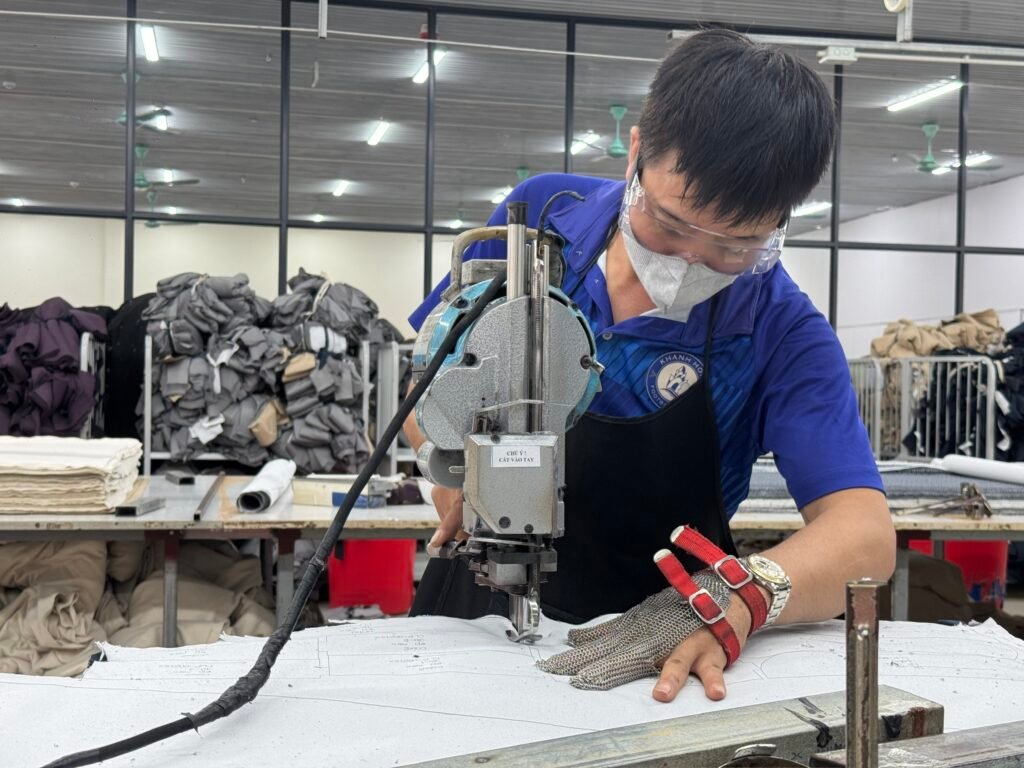
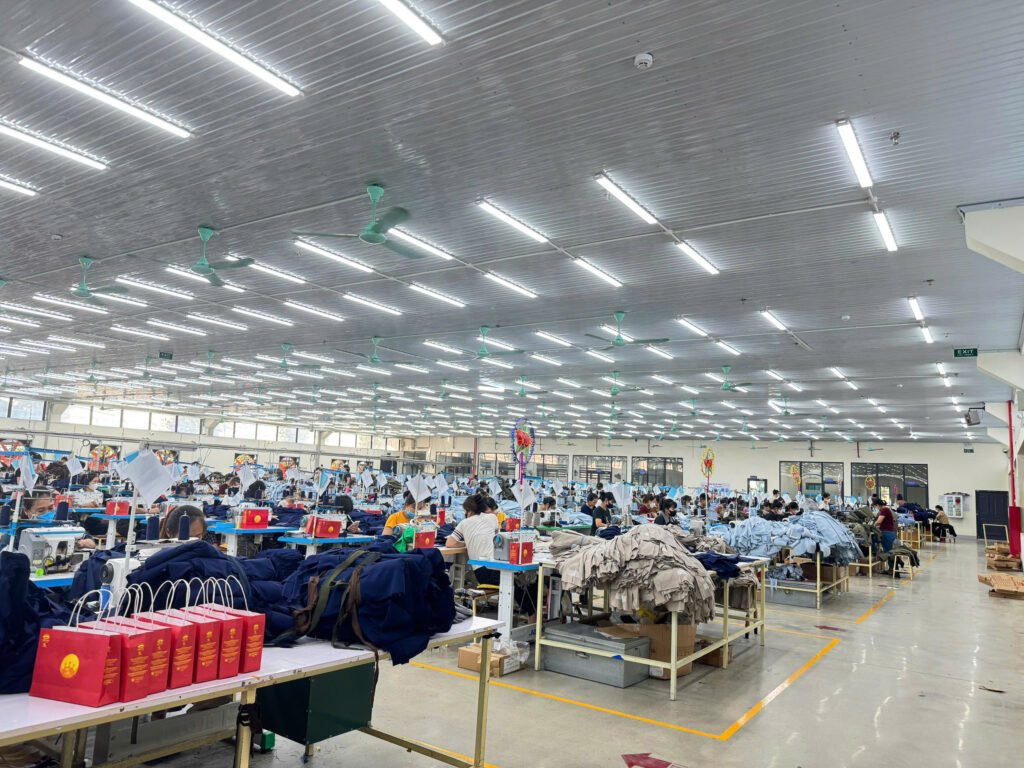
Kiara Garments operates 18 production lines across a 100% Capital World Group-owned facility in Ninh Binh Province (formerly Nam Dinh) – one of Vietnam’s established textile manufacturing centers. The facility runs automated systems and lean processes across every stage: fabric and trim sourcing, pattern making, sampling, bulk cutting, quality control, packing, and export.

That vertical integration is deliberate. When every stage happens under one roof, your brand avoids the margin compression and lead time risk that comes from outsourcing steps to third parties. It also gives our team direct visibility over quality at each handoff point – not just the final inspection.

For brands ordering at MOQ 3,000 pieces per style, this setup means consistent output from run one to run ten.

High Volume Doesn’t Mean Low Standards

A common concern for sourcing managers moving into higher-order quantities: will compliance documentation hold up at scale?

For Capital World Group, certifications aren’t tied to order size – they’re embedded in how the factory operates.

Kiara Garments Vietnam holds:

  • ISO 9001 – quality management systems
  • Higg FEM – facility environmental performance
  • amfori BSCI – business social compliance
  • SLCP – social and labor convergence

These aren’t box-ticking exercises. They reflect the audit and process standards your brand’s compliance team will ask for – and they scale with production volume because they’re built into facility operations, not applied case-by-case.

Sustainability at Scale

High-volume production carries an environmental footprint. Capital World Group addresses this directly through its materials sourcing program, which has prioritized sustainable fabrics.

CWG works with mills across China and internationally to source:

  • RCS-certified recycled textiles
  • BCI cotton – Better Cotton Initiative
  • FSC-ready viscose – responsibly sourced cellulosic fibre

For your brand, this means bulk orders don’t require a trade-off between volume and sustainability credentials. You can source at scale and meet the material traceability standards your market increasingly expects.

Explore CWG’s fabric sourcing capabilities for a full overview of available materials.

Built for Brands Sourcing at Scale in Vietnam

What does a global fashion brand actually need from a high-volume clothing manufacturer in Vietnam?

Consistency, compliance documentation, fast sampling, and a supplier who can absorb order growth without quality degradation. Capital World Group was structured around those four requirements: High Capacity, Full Vertical integration, social compliance, and a fast 10-day sample turnaround with a capacity for 500 samples per week.

Capital World Group serves global apparel brands seeking a Vietnam garment manufacturer with end-to-end supply chain control. If your brand is moving into higher-order volumes and needs a manufacturing partner that can match, contact the CWG team to discuss your sourcing requirements.

Read More
us china trade war about tariff

Garment manufacturing industry – US-China trade war and Vietnam’s role

The US-China trade war has unsettled supply chains worldwide, driving tariff levels and disrupting trade flows. Apparel has been among the hardest-hit sectors, as every garment factory that depends on cross-border sourcing now faces higher costs and shifting production strategies.

The impact of the US-China trade war has not been limited to Washington and Beijing. Higher tariff costs are filtering down to consumers and unsettling global trade. In this environment, Vietnam has drawn greater attention from sourcing teams. With a stable economy and expanding garment factory capacity, Vietnam’s garment manufacturers are becoming reliable partners for brands looking to reduce dependence on China and secure a steady supply.

Overview of the US-China trade war

The trade war between the US and China, the two countries that ranked in top 10 clothing manufacturing countries, has began in 2018 with an initial 25% tariff on Chinese goods, and it only intensified in subsequent years. What started as a dispute over trade imbalances and technology transfer quickly became a prolonged confrontation that unsettled global supply chains. Labor-intensive sectors, particularly apparel and footwear, were hit early as duties pushed up import costs for products that had long relied on China’s scale and efficiency.

According to CNN, in April 2025, the US-China trade war reached a peak when The United States raised tariffs on Chinese imports to 145%, and China responded with 125% duties on American goods. These extreme rates cut into business margins and lifted retail prices, straining both companies and consumers. Manufacturers that relied on cross-border parts also saw production expenses climb sharply, forcing some to rethink sourcing strategies.

The World Trade Organization estimated the fallout would trim global merchandise trade by 0.2% in 2025. As of August 27, US duties on Chinese exports averaged 57.6%, while China’s stood at 32.6%. Even at these revised levels, the dispute continued to weigh on profitability and limit growth in global trade, creating ripple effects across supply chains and highlighting the need for alternatives, such as garment manufacturers from the third countries.

These third countries felt the impacts sharply. Exporters tied to raw materials and intermediate goods faced shrinking demand as production costs rose in both the U.S. and China. Regional suppliers dependent on cross-border inputs also saw their margins narrow, while consumer markets endured higher prices. That said, some producers gained opportunities as brands shifted sourcing to avoid escalating tariffs.

Vietnam’s role in the US-China trade war

Vietnam, one of the competitive clothing manufacturing countries, has become stronger as the trade conflict reshape global sourcing patterns. Its garment industry has become central to this shift.

The potential garment manufacturing hub

Many companies have adopted a China plus one strategy, diversifying production beyond China to mitigate risk. Vietnam has quickly become the leading alternative hub. It is now the world’s second-largest exporter of textiles and garments, showing how far its supply chain has advanced in just a few years. Export performance reflects this momentum: by May 2025, Vietnam’s textile and garment shipments reached $17.58 billion, a 9% increase compared with the previous year. 

Global brands are reinforcing the trend. Nike, Adidas, and Uniqlo have all built strong sourcing relationships in Vietnam, valuing its reliability and competitive costs. With average labor expenses of about $3 per hour versus $5 in China, the country holds a clear advantage in labor-intensive manufacturing.

pressing finished clothes in kiara garments factory

At the same time, Vietnam is expanding garment factory capacity through new facilities and modern industrial zones. This growth and a skilled workforce enable manufacturers to handle orders redirected from China. As a result, many global firms are partnering with Vietnamese textile manufacturers to safeguard supply chains and maintain production stability during uncertain trade conditions.

Experience dynamic shifts

Recent trade agreements have strengthened Vietnam’s role in apparel sourcing. The EU–Vietnam Free Trade Agreement (EVFTA) allows near-zero duties on clothing shipped to Europe, cutting costs for brands. Through the Comprehensive and Progressive Agreement for Trans-Pacific Partnership (CPTPP), Vietnam also gains access to partners such as Canada, Japan, and Australia. These deals lower tariff barriers and make Vietnam’s garment manufacturers more competitive in global trade, attracting brands that want stable, cost-effective production outside China.

In July 2025, General Secretary To Lam and US President Donald Trump agreed to cut US tariffs on Vietnamese exports from 46% to about 20%, with apparel at 20–25%. This deal improved access to the American market and reinforced Vietnam’s role as a key sourcing base. These measures strengthen Vietnam’s garment manufacturers and expand garment factory networks.

Many garment producers in Vietnam that once focused only on Original Equipment Manufacturing (OEM) now offer Original Design Manufacturing (ODM), giving buyers design input and production. At the same time, factories are putting money into greener operations, using less water, reducing waste, and meeting international audit standards. These steps show how Vietnamese garment manufacturers are adapting to new market expectations.

The other aspects being introduced on factory floors to improve efficiency, quality, and scalability are digital tools and automation. Major infrastructure upgrades in ports and industrial zones are now meant to expand capacity for rising export volumes. Even niche players, such as Kiara Garments of Capital World Group, one of the leading women’s clothing manufacturers in Vietnam, are embracing these advances to meet international expectations.

Learn more about The differences between OEM vs. ODM vs. Private Label for your garment production.

aerial view of kiara garments manufacturing factory capital world group

Capital World Group serves global apparel brands seeking a reliable Vietnam garment manufacturer. Furthermore, Capital World Group provides design development, sampling, scalable runs, certified fabrics, and end-to-end logistics. This integrated approach helps cut costs, shorten lead times, and align production with global compliance benchmarks, building a supply chain that balances speed, quality, and responsibility. 

Read More